


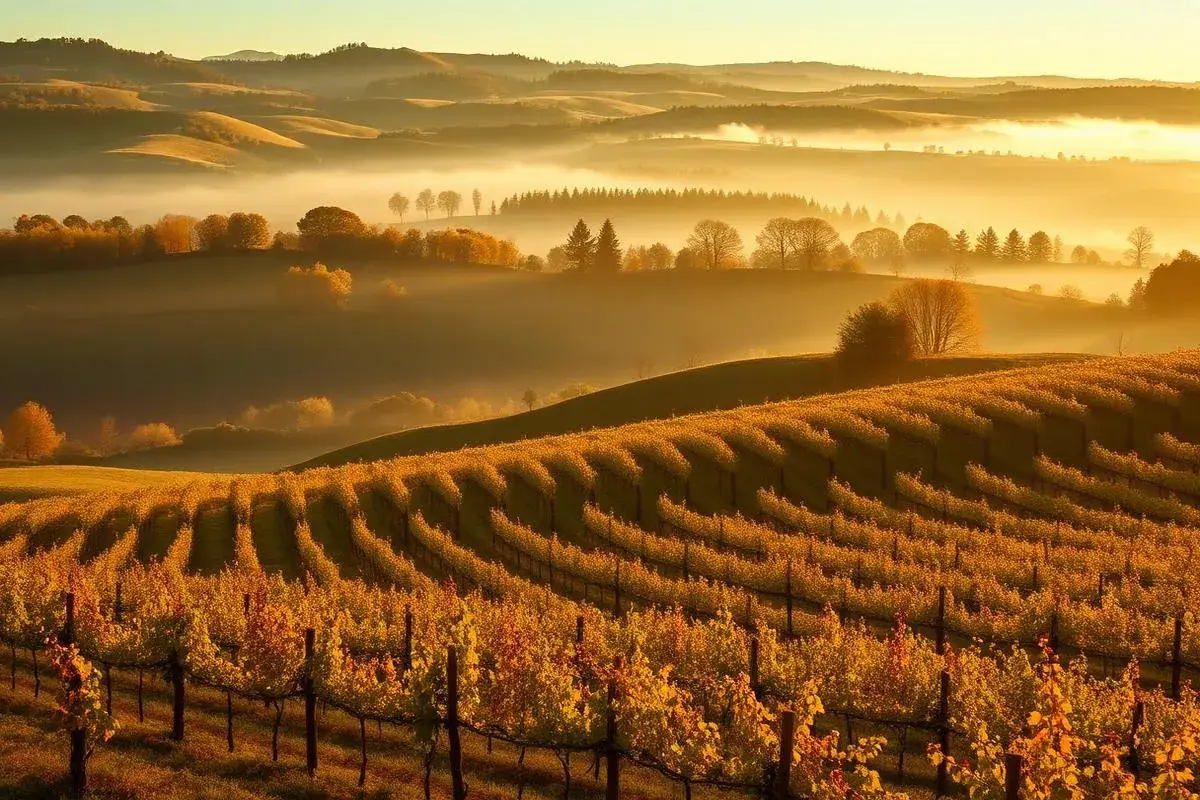
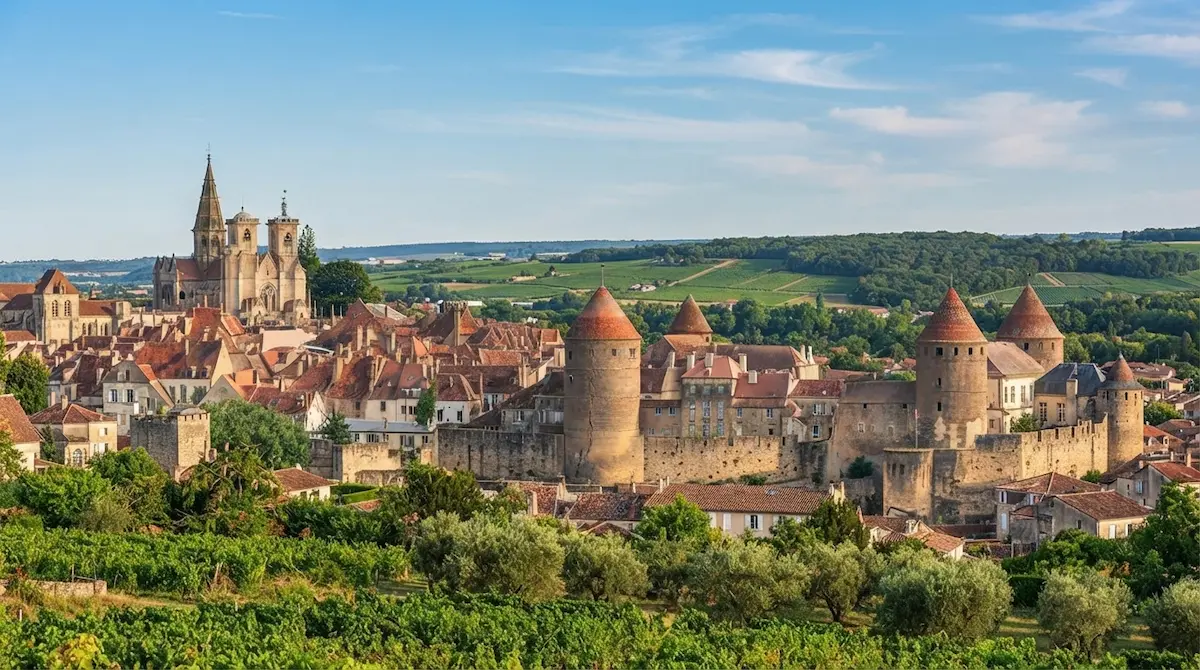



Short answer: “Dijon mustard” designates no place of manufacture. Since a decree of 10 September 1937, it has been the name of a recipe, a precise sifting process and a minimum dry-extract level, which any manufacturer, in France or elsewhere, can legally use. Only “Moutarde de Bourgogne,” a PGI recognised in 2008-2009, commits to a genuine geographic origin for its seeds and white wine.
The misconception runs deep: many visitors to the Côte-d’Or think that a jar of “Dijon” mustard is a protected local product, the way an appellation wine is. It isn’t. French law draws a clear line between the two names, and that line explains why most mustard sold under the “Dijon” name today is made far from Dijon, with seeds that have often never seen the Côte-d’Or.
The name “Dijon”: a recipe, defined by decree in 1937
What the text says
The status of “Dijon mustard” rests on one precise text: the decree of 10 September 1937, issued to apply the law of 1 August 1905 on the repression of fraud. Its Article 3 reserves the names “moutarde de Dijon,” “moutarde blanche,” “moutarde forte” or “extra-forte” for prepared mustards made from bolted or sifted ingredients : meaning the seed husks have been removed by sifting.
The decree also sets two numerical thresholds:
- Total dry extract (including salt and sugar) must not fall below 28%.
- The proportion of husks that escape sifting must not exceed 2%.
Nothing in the text requires manufacturing to take place in Dijon, in the Côte-d’Or, or even in France. The decree governs a process, not a territory. That is the essential difference from a protected designation of origin or a geographical indication, which always tie the name to a defined place of production.
Why the name cannot be registered exclusively
This generic nature has a direct legal consequence for trademarks. The INPI states that a trademark must be distinctive: it cannot simply describe a product’s nature, composition or manufacturing process. A recipe name open to any manufacturer that follows the 1937 specification fails that test: no company can appropriate “Dijon mustard” as an exclusive trademark. That’s what allows producers based in Canada, Germany or elsewhere in France to legally sell a “Dijon mustard,” as long as they respect the composition set by the decree.
The Moutarde de Bourgogne PGI, the only geographic protection
A recent recognition
Unlike the name “Dijon,” “Moutarde de Bourgogne” holds a protected geographical indication (PGI). Its specification was approved by an order of 13 November 2008, before the product gained European recognition in 2009. This status, overseen by the INAO (France’s National Institute of Origin and Quality), turns the name into a verifiable claim of origin: unlike “Dijon,” it can only be used by operators registered with the PGI’s managing group.
What the specification guarantees
The PGI specification covers two points the 1937 decree doesn’t touch:
- Mustard seeds must come exclusively from a defined growing zone in Burgundy, within the four historic departments (Côte-d’Or, Nièvre, Saône-et-Loire, Yonne), excluding the Morvan and Mâconnais massifs. Actual cultivation is concentrated mainly in eastern Côte-d’Or, around Dijon.
- The grinding liquid must contain at least 25% Burgundian white wine from Aligoté and/or Chardonnay grapes, under a protected designation of origin : up to 16% of the finished product. This requirement, absent from the 1937 text, alone guarantees a direct link to the local vineyard.
Once sifted, Moutarde de Bourgogne shows a pale yellow colour, a thick, smooth and creamy texture, and a sharp character inherited both from the brown seed’s heat and the white wine’s acidity. The specification has been amended several times since 2008, most recently under European implementing regulation 2023/1130.
Production: seeds, verjuice or white wine, sifting
The process that sets a “Dijon” or “Burgundy” mustard apart from an ordinary one runs through three broad steps shared by both names: only the origin of the ingredients differs.
The seeds: brown and white
Two species go into the mix: the brown seed (Brassica juncea), which brings the characteristic heat, and the white or yellow seed (Sinapis alba), used in a smaller proportion to soften the blend. The seeds are first ground, then mixed with an acidic liquid.
Verjuice or white wine, never plain vinegar
That liquid is what makes all the difference in character: the 1937 decree allows an acidic liquid without specifying its exact nature, while the Burgundy PGI specification requires a defined share of regional white wine. Historically, the Burgundian recipe used verjuice : the acidic juice of unripe grapes : before white wine became the dominant base. That vinous base, absent from an industrial vinegar-only mustard, is what gives Moutarde de Bourgogne its recognisable aromatic bouquet.
Sifting, the step that names the process
The ground mixture then goes through sifting (or bolting): the seed husks are separated from the paste to leave only a fine, even texture. This is precisely the operation the 1937 decree makes mandatory for the “Dijon” name, with a maximum tolerance of 2% residual husks. A mustard that deliberately keeps the ground husks, in the old-fashioned way, belongs to a different family: so-called wholegrain or “à l’ancienne” mustard, not covered by this regulation.
What sifting changes on the palate
A paste sifted to under 2% husks produces a smooth texture, with no perceptible grain: that smoothness is what lets the mustard blend without residue into a vinaigrette or sauce. Wholegrain mustard, by contrast, keeps whole or cracked seed fragments, for a deliberately grainy texture and a milder taste, since grinding concentrates acidity less.
Industry figures and supply chain
Reliance on imported seeds partly explains why the public still confuses the two names. About 80% of the seeds used for mustard sold under the generic “Dijon” name are imported, mostly from Canada, the world’s leading producer. This exposure weakened supply during poor Canadian harvests, pushing the French industry to react: seed-growing acreage in France rose from about 4,000 to 10,000 hectares in two years, an increase meant to secure part of production on French soil, particularly the raw material the Burgundy PGI needs.
The distinction between the two names is therefore not just an abstract legal point: it maps onto a concrete economic reality, that of an industry trying to rebuild a local supply chain for a product whose name, paradoxically, never required that origin in the first place.
Frequently asked questions
Can Dijon mustard sold abroad legally use the name?
Can "Dijon mustard" be registered as an exclusive trademark?
Why isn't Moutarde de Bourgogne simply called Dijon mustard?
Where do the seeds in supermarket Dijon mustard come from?
Another question?
Write to usSources
- Légifrance - Decree of 10 September 1937 on mustard naming
- Wikipédia - Moutarde de Dijon
- Wikipédia - Moutarde de Bourgogne
- INAO - Moutarde de Bourgogne (PGI) product sheet
- France 3 Bourgogne-Franche-Comté - Dijon mustard, Burgundy mustard: the difference
- Cookismo - Dijon mustard, not really anymore!
- La Clé des Champs - Mustard production, origin and supply chain
- INPI - Conditions for trademark validity