
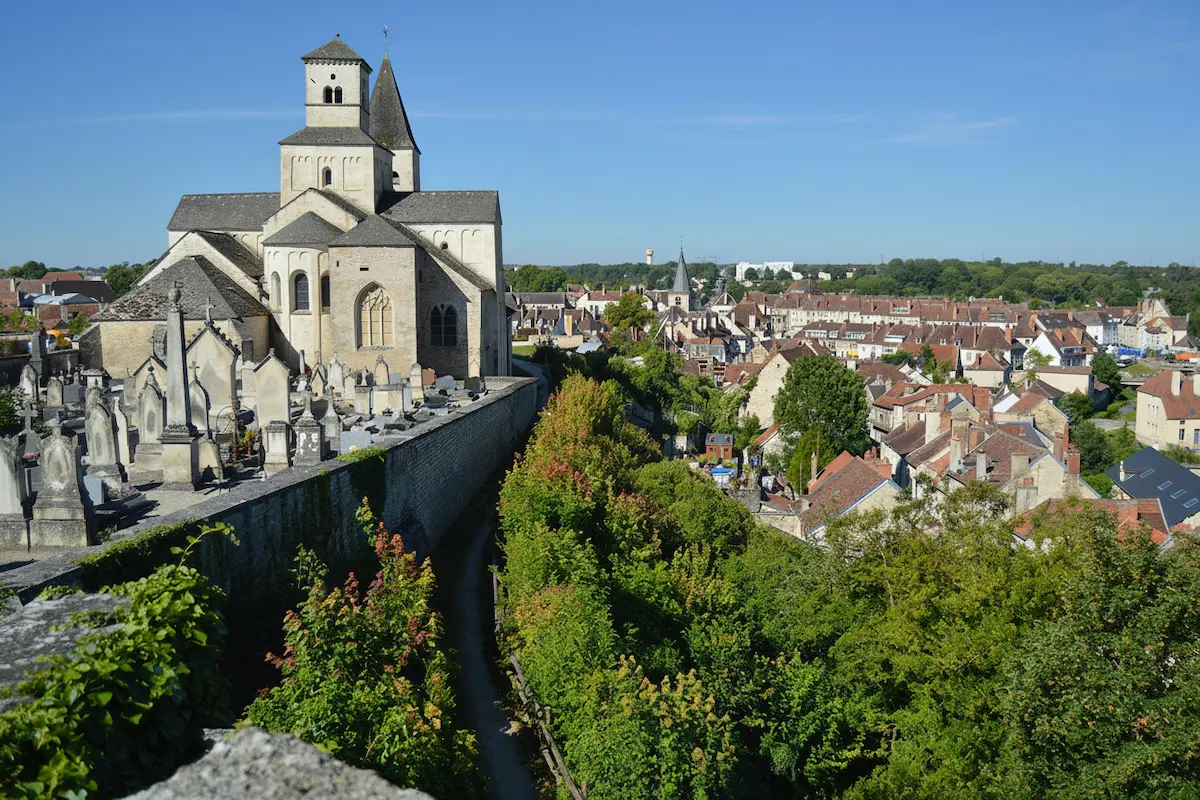


In short: Santenay, the southernmost village of the Côte de Beaune, offers 329 hectares of village AOC vineyards (85% reds), Europe’s lithium-record thermal water, a 14th-century château open for visits, and the Côte de Beaune’s only windmill. It is one of the most varied stops on the Route des Grands Crus.
Santenay is a village of contrasts. It clings to the reverse slope of Mont de Sène, the last undulation of the Côte de Beaune before the valley opens into Saône-et-Loire, with its vineyards laid out in an amphitheatre facing east and southeast. Yet the same village also houses a casino, a thermal spa and a ducal chateau - a rare combination for a commune of 820 residents. As you arrive via the D974 from Chassagne-Montrachet, the landscape shifts: the slopes soften, the plots widen and the view stretches further south.
The Santenay vineyards: a confident 85% reds
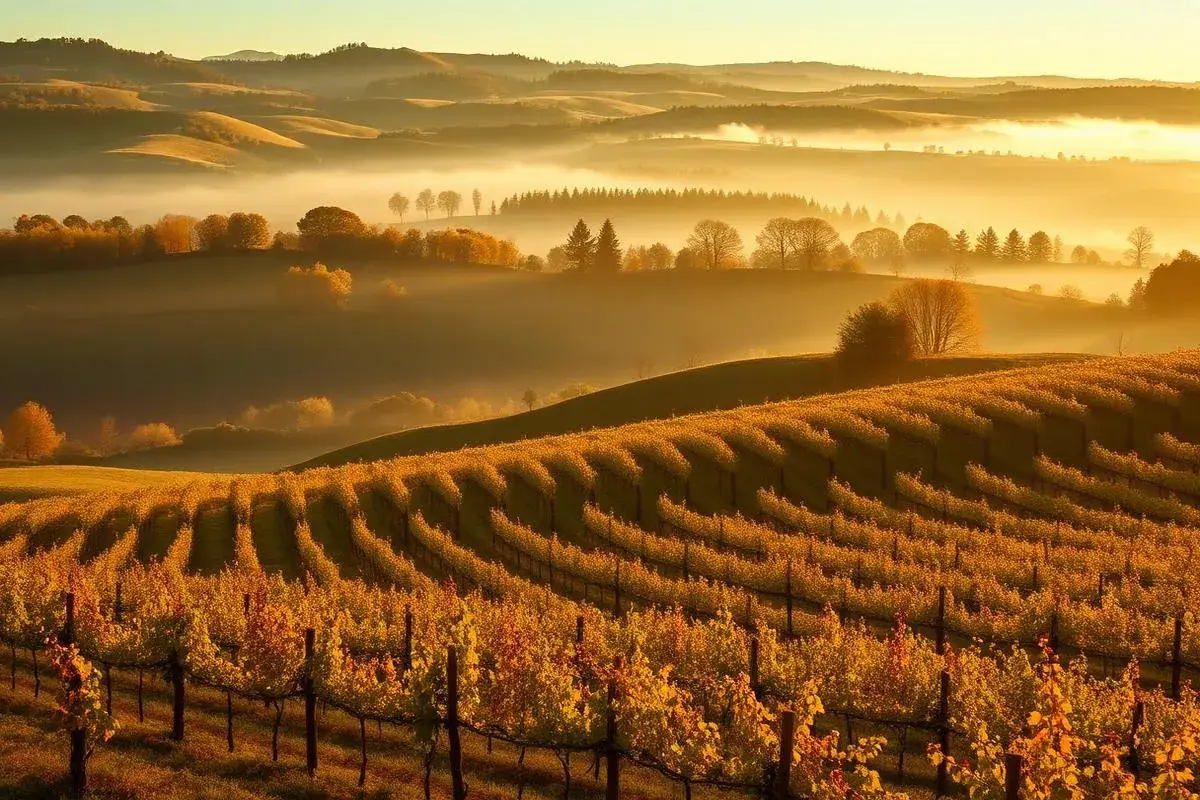
Unlike its neighbour Chassagne-Montrachet, famous for its whites, Santenay leans heavily into Pinot Noir. The 283 hectares of red dominate the 47 hectares of white, making up roughly 85% of total production. The appellation, granted AOC status on 8 December 1936, covers the communes of Santenay and Remigny (the latter in Saône-et-Loire). The base yield is 40 hl/ha for reds and 45 hl/ha for whites. Production exceeded 17,600 hl in 2023 (13,600 hl of red, including over 5,100 hl of Premier Cru, and 4,000 hl of white).
The soil here mixes grey limestones, clays and marls, with east and southeast exposures that favour steady ripening of Pinot Noir. The resulting wines are described as honest, structured, occasionally rustic - powerful enough to be more affordable than their neighbours in Pommard or Volnay, without sacrificing Burgundian typicity.
The 12 Premier Cru
The vineyard has 12 Premier Cru climats, grouped in three zones. To the west, towards Dezize-les-Maranges, are La Comme and Beauregard; above the village, the Clos de Tavannes, Beaurepaire and Passetemps plots; to the northeast, in continuity with Chassagne-Montrachet, Les Gravières, Clos Rousseau and Grand Clos Rousseau. Together they cover around 124 hectares, nearly 38% of the total vineyard.
Les Gravières and La Comme are the most renowned, producing reds with a concentration that rivals some Pommard Premier Crus. In white, Clos Rousseau yields a mineral Chardonnay well worth seeking out.
The thermal baths: a European lithium record
This is perhaps Santenay’s most unexpected asset. The village has a saline spring known since Gallo-Roman times, the Fontaine Salée, used since antiquity for its therapeutic properties. Today, the thermal spa operated by the Valvital group was rebuilt a few steps from the original source.
The water measures 25 mg of lithium per litre - the highest concentration of any European thermal water. This natural lithium richness, combined with high levels of magnesium and potassium, gives it soothing properties for the nervous system. The spa offers accredited 18-day courses for rheumatological and digestive conditions.
Beyond medical cures, the aqua-detox area is open to day visitors: a thermal water pool, massage jet and whirlpool baths, hammam, sauna, a music grotto and swan-neck baths.
Villa Thermae
The Villa Thermae, a hotel residence built alongside the thermal baths, lets you combine a wellness stay with vineyard exploration without needing to drive.
Château Philippe le Hardi: from fortress to wine estate
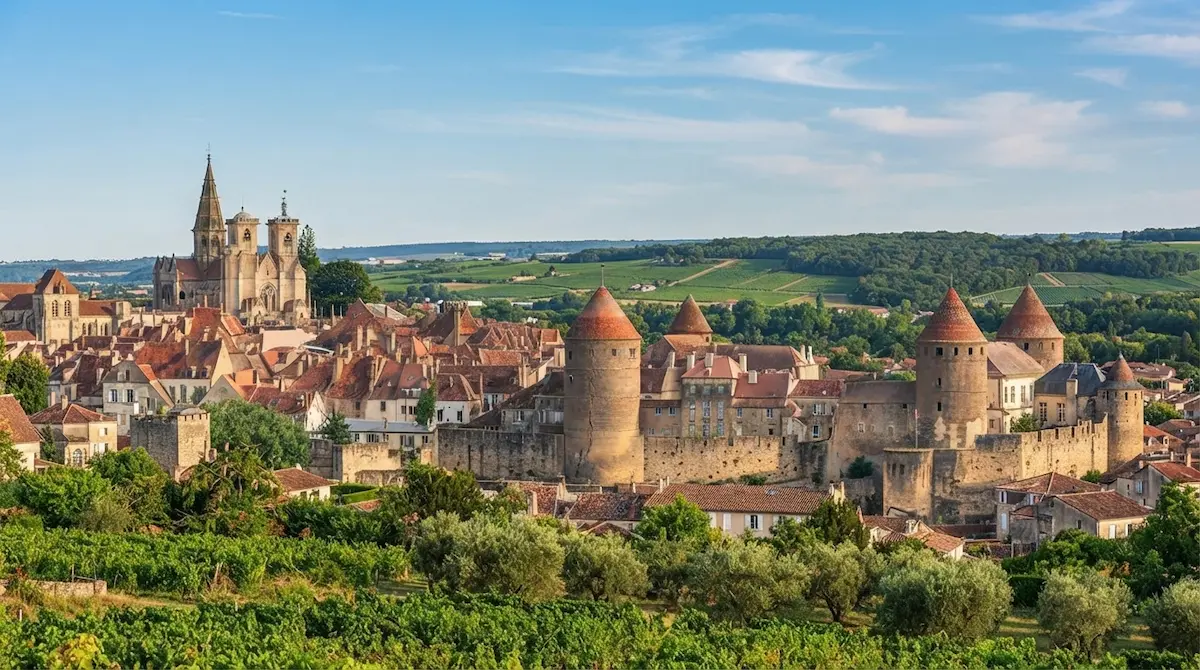
In the centre of the village, the Château Philippe le Hardi (renamed from Château de Santenay in 2021 - the name changed to comply with legislation prohibiting AOC names as brand names) is a former stronghold of the Duchy of Burgundy built on 9th and 12th-century foundations. It became one of the residences of Philip the Bold, Duke of Burgundy from 1363 to 1404, in the 14th century.
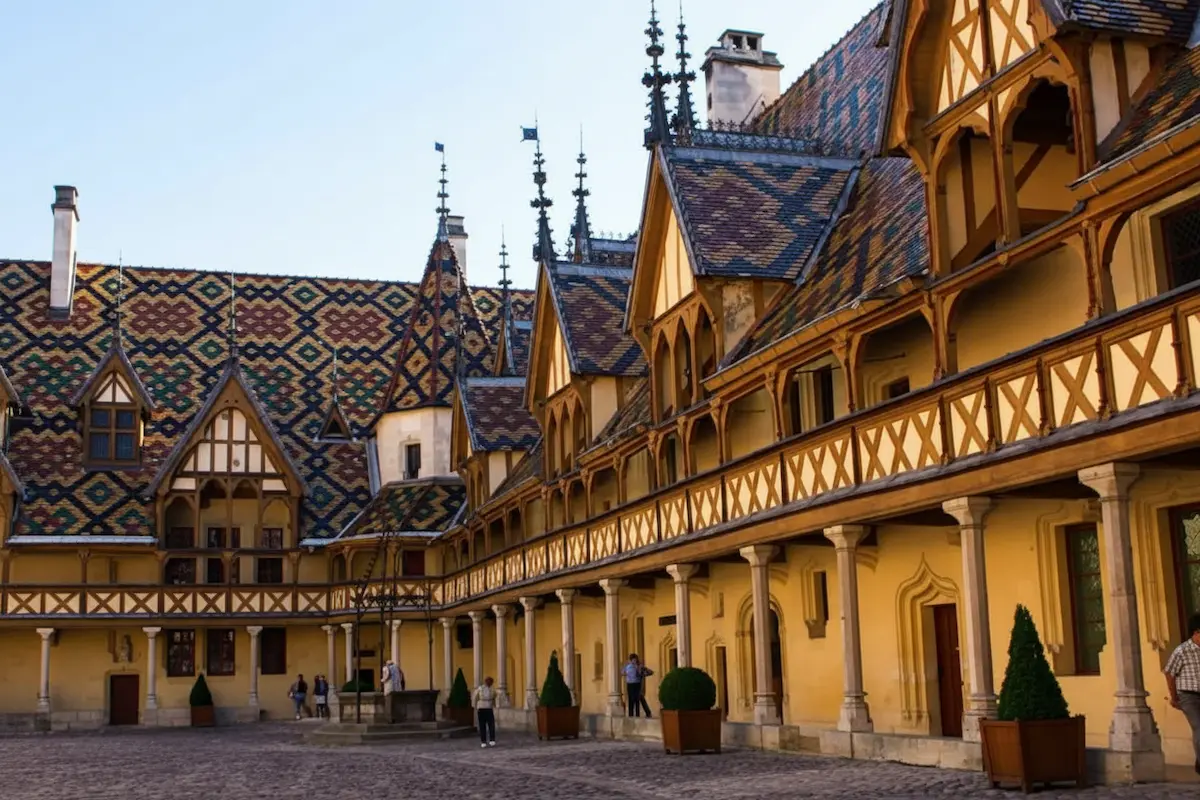
The château now operates nearly 100 hectares of vineyards spread across the Côte de Nuits, the Côte de Beaune and the Côte Chalonnaise, making it one of Burgundy’s largest wine estates. The cellars offer tours with tastings. The building itself retains a square keep and polychrome roofs that stand out in the landscape.
It was Philip the Bold who, by an ordinance of 1395, imposed Pinot Noir as the sole grape variety for Burgundy’s red wines. This decision, taken from his Santenay chateau, shaped the wine identity of the entire region - a legacy you still measure when walking the vines around the village.
The Moulin Sorine: unique windmill of the Côte de Beaune
In the vineyards south of the village, the Moulin Sorine stands on the hillside. Built in the early 19th century, it is the only windmill in the Côte de Beaune and the only municipally-owned working mill in the region, restored in 1995. When the wind is right, its sails still turn.
The Moulin Sorine Festival takes place on the 3rd Sunday of June, with mechanism demonstrations, Santenay wine tasting, local produce and traditional entertainment. One-hour guided tours are also organised on Thursday afternoons, from April to November, by reservation.
The mill offers a wide panorama over the Côte de Beaune vineyard - a curiosity worth the detour even if old stones are not your thing.
Life in Santenay: casino, events and village life
Santenay is not just about vines and water. The Casino de Santenay offers slot machines, poker, roulette and cabaret evenings year-round. The commune also has marked hiking trails, notably on Mont de Sène.
Several events mark the year: the Music and Theatre Festival in July, classical and jazz concerts throughout the summer, the Marie-Noel Poetry Prize in October (the winner walks away with 100 bottles of Burgundy wine), and the Chocolate Market on the 1st Sunday of December.
For cyclists, the Voie des Vignes, a 26 km greenway linking Beaune to Santenay via Meursault and Pommard, offers a flat, safe route through the UNESCO-listed climats. Bike rental, including electric bikes, is available from several local providers.
Frequently asked questions
Is Santenay a renowned wine village?
What makes Santenay's thermal waters special?
Can I visit the Château de Santenay?
When is the Moulin Sorine festival?
Another question?
Write to usSources