
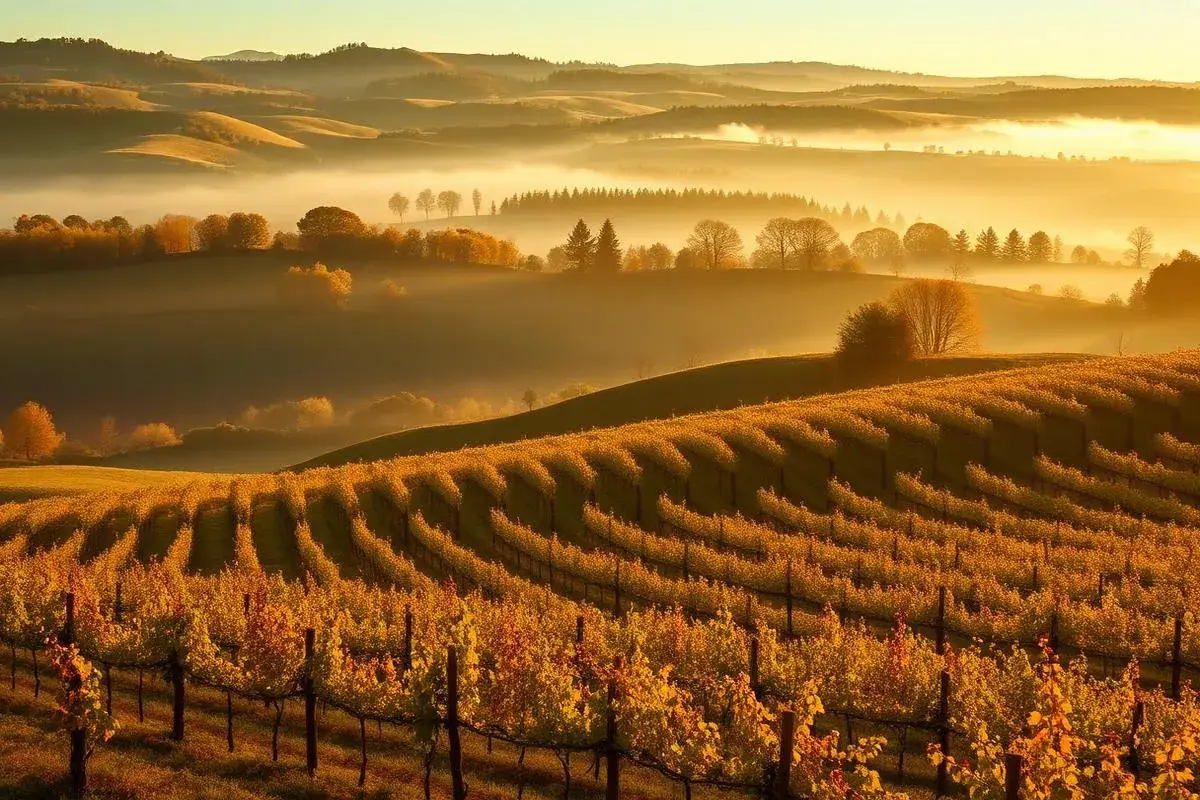


In short: the Burgundy vineyard offers landscapes of rare photogenicity, especially in autumn (red and gold vines) and spring (yellow mustard fields). The best spots lie on the Route des Grands Crus, between Gevrey-Chambertin and Santenay. Favour sunrise for mist on the climats.
Photographers from around the world come to Burgundy to capture the alignment of vine rows, dry-stone walls and glazed tile roofs. Here are the best spots, the right seasons and technical tips.
Best photo spots
Vosne-Romanée: the Croix de Rameau
Vosne-Romanée: the Croix de Rameau, details
The most famous viewpoint in Burgundy. A stone calvary amid the vines, with the village of Vosne in the background and climats sloping south. Best moment: sunrise in October, when mist covers the lower plots and the vines are vivid red.
Gevrey-Chambertin: the Clos de Bèze
A rectangular plot enclosed by walls, with Gevrey’s Romanesque steeple in the backdrop. Best moment: April, when flowering mustard fields add a vivid yellow contrast.
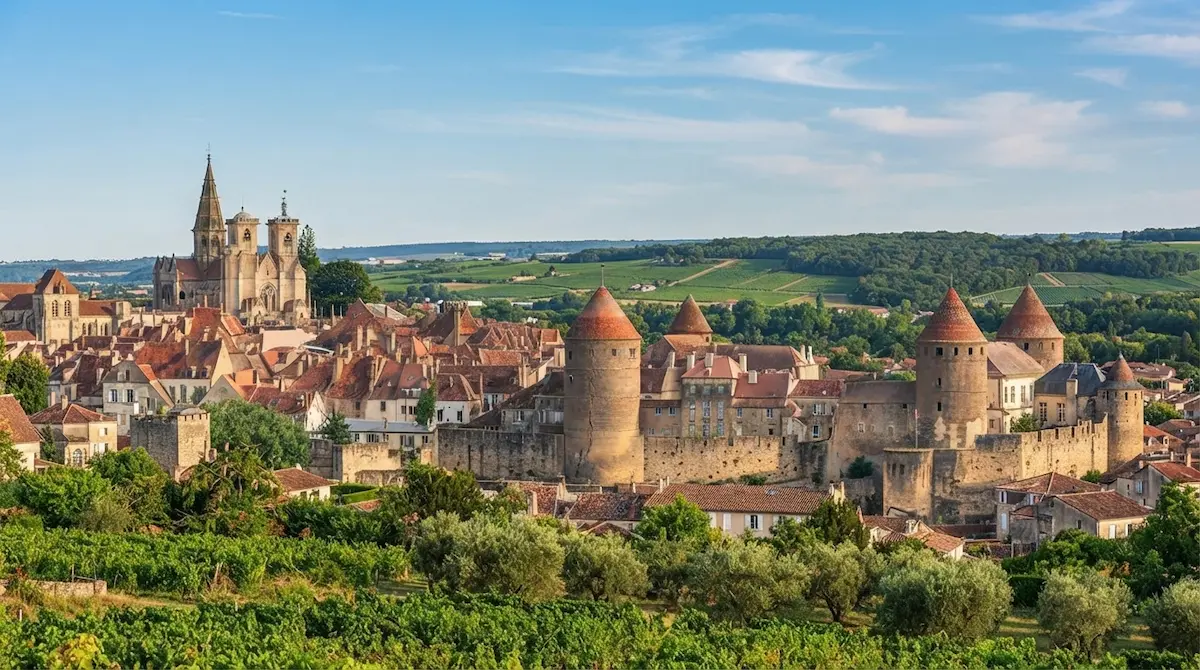
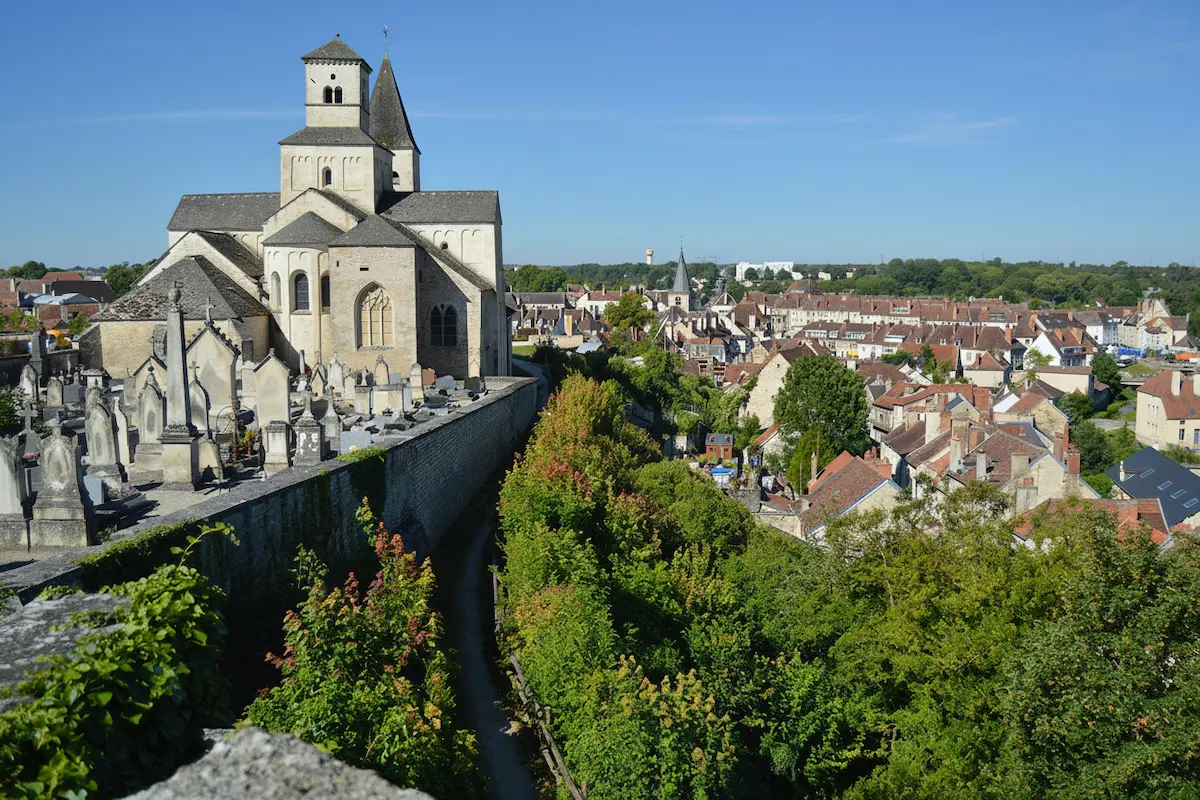
Châteauneuf-en-Auxois: the panorama
From the medieval château, the view takes in the Canal de Bourgogne, the Ouche valley and the Auxois hills. Best moment: late summer afternoon, golden light on the village roofs.
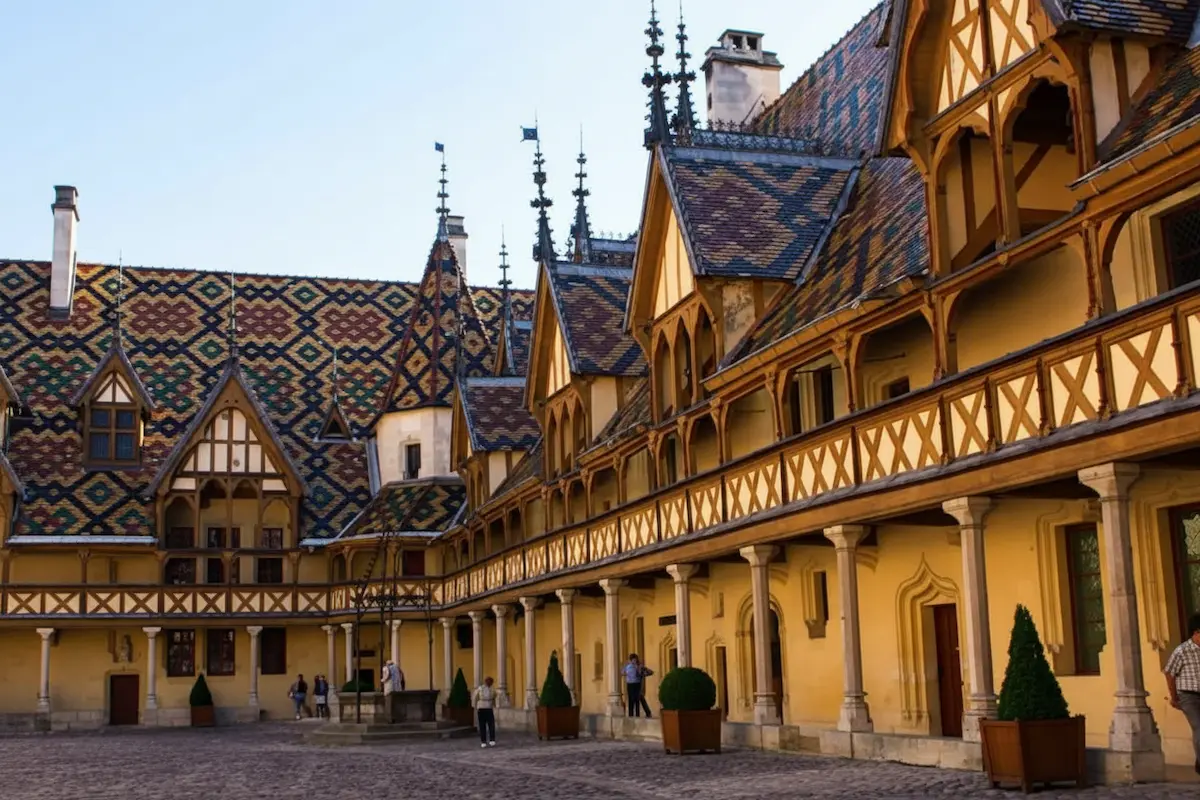
Beaune: Hospices roofs
The yellow, green, red and black glazed tiles of the Hospices roof. Best moment: a sunny morning, when light strikes the roof full on.
Seasons and light
- October (autumn): vines turn red, orange and gold. The most spectacular month. Light is soft and low.
- April–May (spring): mustard in flower, tender green shoots, changeable skies. The most contrasted season.
- December–January (winter): frost on the canes, bare graphic vines, frequent mist. An underrated season.
- June–July (summer): hard light, uniformly green vines. Less photogenic but guaranteed blue skies.
Technical tips
- Arrive at sunrise: morning mist in the vineyard hollows creates unreal images. It lifts around 9–10am.
- Use a telephoto: to compress perspective and stack the vine rows.
- Respect the plots: do not enter the vines without permission. Photograph from paths and roads.
- Pack warm clothes: October sunrises are cold (0–5 °C).
Composing an image without disrupting vineyard work
The best subjects are not always the best-known panoramas. A wall, a boundary stone, a cabotte, a pruned vine or a line of rows vanishing into fog tell the vineyard’s scale better. Walk slowly on authorised ways, watch where the light comes from and return if needed: landscape photography is often a matter of patience more than kilometres covered.
The vineyard is a workplace. Rows are private plots, paths serve tractors, and periods of pruning, treatment or harvest are busy. Do not cross a barrier to “gain” a few metres of foreground, do not move stones from a wall and avoid blocking access with a car. A successful photo does not justify disturbing a team or damaging a plot.
Preparing the light
Scout a place the day before with a map and observe the orientation of the relief. At sunrise, east-facing slopes light quickly; in the evening, villages and walls often take a softer light. Mist cannot be ordered: it appears mainly after a cool, damp night, then vanishes quickly. Arrive early with a charged battery, an empty memory card and a discreet lamp so you are not hunting for kit in the dark.
Useful settings in the field
For a sharp landscape, start from a low ISO and a medium aperture, then adjust to the light. Check the histogram when a bright sky sits behind a dark vine: a phone or camera screen can be misleading. A tripod helps at dawn, but keep it off narrow paths. In strong wind, weight it or give up: a blurred image is not a travel souvenir.
Building a photo day in the vineyard
Alternate scales. Start with a wide landscape in the morning, then at midday look for details in shade: stone texture, tools, cellar doors, leaves or village signs. At the end of the day, return to a viewpoint for oblique lines and silhouettes. This method avoids trying to do everything at sunrise and yields a more varied series than a string of postcards.
If you want to photograph someone at work, ask permission first. At an estate open to visitors, a welcome or tasting is the right moment to explain your project. Respect a refusal, do not use a drone without knowing local rules and do not photograph customers without their agreement. In villages, stay attentive to residents: an open courtyard is not an invitation to enter.
Photographing with a phone
A recent phone is enough to build a travel notebook. Clean the lens, enable the grid and avoid digital zoom; walk a few steps closer when possible. For backlit scenes, tap the bright area on screen then lower exposure slightly. Also take a few vertical frames: they suit vines, steeples and wall-lined roads well.
Keeping track of places
Note the village, date and time of your best images. Autumn colours vary from year to year, and a place magnificent at 7am can be ordinary at noon. Geotagging photos is handy, but do not broadcast your live position if you are alone early in the morning. Caution and respect for the site remain the best accessories.
Planning a reasonable itinerary
The Route des Grands Crus lends itself poorly to a race for “spots”. Choose two or three villages, park in designated areas and link viewpoints by authorised paths. Walking time reveals framings invisible from the car and limits dangerous roadside stops. In autumn the light changes fast: better to deepen one place than multiply detours.
Sharing images with context
Name the village or appellation accurately, without wrongly attributing a private plot. If a photo shows a domaine, an identifiable person or an event, obtain the necessary agreement before a commercial publication. A sober caption, season, light, viewpoint, is often fairer than claims about a wine or property the image cannot verify.
Preserving access
Do not reveal a fragile access or a property as if it were a public belvedere. When recommending a place, name the village instead and invite visitors to stay on the paths. That restraint protects the vines and leaves the next photographers the same chance to discover the landscape.
Frequently asked questions
Do you need permission to photograph in the vines?
Which lens should you bring?
Another question?
Write to usSources