


In short: the tradition of the inn, with table and rooms under one roof, remains very much alive in Côte-d’Or. From A6 roadside stops to rural inns in the Auxois and Morvan, and gastronomic stages on the Route des Grands Crus, this form of lodging embodies the Burgundian tradition of welcome: eat well, sleep soundly, leave content. This guide sets out the different types of establishment, their specifics, prices, and the best addresses by area.
The inn is a form of lodging that has deeply marked the history of Burgundy. On the roads linking Paris to Lyon and the Mediterranean, inns were obligatory stages for travellers, merchants and pilgrims. The model of the inn with table d’hôtes has endured in Côte-d’Or, where gastronomy is part of regional identity: people come as much for the cooking as for a bed, often in that order. From the roadside stops at motorway exits to the family inns of the Morvan hamlets, the department offers a network of gourmet stages covering the whole territory.
The Burgundian, and specifically Côte-d’Or, peculiarity is the almost natural fusion between inn and table. Here, an inn is rarely a mere passing place where you sleep: you choose your stop for the restaurant, and perhaps extend the evening by staying the night. This tradition is still visible today in Logis de France establishments, whose charter requires members to serve home cooking based on local produce, directly inspired by the rural inns of old.
A6 roadside stops: the passing stage
A tradition on the Paris–Lyon axis
The A6 motorway crosses Côte-d’Or for around 95 kilometres, from the department boundary at Bierre-lès-Semur (Yonne border) to the exit towards Saône-et-Loire (Chagny). Before the A6 was built in the 1960s–1970s, national route 6 (RN6) carried Paris–Lyon traffic through Burgundy, with stops in each town: Auxerre, Avallon, Saulieu, Arnay-le-Duc, Chalon-sur-Saône. Today’s roadside stops, at motorway exits, are the direct heirs of those stage inns: simple but clean rooms, restaurants open early and late, and hearty menus at moderate prices.
The roadside stops listed by the Relais Routiers association are unevenly spread along the motorway corridor. The best-served sectors are the Bierre-lès-Semur, Montbard and Venarey-les-Laumes exits in the north, and the Pouilly-en-Auxois exit in the south, at the crossroads of the A6 and the RN6. These establishments offer full packages at competitive prices: workers’ menu between €12 and €18 at lunchtime (starter + main + dessert or cheese), double room from €50 a night, and stopover package (night + dinner + breakfast) from €70 per person.
Roadside-stop clientele has changed since the 2000s. Long-haul truck drivers (international hauliers, delivery drivers) still dominate, but you increasingly meet budget travellers, cycle tourists, weekend motorcyclists, and foreign tourists in vans or motorhomes looking for a simple, economical stage. Stops are adapting: some now offer facilities for motorhome users, showers for non-guests, and breakfasts served from early morning.
Choosing your stop on the A6
For a one-night stop on the A6, two logics clash. The first is convenience: a roadside stop directly beside the motorway lets you get back on the road in minutes, but you have to accept the noise of the axis and the service areas. The second is the quality of the table: the stops set in the towns, a few kilometres from the interchange, are often those where the home cooking is the most careful, with regional specialities (bœuf bourguignon, œufs en meurette, Époisses or Cîteaux cheeses). It is advisable to phone before stopping: many stops close one day a week and limit evening service in low season.
Rural inns of the Auxois: the tradition of the table
A model that endures
The Auxois, an agricultural and rural region par excellence, concentrates most of Côte-d’Or’s rural inns. These establishments, often run by the same families for two or three generations, work on a simple economic model: a 30–60-cover dining room, 5–10 rooms upstairs or at the back, a bar for village regulars, and a kitchen that changes with the seasons. Produce is bought from local suppliers: Charolais beef from the canton breeder, Bresse poultry from a few dozen kilometres away, cheeses (Époisses, Soumaintrain, Cîteaux, Ami du Chambertin) from the regional affineur, vegetables from the kitchen garden for inns that grow their own.
The viability of this model rests on a subtle balance between local custom (bar regulars, business lunches, wedding and hunt banquets at weekends) and tourist trade (walkers, cyclists, passing visitors). The inns that survive are those that have kept their local base while opening to tourism, without falling into standardised prices and menus.
Where to find them
The rural inns of the Auxois are concentrated in the towns and villages along the Armançon and Serein valleys, around Semur-en-Auxois, Montbard and Vitteaux, and on the secondary roads between the medieval towns (Flavigny-sur-Ozerain, Châteauneuf-en-Auxois, Saint-Thibault). Many belong to the Logis de France network, which makes searching by area easier on its national website. Rates follow local logic: expect €65 to €90 a night for a double room, and €25 to €50 for a terroir menu depending on the formula, the upper end corresponding to weekend dinners with cheese and dessert. The cooking is traditional Burgundian: œufs en meurette, Charolais beef, jambon persillé, coq au vin, homemade pain d’épices.
Stages on the wine route: inns between vines and villages
From Marsannay-la-Côte to Santenay
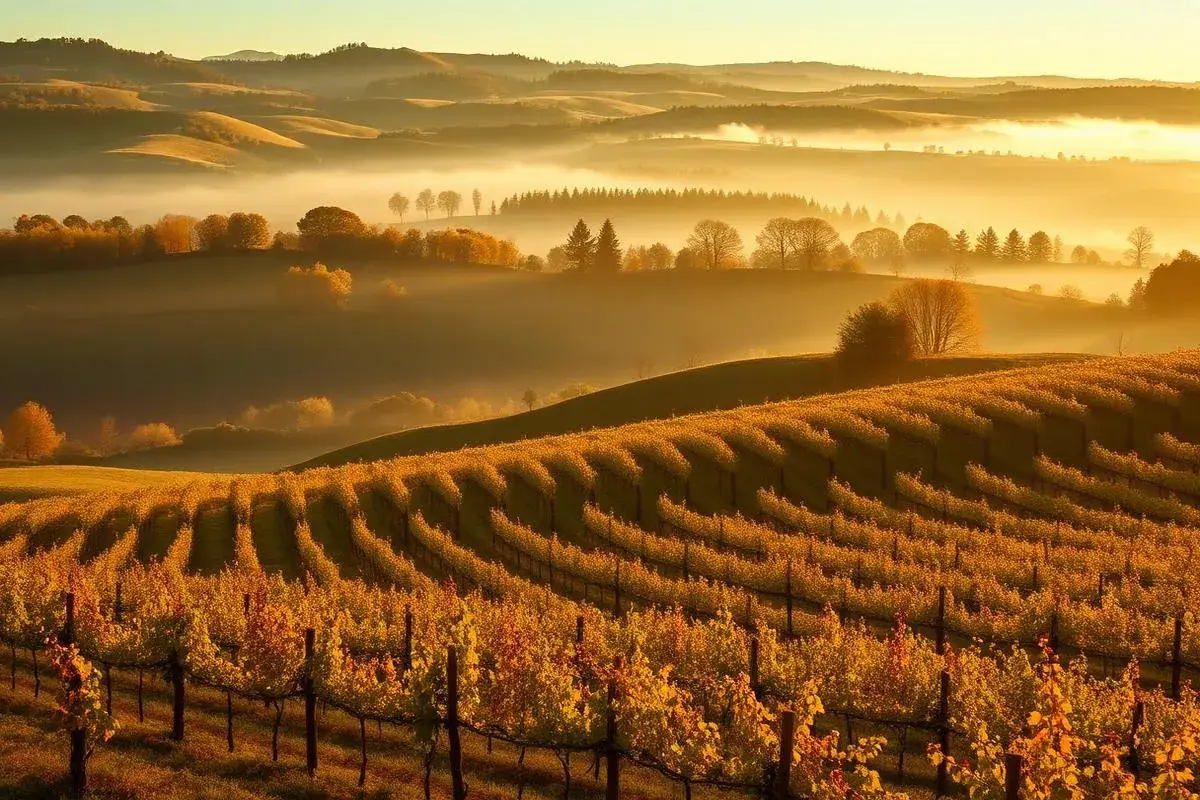
The Route des Grands Crus (D974) crosses Côte-d’Or north to south for 60 kilometres, from Marsannay-la-Côte to Santenay, through the world’s greatest wine villages: Gevrey-Chambertin, Chambolle-Musigny, Vougeot, Vosne-Romanée, Aloxe-Corton, Pommard, Volnay, Meursault, Puligny-Montrachet, Chassagne-Montrachet. Following the wine slope between the Saône plain and the first Morvan foothills, the route is lined with estates, cellars and restaurants, but also inns and stops that have welcomed visitors for centuries.
Wine-route inns differ from Auxois rural inns in clientele and standing. Here the clientele is almost exclusively tourist and wine-focused: people come for tastings, estate visits and gastronomic meals, often with a higher budget than in country inns. Prices are therefore naturally higher: a room in a wine-route inn costs on average €80–150 a night, with menus at €35–65 depending on the establishment. The addresses are concentrated in the most touristic villages of the Côte de Nuits (Gevrey-Chambertin, Nuits-Saint-Georges) and the Côte de Beaune (Beaune, Pommard, Meursault), often in former vignerons’ houses.
During harvest, generally from late August to mid-September, these inns show full weeks ahead: book the dinner at the same time as the room, and often in spring for the most in-demand dates.
Morvan inns: hiking refuges and rustic gastronomy
A network of stages for walkers and anglers
The Morvan, on the Côte-d’Or side, offers a network of rural inns more spaced out but just as authentic as those of the Auxois. Density is lower: one inn every 15–20 kilometres against one every 5–8 in the Auxois, which makes stage planning more important for walkers and cyclists. Morvan inns are often in isolated hamlets, beside a lake or river, with 4–8 rooms and a dining room serving anglers’ lunch and walkers’ dinner.
Prices in the Morvan are the lowest in Côte-d’Or for an inn with a table: expect €45–70 a night for a double room, and menus at €22–35. Cooking quality is often surprising for the price: Morvan inns rely on good local produce (Saint-Agnan lake trout, Charolais beef, Morvan honey, farm cheeses) and home cooking that values simplicity over sophistication.
The sectors to favour
The establishments are spread around the activity hubs of the Côte-d’Or Morvan: the Saulieu area, a stopover town on the RN6 at the edge of the park, the Cousin valley between Saint-Seine-l’Abbaye and the gates of the massif, and the inland towns such as Liernais, Précy-sous-Thil or Molphey, where you find the smallest inns, often run by couples who grow their own kitchen garden and serve a single menu announced in the morning according to availability. In the most isolated hamlets, card payment is not always possible and wifi may be absent: two points to check when booking. Many Morvan inns close from November to March or only open at weekends in low season.
Prices and tips for an inn stopover
The choice between a rural inn, a roadside stop or a gastronomic stage depends on your itinerary. For a stop on the A6, a roadside stop is the most economical and practical option: you can pull in without booking in the early evening, dine quickly, sleep and get back on the road early in the morning. For a gastronomic stay in the Auxois or on the wine route, an inn with a restaurant is the best choice: dine on site, sleep upstairs, and benefit from the innkeeper’s advice for the next day’s visits. For a nature stay in the Morvan, the refuge-inn offers the most authentic experience, with rustic cooking and personal welcome.
The price ranges given above correspond to the prices charged in 2025–2026 by establishments in the department. Most inns offer stopover packages (room + dinner + breakfast) saving 10–20% compared with booking each service separately. It is advisable to book dinner when booking the room, especially at inns with fewer than 10 rooms, where restaurant covers are limited and demand often exceeds supply in season.
Accepted payment methods vary considerably. Roadside stops accept almost all cards and cash. Rural inns in the Auxois and Morvan are more mixed: some take cash and cheques only, others bank cards from a certain amount. It is wise to check when booking, especially at small country inns where the card terminal is sometimes out of order.
Frequently asked questions
What is the difference between an inn and a conventional hotel-restaurant in Côte-d'Or?
What are the best roadside stops in Côte-d'Or for a break on the A6?
Is a rural inn in Côte-d'Or suited to a gastronomic stay?
Should you book ahead to dine at a rural inn in Côte-d'Or?
Another question?
Write to usSources
- Bourgogne Tourisme - Auberges et relais
- Logis de France - Auberges en Côte-d'Or
- Wikipédia - Route nationale 6
- Wikipédia - Route des Grands Crus
- Relais Routiers - Guide des relais
- Guide Michelin - Hôtels et restaurants Bourgogne
- BIVB - Routes des vins de Bourgogne
- Wikipédia - Auberge (établissement)
- Côte-d'Or Attractivité - Routes et étapes