
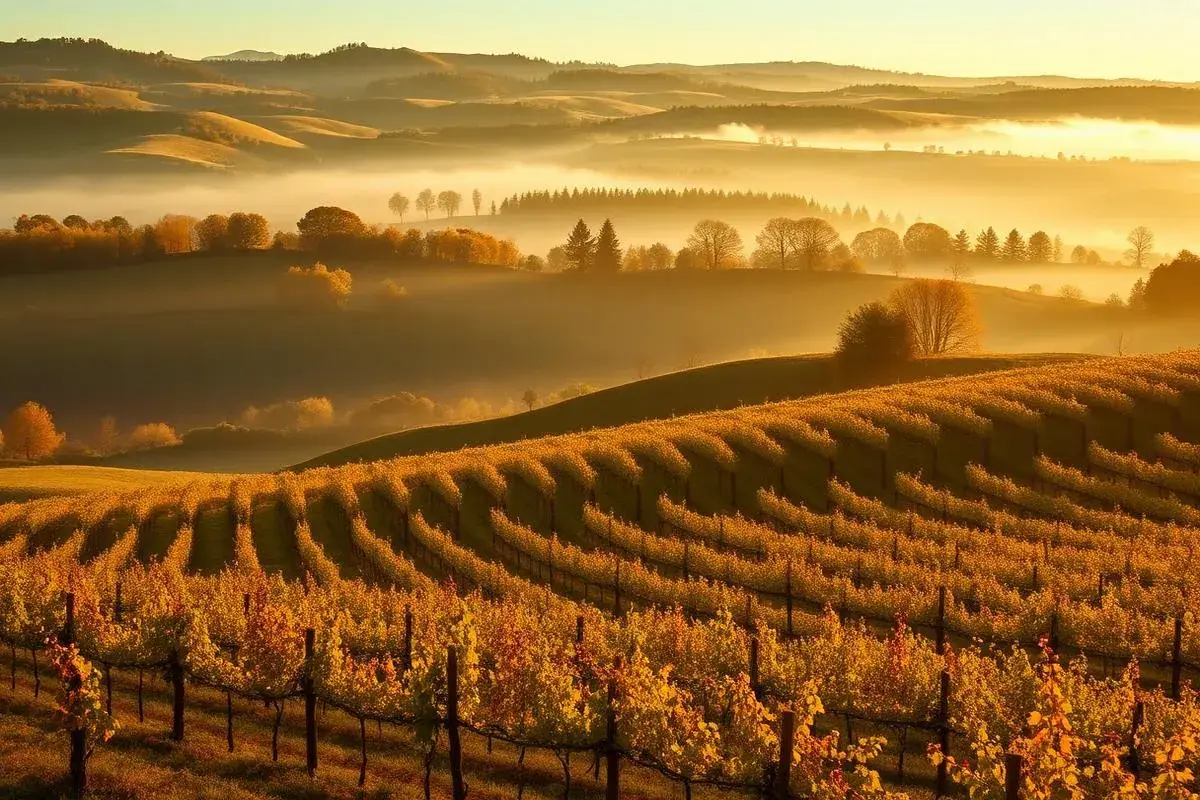


A precisely delimited, named vineyard plot, listed as a UNESCO World Heritage site since 2015. There are 1,247 climats in Burgundy, each with its own history, soil, aspect and microclimate. Examples: Clos de Vougeot, Les Amoureuses, Corton.
Appellation d'Origine Contrôlée: a grouping of several climats under a single set of rules (grape variety, yield, winemaking, geographical area). There are 84 AOCs in Burgundy. Examples: Vosne-Romanée (14 climats), Gevrey-Chambertin (9 climats).
A quality hierarchy within a village appellation. Grand Cru: the highest level, where the climat carries the name of the appellation (e.g. Corton-Charlemagne). Premier Cru: the intermediate level, where the climat name follows the village name (e.g. Meursault Les Perrières). There are 33 Grands Crus and 640 Premiers Crus in Burgundy.
The king of red grape varieties on the Côte de Nuits and the Côte de Beaune. Sensitive to terroir, it expresses red fruit (cherry, raspberry), spice, undergrowth and, with age, truffle. Low in tannins, it ages on elegance rather than power. 12,000 ha planted in Burgundy.
The king of white grape varieties on the Côte de Beaune, in the Chablis area and in the Mâconnais. Depending on the ageing, it expresses minerality (gunflint, chalk), citrus, white fruit, butter and hazelnut. 6,800 ha planted in Burgundy. The base of Crémant de Bourgogne.
A secondary white grape variety, hardier, planted on less noble terroirs. Lively, acidic and lemony, it makes easy-drinking wines (Bourgogne Aligoté) and goes into the Kir. 1,800 ha. The Bouzeron appellation is the only village made of 100% Aligoté.
A sparkling wine made by the traditional method from Chardonnay, Pinot Noir, Aligoté and Gamay. A minimum of 9 months resting on racks (sur lattes). 20 million bottles a year. An AOC since 1975. An excellent alternative to Champagne as an aperitif or with oysters.
A specific 62 cl bottle (instead of 75 cl) used exclusively for the Jura's Vin Jaune. Its squat shape limits oxidation during the minimum of 6 years and 3 months of ageing under a veil of yeast. It does not apply to Burgundy wines.
A term for a resident of Vézelay (Yonne), often confused with the wine-growing Burgundy. Vézelay is in Lower Burgundy (Yonne), outside the Côte-d'Or. Its vineyard (AOC Vézelay) is distinct from the UNESCO-listed Climats of the Côte de Beaune and Côte de Nuits.
Bureau Interprofessionnel des Vins de Bourgogne, the Burgundy wine trade board. The body that manages the appellations, promotes the wines, steers research and publishes the AOC specifications. Based in Beaune. The official source for acreages, yields, volumes and average prices.
Institut National de l'Origine et de la Qualité, the French national institute for origin and quality. The state body that validates the AOC/AOP/IGP specifications, checks that the rules are respected and issues approvals. Any change to an appellation goes through the INAO.
A 60 km cycle path linking Dijon to Santenay along the Route des Grands Crus. A former railway line converted for cycling. Smooth surface, signposting, water points and picnic areas. Suitable for e-bikes and families. Bike hire in Dijon, Beaune and Nuits-Saint-Georges.
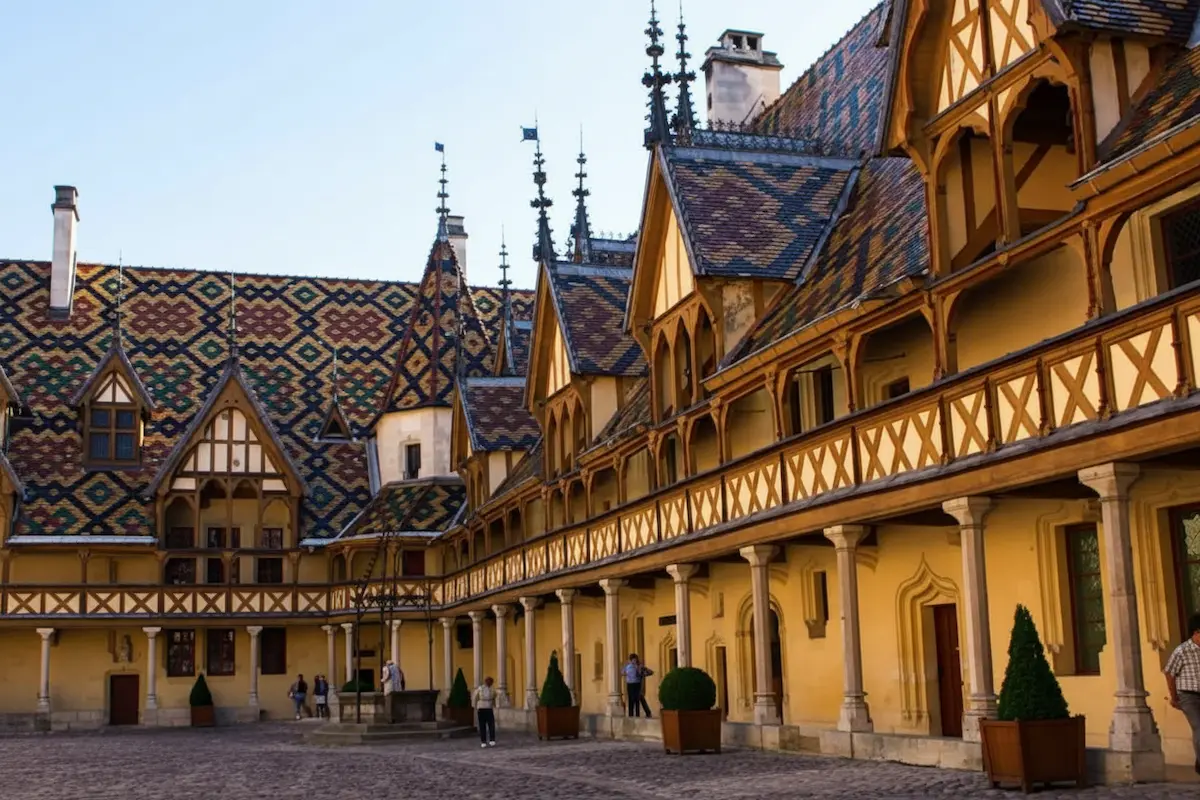
A hospital founded in 1443 by Nicolas Rolin, Chancellor of Burgundy. Famous for its Salle des Pôvres, its roof timbers, its polyptych by Rogier van der Weyden and its annual wine auction (third weekend of November). The proceeds from the Hospices wines fund the modern geriatric hospital.
A 60 km tourist route from Dijon to Santenay, lined by the 32 wine-growing communes of the Côte de Nuits and the Côte de Beaune. Dedicated brown signage. Not to be confused with the Voie des Vignes (the parallel cycle path).
A soft, washed-rind cheese made from raw cow's milk and matured with Marc de Bourgogne. An AOP since 1996. Made in Époisses (Côte-d'Or) and 13 neighbouring communes. Powerful smell, creamy, nutty taste. It pairs with a white Burgundy (Meursault) or a Marc de Bourgogne.
A savoury choux pastry puff made with cheese (traditionally Comté or Époisses), a Burgundy speciality. Origin: Flogny-la-Chapelle (Yonne). Served warm as an aperitif, often with a Crémant de Bourgogne. The Flogny gougère earned the “Site remarquable du goût” label in 1997.
A Burgundy charcuterie speciality: cooked white ham, boned, studded with parsley, bound with red wine (Bourgogne or Irancy) and set in jelly. Served cold as a starter, with country bread and gherkins. The classic pairing: a red Burgundy (Marsannay, Irancy).
The oldest sweet in France still in production (since 1591). A green aniseed seed coated in sugar syrup for 15 days in copper pans. Made in Flavigny-sur-Ozerain (Côte-d'Or) by the Troubat company. Iconic oval tin. No colouring, no artificial flavouring.
A condiment made from brown mustard seeds (Brassica juncea), verjus (green grape juice), salt and water. An IGP since 2009. Genuine Dijon mustard contains no vinegar. Historic brands: Fallot (Beaune), Edmond Fallot, Moutarderie Royer. It pairs with beef, sausages and vinaigrettes.
A baker's speciality made with honey, rye flour, green aniseed, cinnamon, clove and nutmeg. No butter, no egg, no yeast (baking powder only). Dense texture, long shelf life. Mulot & Petitjean (Dijon) has been its historic guardian since 1796. It pairs with foie gras and strong cheeses.
A small round cake made with honey, wheat flour, apricot or orange jam and a sugar glaze. A monastic speciality taken up by Dijon bakers. Mulot & Petitjean, Au Pain d'Épices. Eaten as an afternoon snack or at breakfast with butter.
Sources for this glossary
- Wikidata :
sameAsidentifiers for each term - BIVB : AOC specifications, acreages, grape varieties
- INAO : official AOC/IGP texts
- Bourgogne Tourisme : official tourism data