
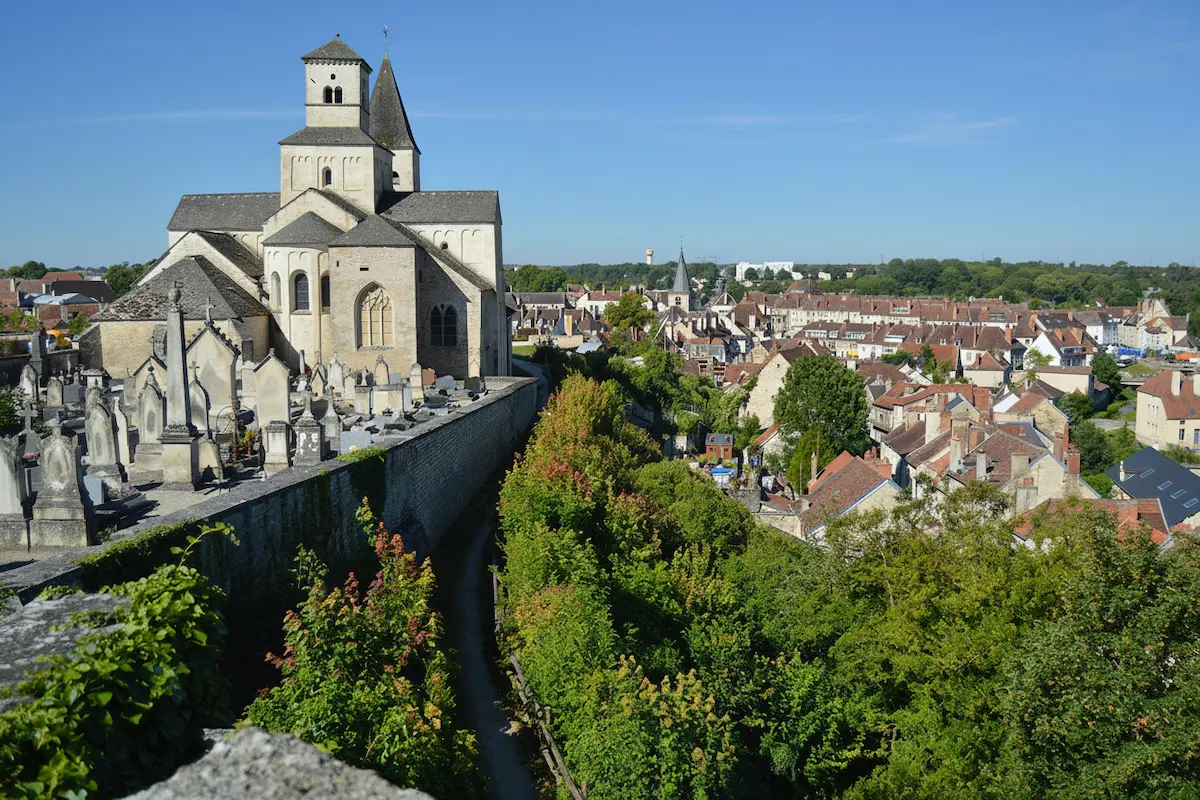


In short: Burgundy sorts its 84 appellations into four nested tiers, regional, village, premier cru, grand cru, all built on the vineyard’s base unit: the climat, a plot delimited by its soil and exposure. Shaped since the Middle Ages by monks and later fragmented by inheritance law, this system has been a UNESCO World Heritage site since 4 July 2015.
Unlike Bordeaux, which classifies estates, Burgundy classifies terroirs. A single family can own a few rows of vines in a grand cru and several hectares of regional appellation a few hundred metres away: it is not the name of the producer that sets the wine’s tier, but the exact plot it comes from. Understanding this pyramid explains why two bottles of the same grape from the same village can differ in price by a factor of 50.
Four tiers, a pyramid of increasing precision
Burgundy’s vineyard counts 84 appellations d’origine controlee: 7 regional, 44 village and 33 grand cru. The tighter the geography, the smaller the volume: regional appellations alone account for nearly 50% of production, villages around a third, premier crus roughly 10%, and grand crus barely 1.5 to 2%.
Regional appellations, the base of the vineyard
A regional appellation (bourgogne, bourgogne aligote, cremant de Bourgogne, bourgogne passetoutgrain…) can draw on grapes harvested across most of the Burgundy wine zone. It is the widest, most affordable entry point in the pyramid.
Villages, 44 communes that lend their name to the wine
A village appellation restricts the harvest to a single commune, or a small group of neighbouring communes: Gevrey-Chambertin, Meursault, Pommard. The grapes must come from plots within the commune’s boundaries and meet stricter specifications than regional wines.
Premier crus, 661 climats singled out without becoming their own appellation
The premier cru status was created by decree on 14 October 1943, during the Occupation. It does not create a new appellation: it singles out, within a village appellation, certain climats judged superior, whose name can then appear on the label alongside the commune’s. Burgundy now counts 662 of them across its 44 villages, with recent additions such as those granted to Pouilly-Fuissé in 2020.
Grand crus, 33 appellations on roughly 550 hectares
At the top, 33 grand cru appellations each form their own AOC, independent of the commune’s name: Chambertin, Montrachet, Corton, Clos de Vougeot. They split into 24 climats in the Côte de Nuits, 8 in the Côte de Beaune and 1 in Chablis (which actually groups 7 distinct climats under one appellation). Altogether, these exceptional plots cover roughly 550 to 560 hectares, a smaller area than many individual wine-growing communes.
The special case of Chablis
The one grand cru located outside the Côte-d’Or actually groups 7 climats on a single south-west-facing hillside above the town of Chablis in the Yonne: Blanchot, Bougros, Les Clos, Grenouilles, Preuses, Valmur and Vaudésir. They share the same grand cru appellation, an exception in a system where each grand cru usually corresponds to a single climat.
What is a climat?
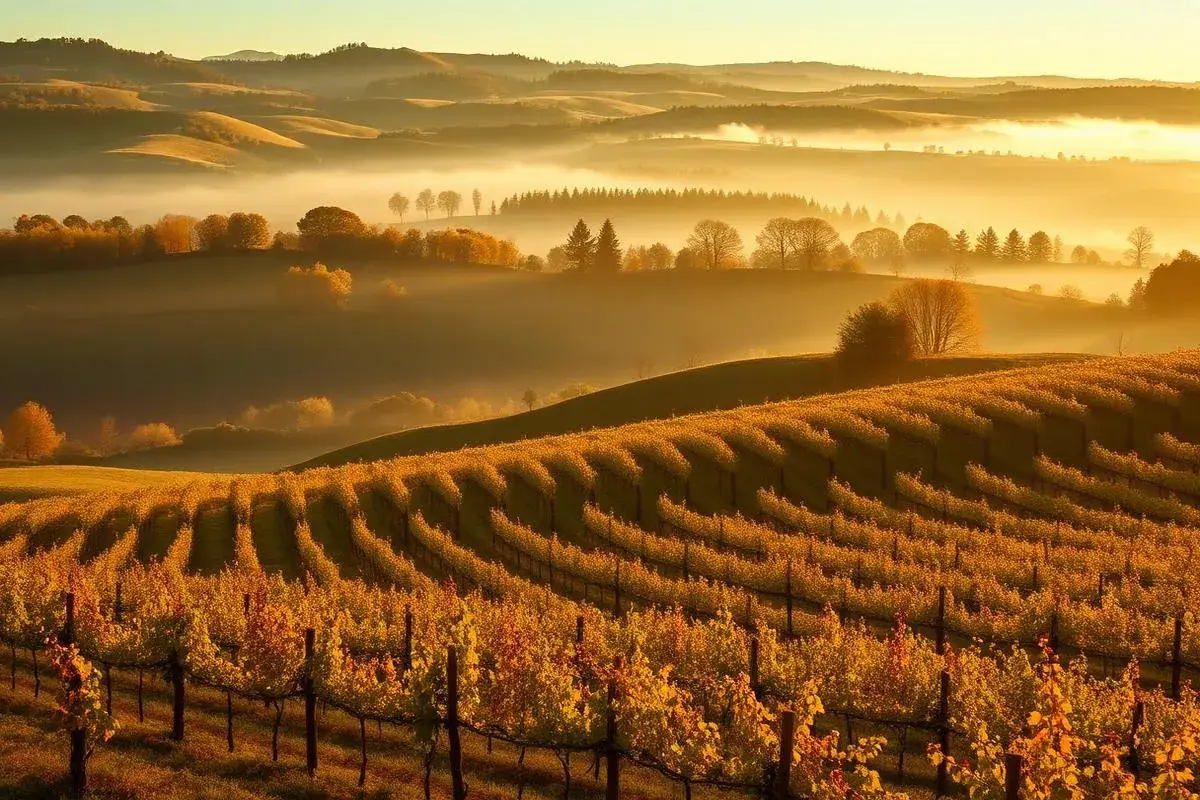
The word does not refer to weather but to a vineyard plot precisely delimited by its soil, slope and exposure, independent of the grape variety planted there. Burgundy counts around 1,247 of them, each carrying a name handed down over centuries, sometimes carved on a stone marker at the edge of the vines. Two neighbouring climats, separated by a simple wall or a path, can produce noticeably different wines and sit at different levels of the pyramid: this fine-grained variation, recognised over generations, structures the entire system.
A delimitation shaped over nine centuries
Monks, the vineyard’s first surveyors
Today’s parcelling has its roots in the work of monastic orders. Cistercian monks from the Abbey of Citeaux, founded in 1098, and Cluniac monks from the Abbey of Cluny, founded in 909, farmed the vineyard through a network of granges and observed, plot by plot, differences in soil and in the wine that resulted. This work produced landmark walled vineyards: the Clos de Beze, mentioned as early as the 7th century, the Clos de Vougeot in 1115, the Clos de Tart in 1141.
The Napoleonic land register and inheritance-driven fragmentation
The Napoleonic land register, drawn up between 1807 and 1861, fixed each plot’s boundaries on paper. Combined with French civil law’s requirement of equal inheritance among heirs, it drove a gradual fragmentation: a single historic climat was progressively split among several owners, each farming a few rows of vines. This phenomenon, the opposite of the Bordeaux model where the estate stays a single entity, directly explains the mosaic of small plots that defines Burgundy today.
The first written classifications, 1831-1861
Formal attempts at ranking appear in the 19th century: Dr Morelot published a first classification in 1831, followed by Jules Lavalle in 1855. Beaune’s agricultural committee then formalised this hierarchy in 1861 in its Plan statistique des vignobles produisant les grands vins de Bourgogne, a text that directly foreshadows today’s pyramid.
The UNESCO listing of 4 July 2015
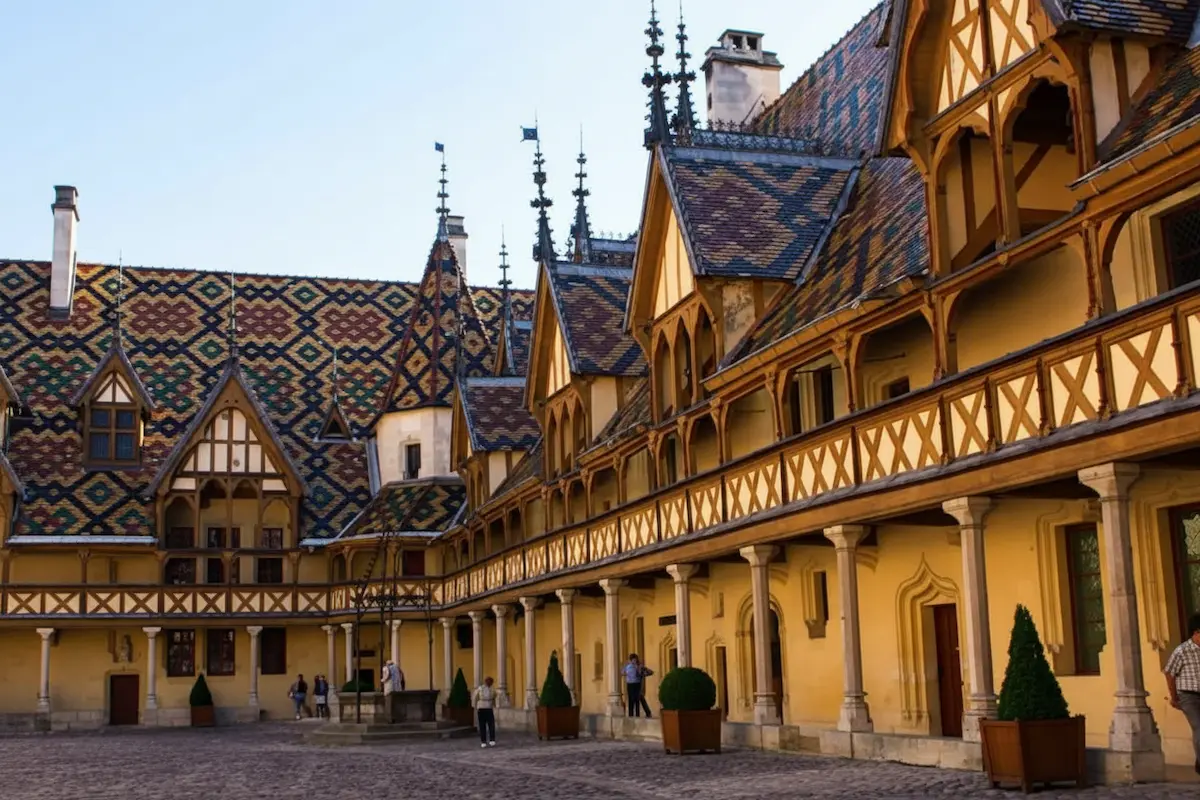
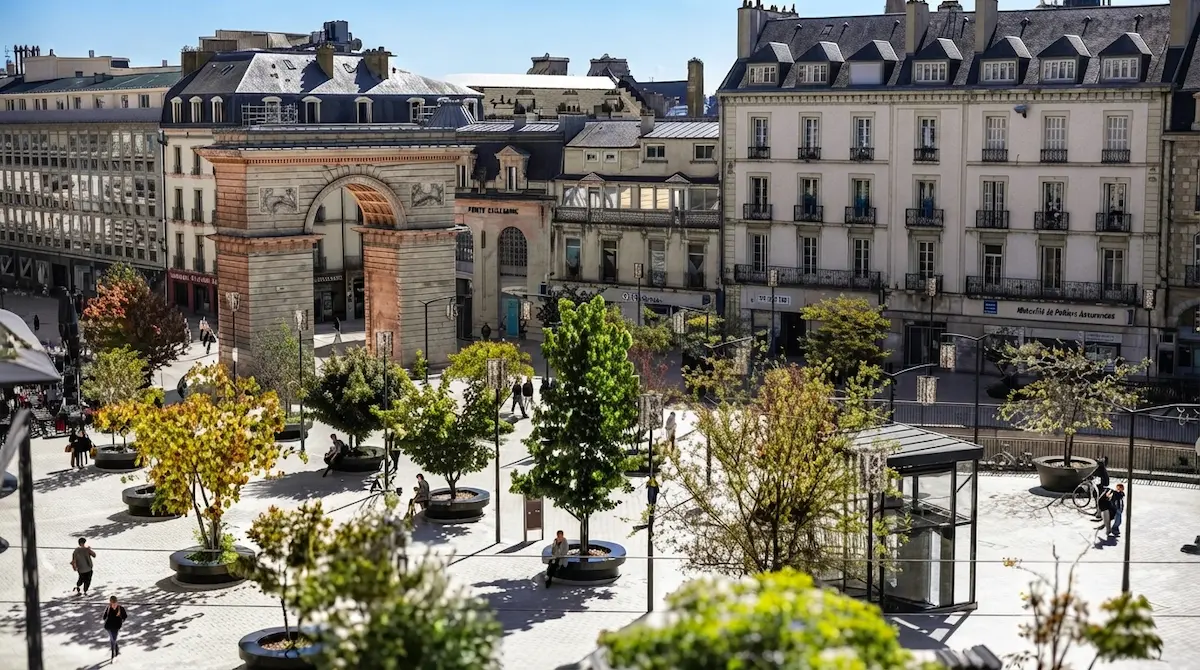
On 4 July 2015, at its 39th session held in Bonn, UNESCO’s World Heritage Committee inscribed “the Climats, terroirs of Burgundy” on the World Heritage List, in the cultural landscape category. The listed property covers 13,219 hectares, surrounded by a buffer zone of 50,011 hectares, across 104 communes stretching roughly 60 kilometres from Dijon to Saint-Sernin-du-Plain in Saône-et-Loire. The listing recognises two cultural criteria: an exceptional testimony to a winegrowing tradition (criterion iii) and an outstanding example of traditional land use (criterion v). It also covers the historic centres of Dijon and Beaune, towns that have organised and traded this production since the Middle Ages.
Reading a Burgundy label
Three clues are enough to place a bottle within the pyramid. A commune name alone (Meursault, Pommard) signals a village appellation. A commune name followed by a climat name in smaller print (Meursault Les Charmes) indicates a premier cru. A climat name standing alone, with no commune (Montrachet, Chambertin), signals a grand cru: the climat has become the appellation itself. This reading says nothing about price or style, but it pinpoints exactly where what is in the glass comes from.
Frequently asked questions
How many grand crus are there in Burgundy?
What is the difference between a climat and an appellation?
Since when has the premier cru status existed?
Why are Burgundy's climats UNESCO-listed rather than the wine itself?
Another question?
Write to usSources
- Vins de Bourgogne (BIVB) - Classification des appellations
- Prefecture de la Cote-d'Or - Les Climats du vignoble de Bourgogne inscrits au patrimoine mondial
- Wikipedia - Climats du vignoble de Bourgogne
- Wikipedia - Vignoble de Bourgogne
- Wikipedia - Premier cru (Bourgogne)
- Wikipedia - Grand cru de Bourgogne
- Vin Malin - Comprendre le classement des vins de Bourgogne
- INAO - L'AOC viticole