
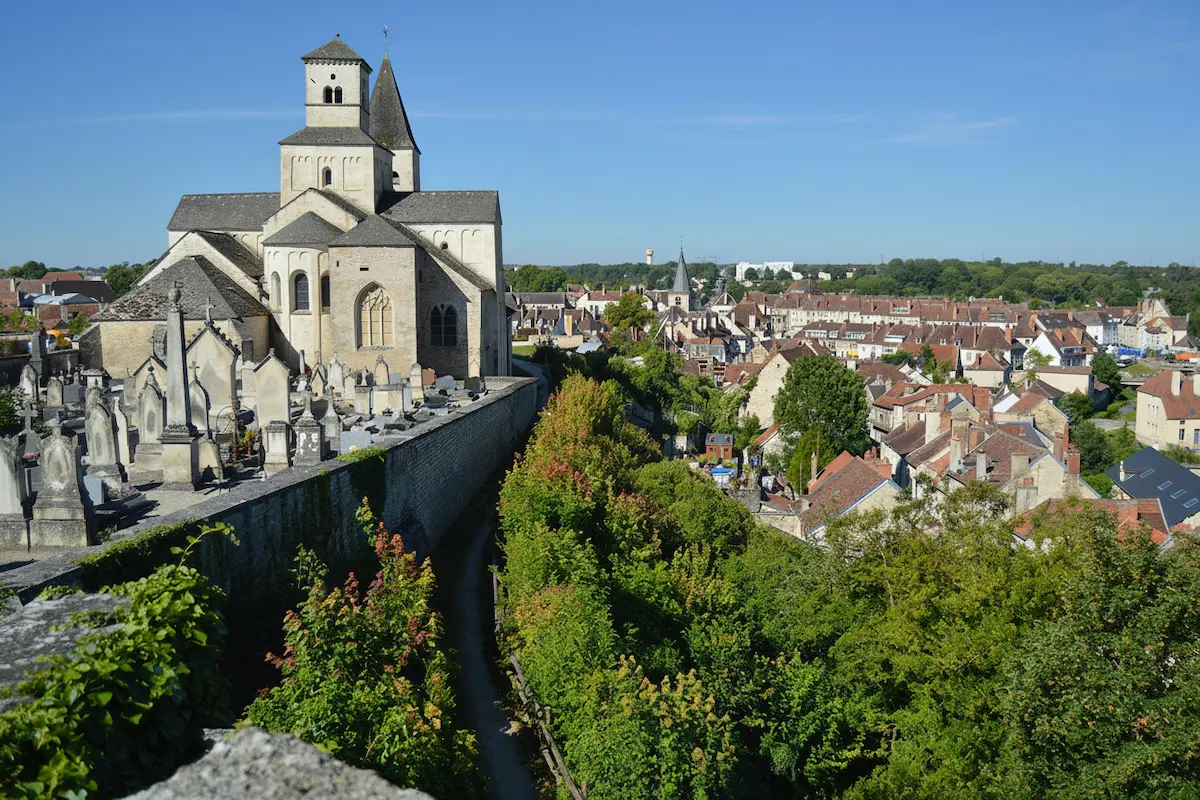


In short: the Côte-d’Or is one of the few French départements where you can spend four days eating and drinking without repeating an experience. Markets, cellars, starred restaurants, tasting workshops and producers: this gastronomic itinerary follows the Dijon–Beaune loop with detours through vineyard villages, favouring addresses and products that tell the story of the place.
Burgundian gastronomy is not tourist folklore: it is terroir cooking shaped by centuries of wine and farming tradition. Every dish has a story: œufs en meurette were born of the need to use wine that would not sell, Époisses AOP is a cheese ripened in marc de Bourgogne, and bœuf bourguignon, once a peasant dish, has become the region’s culinary ambassador. This itinerary is designed to understand and taste that chain, from producer to plate.
Day 1: Dijon, gastronomic capital
Morning: the Halles market
the Halles market, details
A gastronomic itinerary in the Côte-d’Or begins at the Halles centrales de Dijon, the city’s belly since 1875. The market runs Tuesday, Thursday, Friday and Saturday from 7 am to 1 pm; Saturday is the busiest day, with the largest turnout of producers. Take time to walk the stalls and note Burgundy’s signature products: jambon persillé in jelly, escargot de Bourgogne with parsley butter, Charolais beef (marbled and tender), soft washed-rind cheeses (Époisses, Soumaintrain, Ami du Chambertin) and seasonal fruit.
Stop at least at a cheesemonger and a charcutier to build your lunch picnic. Most traders sell by the cut and gladly advise on food-and-wine pairings.
Late morning: Dijon mustard workshop
A 10-minute walk from the Halles, Moutarderie Fallot (8 rue de la Chouette) is the last great family mustard works in Burgundy. Founded in 1840, its shop-workshop offers a Dijon mustard-making workshop (by booking, about 1 hour): a master mustard-maker explains the process, from mustard seed to jar. The tasting at the end lets you compare styles: wholegrain, verjuice, herbs, blackcurrant. The shop sells the full range.
Lunch: traditional Burgundy in the centre
For a first 100% Burgundian lunch, choose a bistro on Rue des Godrans or Place François-Rude. Order a shared starter selection: oeufs en meurette, jambon persillé, escargots de Bourgogne. Accompany with a glass of Crémant de Bourgogne as an aperitif, then a Bourgogne Aligoté (dry white) or a Bourgogne Passetoutgrains (light red). Avoid the grands crus for lunch, the day is only beginning.
Afternoon: Cité de la gastronomie
The afternoon at the Cité internationale de la gastronomie et du vin is devoted to understanding taste. The permanent trail explores the five senses and their role in tasting, with interactive workshops on wine, bread, chocolate and spices. The Cité shop offers a sharp selection of regional products, including some you will not find on classic tourist circuits. Allow 2 hours for the visit.
Evening: dinner in Dijon
Dinner is the moment for a more ambitious table. Dijon has several good addresses: La Dame d’Aquitaine (place Bossuet), housed in a former medieval crypt with Gothic vaults; William Frachot (2 Michelin stars, at the Hostellerie du Chapeau Rouge) for an exceptional table; or L’Aspérule (1 star) for a contemporary take on Burgundian terroir. Book at least a week ahead for Saturday dinner.
Day 2: from Dijon to Beaune via the Côte de Nuits
Morning: Route des Grands Crus and tastings
Leave Dijon for a morning of tastings on the Côte de Nuits. First stop at Gevrey-Chambertin (14 km, 20 minutes by road) for a tasting at a wine merchant or domaine. Château de Gevrey-Chambertin offers visits with guided tasting of its appellations, from village to Grand Cru. Allow 1 hour.
Second stop at Morey-Saint-Denis or Chambolle-Musigny for a comparative tasting: try a Premier Cru from each village to grasp the style difference between Morey (structured, tannic) and Chambolle (elegant, silky).
Lunch: Nuits-Saint-Georges
Lunch in Nuits-Saint-Georges, where several addresses serve traditional Burgundian cooking. Le Grenier à Sel serves reasonably priced menus (€20–40), with fine Burgundian wine lists.
Afternoon: Beaune cellars
Afternoon in Beaune for a series of cellar tastings. Caveau Nuiton-Beaunoy offers a free tasting of a selection from the Côte de Beaune and Côte de Nuits, representing 80 growers. Caves Patriarche (5 km of galleries) offer a self-guided tasting of 10 wines. If you prefer a more guided experience, Cave d’Élisée offers three formulas: Premiers Éclats (3 wines, 30 min, €13), éveil des 5 Côtes (6 wines, 1 h, €25) and secrets des Climats (6 wines including a Grand Cru, 1 h).
Evening: dinner in Beaune
Beaune has the highest density of gastronomic restaurants in the Côte-d’Or. Options include: Ma Cuisine (passage Sainte-Hélène), famous for its bœuf bourguignon and cellar of more than 20,000 bottles (closed on Sunday); Soul Kitchen (1 rue Rousseau-Deslandes), noted by the Michelin Guide, seasonal cooking in a small setting; Maison Jules (28 place Carnot), local brasserie open 7 days a week. For a starred table, Le Bénaton (1 Michelin star); for a more relaxed lunch, Loiseau des Vignes (31 rue Maufoux).
Day 3: producers, markets and Côte de Beaune
Morning: Beaune market
If day 3 falls on a Saturday, Beaune market is essential. About 180 traders fill Place de la Halle and nearby streets from 8 am to midday. Meet local producers: an Époisses affineur, a jambon persillé specialist, an organic grower from the Saône plain. Do not leave without a piece of Époisses AOP and one or two bottles from a grower.
Late morning: Meursault and the white wines
Ten minutes from Beaune, Meursault is the capital of Burgundy Chardonnay. Château de Meursault (visit with tasting, by appointment) offers a full approach to its Premiers Crus. For something more informal, several domaines in the village welcome walk-ins for a standing tasting. The day’s exercise: compare a Meursault Premier Cru (Les Perrières, mineral) with a Puligny-Montrachet (taut, citrus) and a Chassagne-Montrachet (round, generous) to understand the Côte de Beaune Chardonnay palette.
Lunch: Puligny-Montrachet
Lunch in Puligny-Montrachet, where restaurant Le Montrachet offers reinvented Burgundian cooking with a wine list covering the whole Côte de Beaune. Prices are high (allow €60–80 per person) but quality matches.
Afternoon: cheese dairy and return
In the afternoon, head for the Berthaut cheese dairy at Époisses (about an hour’s drive north of Beaune, in the Auxois) for a tasting of the famous AOP cheese, if time allows. Otherwise, return to Beaune via the village road (Pommard, Volnay, Monthélie) for last-minute purchases from producers.
Evening: starred gastronomic dinner
The last evening deserves an exceptional table. Relais Bernard Loiseau (Saulieu, 2 Michelin stars, about an hour’s drive from Beaune) or Le Bénaton (1 star, Beaune) are the obvious choices. Book several weeks ahead, especially for Saturday dinner.
Day 4: taste workshops and tasting cellar
Morning: Burgundian cooking workshop
On the last day, join a Burgundian cooking workshop. The Cité de la gastronomie offers thematic cookery courses (bœuf bourguignon, œufs en meurette, pain d’épices) led by a professional chef. Equipment and ingredients are provided, and you leave with what you cooked. Prices and booking on the Cité’s website.
Lunch: final tasting and farewell
Last lunch on Place Carnot in Beaune, or a farewell picnic with products bought during the stay. Before leaving, a final stop at a wine merchant for bottles to take home: Château de Beaune (Bouchard Père & Fils house) or Cave des Cordeliers offer selections from all Côte-d’Or appellations, with sound buying advice.
Estimated budget for 4 gastronomic days
In the full version (two starred dinners, at least two cellar tastings a day): accommodation €100–150 × 3 nights, meals €80–120 × 4, tastings €30–50, cooking workshop, product purchases €50–100. Total: between €760 and €1,140 per person. In the bistro-and-market version: allow €350–500 per person.
Frequently asked questions
What budget should you allow for a gastronomic itinerary in the Côte-d'Or?
What is the best time of year for this itinerary?
Do you need to book starred restaurants well in advance?
Another question?
Write to usSources
- Michelin Guide - Dijon and Beaune restaurants
- Cité internationale de la gastronomie et du vin - Dijon
- Wikipedia - Burgundian cuisine
- Moutarderie Fallot - Visit and workshop
- Bureau interprofessionnel des vins de Bourgogne
- Wikipedia - Époisses (cheese)
- Beaune Tourisme - Gastronomy
- Dijon Tourisme - Gastronomy and markets
- Wikipedia - Boeuf bourguignon
- Wikipedia - Escargots de Bourgogne
- La Côte d'Or J'adore - local producers
- Wikipedia - Crémant de Bourgogne