
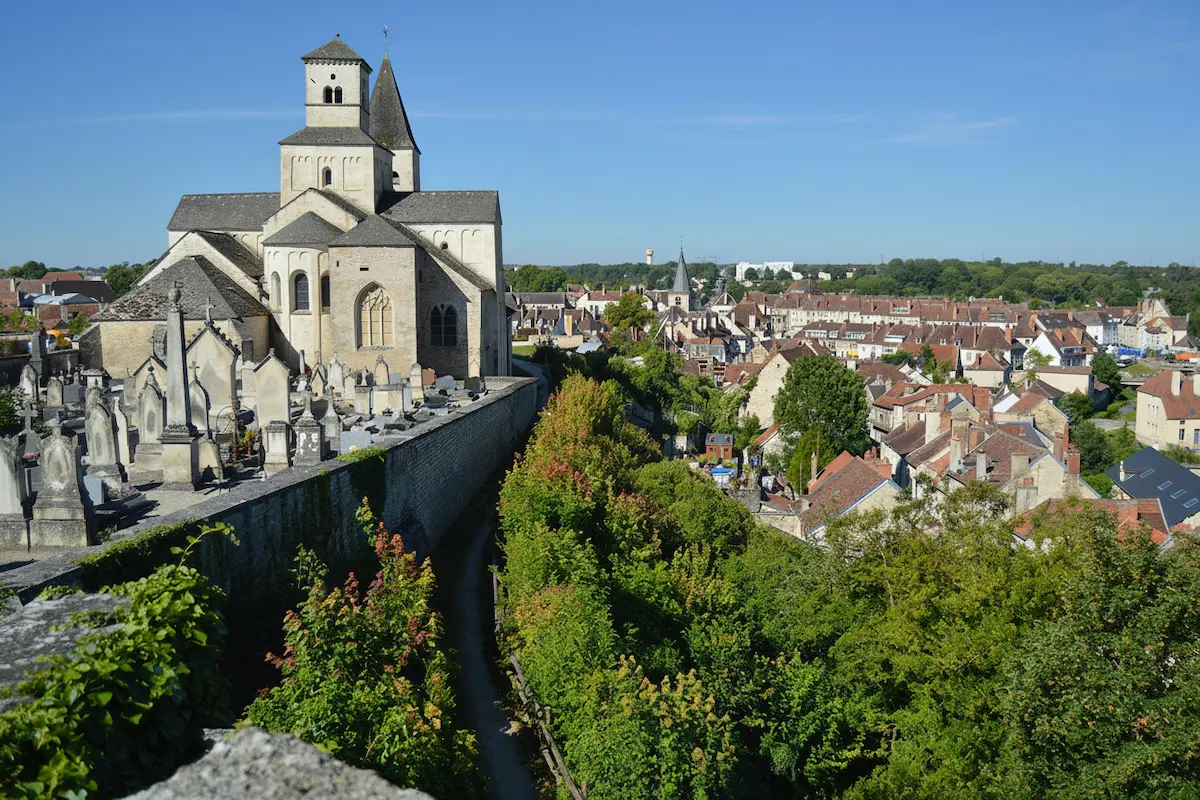


In short: the Côte de Nuits is the northern stretch of the Route des Grands Crus, the one that concentrates 24 of Burgundy’s 33 grands crus. It runs for 25 km from Marsannay-la-Côte to Nuits-Saint-Georges. This day takes you through 8 legendary villages, with tasting stops at some of the most prestigious domaines.
The Côte de Nuits produces Burgundy’s greatest red wines, exclusively from Pinot Noir. Each village has its character: Gevrey for power, Chambolle for finesse, Vosne for perfect balance. This itinerary takes you from north to south, with the right addresses.
Marsannay (9–10 am): the golden gateway
Marsannay-la-Côte is the village closest to Dijon and the only one to produce all three colours (rosé, red, white) at village appellation level. The gateway to the Côte.
Tasting
Tasting, key points
Book a family domaine, allow 30–45 minutes. Ask for Marsannay rosé, a rarity in Burgundy.
Fixin (10:15–11 am): the discreet one
Fixin is Gevrey’s lesser-known neighbour, with premiers crus still at reasonable prices. The village holds the Napoléon monument (Noisot) and the Parc de la Combe aux Fées.
Tasting
30 minutes. Compare a Fixin village with a Fixin 1er Cru (Clos du Chapitre or Clos Napoléon).
Gevrey-Chambertin (11:15 am–12:30 pm): the king
Gevrey-Chambertin is the largest wine village on the Côte de Nuits, with 9 grands crus including Chambertin, Napoleon’s favourite wine. The village is lively, with cellars, restaurants and a fine Romanesque church.
Tasting
Book a reputable domaine (1 h). Taste a Gevrey village, a 1er Cru and if possible a grand cru to understand the hierarchy.
Lunch: table in Gevrey or picnic in the Parc de la Combe aux Fées.
Morey-Saint-Denis (2–2:30 pm): the link
Small village between Gevrey and Chambolle, with 5 grands crus (Clos de la Roche, Clos Saint-Denis). Less touristy, authentic welcome.
Chambolle-Musigny (2:45–3:30 pm): the silk
Chambolle wines are renowned for their finesse and aerial elegance. The grand cru Musigny is one of Burgundy’s most expensive.
Vosne-Romanée (3:45–4:45 pm): the peak
Burgundy’s most prestigious village, with 6 grands crus including Romanée-Conti, the world’s most expensive wine. Domaines are more closed than elsewhere, but a tasting at a family domaine remains possible.
Nuits-Saint-Georges (5–6 pm): the bastion
Last stop on the Côte de Nuits, Nuits is a lively small town with a fine bell tower, the Cassissium (blackcurrant museum) and many cellars.
Aperitif
A kir with Nuits blackcurrant liqueur, to finish the day in style.
Organising tastings without turning the day into a marathon
The trap is wanting to enter every cellar. Over 25 kilometres, you can easily do six tastings, but that is neither pleasant nor sensible if you are driving. Two prepared appointments, perhaps one very short stop at a village cellar, are plenty. Keep time to walk between the rows, read the climat signs and pause in the villages.
Building a realistic route
Choose one domaine in the morning at Marsannay, Fixin or Gevrey, then another in the afternoon towards Chambolle, Vosne or Nuits. Write a week ahead, especially Thursday to Saturday and during harvest. State the number of people, preferred language, transport and level of knowledge. Domaines respond better to a precise request than to “can we drop by?”.
Allow generally €15 to €30 per person for a guided tasting of four to six wines. Some deduct this on purchase, others do not. Larger houses sometimes offer regular slots; small properties often work on demand and close during cellar work. A confirmed appointment is therefore preferable, even when the sign says “dégustation”.
If you are driving
Tasting does not mean swallowing every glass. The spittoon is part of the kit, including at the most prestigious domaines: use it without embarrassment and keep a bottle of water in the car. Designate a driver, alternate glasses or book a local chauffeur for the afternoon. A bike suits a ride, less so a string of tastings; the verges of the D974 are not where you improvise a return.
Where to take a real break
Gevrey-Chambertin and Nuits-Saint-Georges are the two simplest lunch stops. In Gevrey, book on Saturday: tables are few and fine-weather weekends draw crowds. In Nuits, a lunch set often runs around €20 to €35; more gastronomic addresses need more notice. Between the two, a picnic is a good option, but avoid settling in the vines: these are working parcels, sometimes treated or in full activity.
Reading the landscape of the climats
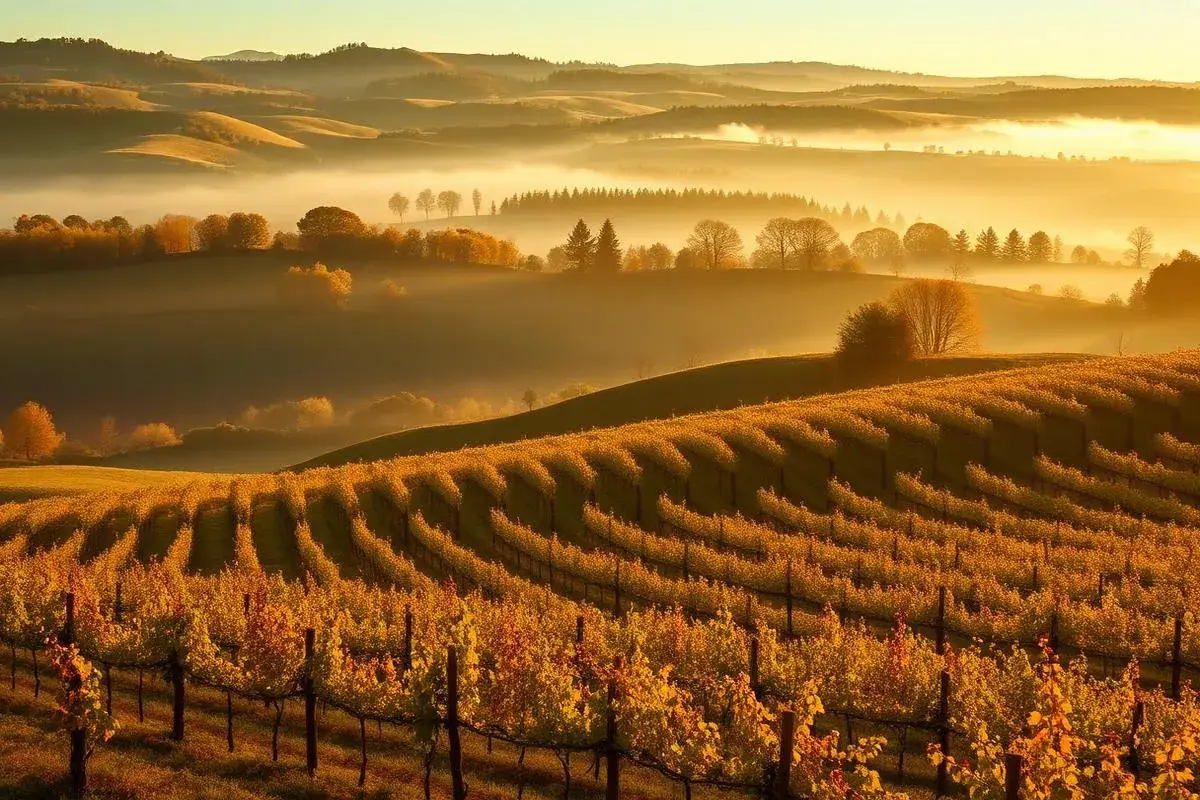
The Côte de Nuits is not understood only in a glass. From the road, the band of vines looks continuous; in reality it is cut into lieux-dits, dry-stone walls, combes and tiny slopes. Here “climat” means a precisely named parcel, with its soil, aspect and history, not the weather. Signs at village entrances are a good starting point, but a Climats map makes the whole far more readable.
Three stops on foot
In Marsannay, climb towards the combes for views of Dijon and the Saône plain. In Gevrey, the walk by Château de Gevrey and the paths at the edge of the grands crus give a fine reading of the hillside. In Vosne-Romanée, stay on public ways: famous names appear on signs, but the rows are not a backdrop to trample. Fifteen to twenty minutes’ walking after each car hop truly changes the day’s rhythm.
At harvest time
From late August to October depending on the year, villages are busy from dawn. Tractors, trailers and picking teams have priority; park without blocking winery access. Many domaines limit visits at this time. In return, the smell of grapes in the streets and visible work in the courtyards give the road an atmosphere found nowhere else in the year.
Coming without a car
The simplest solution is the TER Dijon–Nuits-Saint-Georges, then a bike hired in Dijon or around Nuits. The Voie des Vignes links the villages at a calm pace, but plan the battery of an electric bike: the route is generally gentle, with detours and returns that add up. Check the last TER time before you start; they vary by day and season.
You can also sleep in Dijon and book an excursion with transport, or take a taxi to link a booked tasting to Gevrey-Chambertin or Nuits-Saint-Georges station. That option costs more, but it avoids limiting the day to one sip per stop. For a first visit, three villages well lived beat eight names ticked too quickly.
Frequently asked questions
Do you need to book tastings on the Côte de Nuits?
Can you do the Côte de Nuits by bike?
Another question?
Write to usSources