
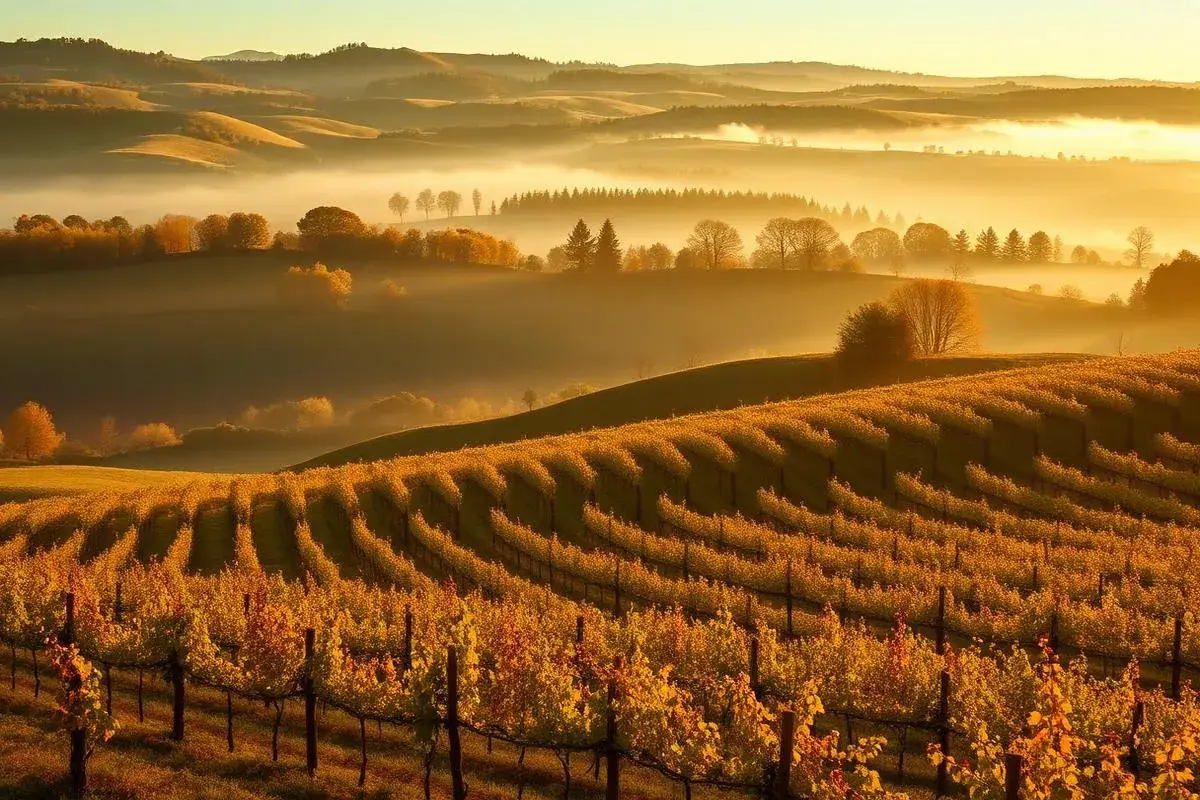
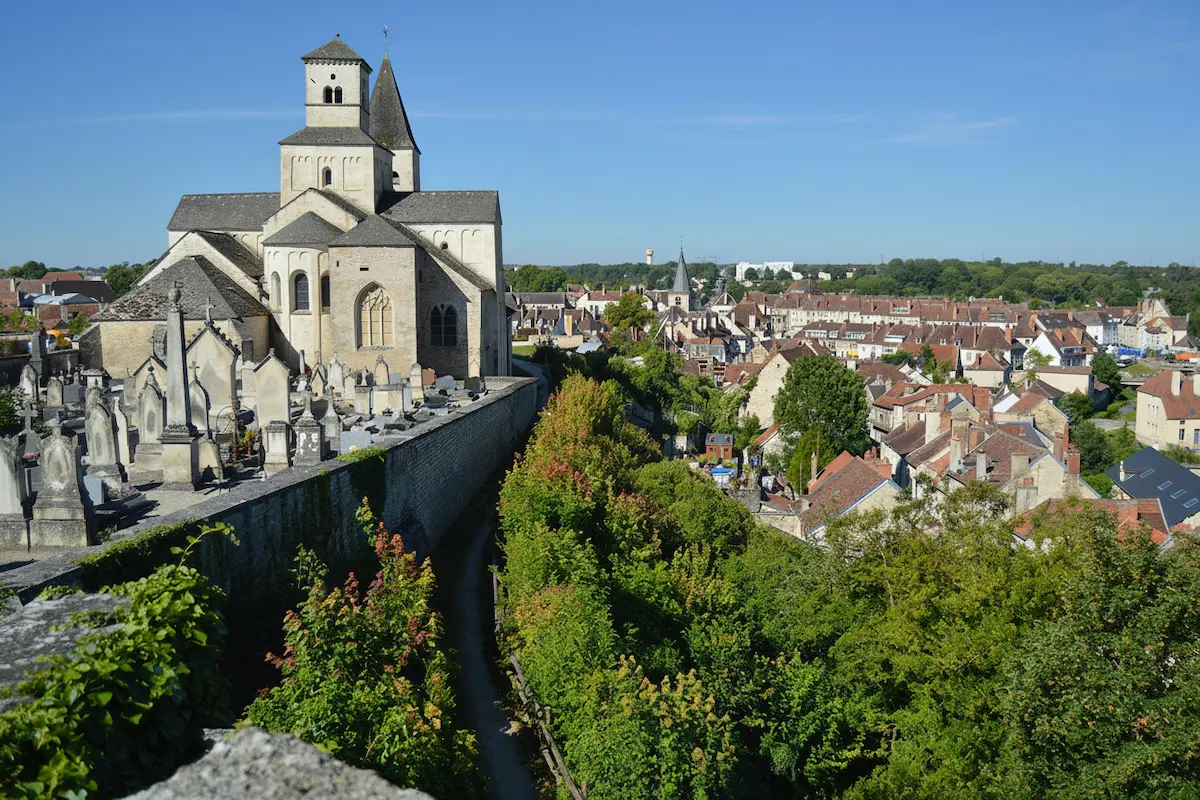


In short: 60 kilometres, 37 villages, 32 of Burgundy’s 33 Grands Crus and brown signage with a white grape cluster, in place since the middle of the 20th century. The Route des Grands Crus links Dijon to Santenay through Burgundy’s most prestigious vineyard, listed as a UNESCO World Heritage Site. This 3-day itinerary lets you travel it without rushing, with time to taste, visit domaines and stay in the heart of the wine villages.
Created in 1937, the Route des Grands Crus is France’s oldest wine route. It crosses the Côte de Nuits to the north and the Côte de Beaune to the south, two distinct wine entities that share the same wine culture and the same exceptional density of grands crus. By car, the route takes about an hour without stopping. But the point is not to cross it: it is to stop, go down into the cellars, wander the villages and understand what makes each climat specific.
Day 1: from Dijon to Nuits-Saint-Georges
Leaving Dijon (morning)
Leaving Dijon (morning), details
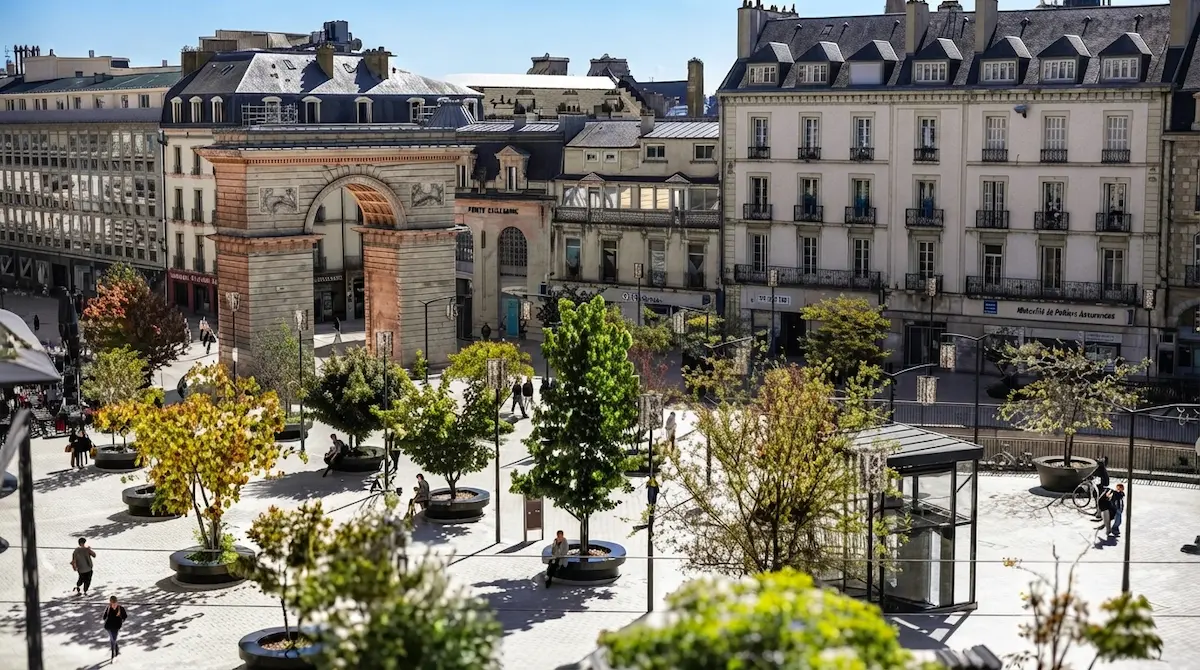
The itinerary begins in Dijon, the natural gateway to the Route des Grands Crus. From the centre, head south on the D974 (former national road 74), which runs along the foot of the Côte de Nuits. As soon as you leave Dijon, the first vines appear at Marsannay-la-Côte, first wine village of the Côte de Nuits and producer of the only communal Burgundy appellation allowed to vinify rosé (Marsannay rosé). 6 km from Dijon centre, it is the first possible stop for a morning tasting: several Marsannay domaines open without appointment for a tasting of their three colours (white, red, rosé).
Fixin and Gevrey-Chambertin (late morning)
10 km from Dijon, Fixin holds the Château de la Perrière and its park, as well as the musée Noisot, dedicated to the grenadiers of the Empire. A short but useful stop to understand the region’s peasant and wine context, far from the glamorous image of the grands crus.
Things get serious at Gevrey-Chambertin, 15 km from Dijon, one of the most prestigious villages on the Côte de Nuits. Nine Grands Crus carry the Gevrey-Chambertin name, including the legendary Chambertin, favourite wine of Napoleon I, who is said to have had it served at his table during his campaigns. The village tourist office offers a circuit of cellars and domaines, with an updated list of producers who accept visits without booking. The Château de Gevrey-Chambertin (13th–16th century) dominates the village and its vines.
Morey-Saint-Denis and Chambolle-Musigny (lunch)
5 km south, Morey-Saint-Denis produces five Grands Crus (including Clos de Tart, Clos de la Roche, Clos Saint-Denis) on a modest surface, giving it one of Burgundy’s highest Grand Cru densities. The village is quiet, without heavy tourist infrastructure, which makes it a pleasant lunch stop.
Across the D974, Chambolle-Musigny is renowned for its elegant, fine red wines. The village is built as an amphitheatre at the foot of the cliff, with narrow lanes climbing towards the vines of Musigny and Bonnes-Mares. A 45-minute stroll through Chambolle’s lanes, between stone walls and vaulted cellars, offers a glimpse of what a Burgundian wine village was before mass tourism.
Vougeot and Nuits-Saint-Georges (afternoon)
The Château du Clos de Vougeot, 3 km south of Chambolle, is the most emblematic monument on the Route des Grands Crus. Built in the 12th century by the Cistercian monks of Cîteaux Abbey, the château was used to vinify the 50 hectares of the clos, one of Burgundy’s largest estates. It now houses the headquarters of the Confrérie des Chevaliers du Tastevin. The visit (about 1 hour) covers the 12th-century presses, the vats and the guard room. Note: the château is often packed in high season, arriving before 2 pm helps avoid the crowds.
End this first day in Nuits-Saint-Georges, 7 km from Clos de Vougeot, capital of the Côte de Nuits. The town, though less touristy than Beaune, has several renowned cellars: the cellars of the Hospices de Nuits-Saint-Georges (founded in the 17th century) and those of Domaine Faiveley, rue du Tribourg, which can be visited by appointment. The town centre deserves a stroll around the church of Saint-Symphorien (13th century) and the belfry, in the heart of the old town. The town makes an ideal base for the first night.
Distance covered on day 1: about 25 km. Suggested accommodation: hotel or B&B in Nuits-Saint-Georges, Premeaux-Prissey or Comblanchien.
Day 2: from Nuits-Saint-Georges to Beaune
Morning: Aloxe-Corton and the Grand Cru Corton-Charlemagne
The second day begins by crossing the southern part of the Côte de Nuits. 12 km from Nuits-Saint-Georges, Aloxe-Corton is dominated by the hill of Corton, the only Burgundy Grand Cru appellation that produces both red and white wines. Corton-Charlemagne (white) takes its name from Emperor Charlemagne, who is said to have owned vines on this hillside and ordered Chardonnay planted so as not to stain his beard drinking red wine. The Pierre de Corton, an orientation table on the hill of Corton, offers a rare panorama over the Côte de Beaune and the Saône plain.
Beaune (lunch and afternoon)
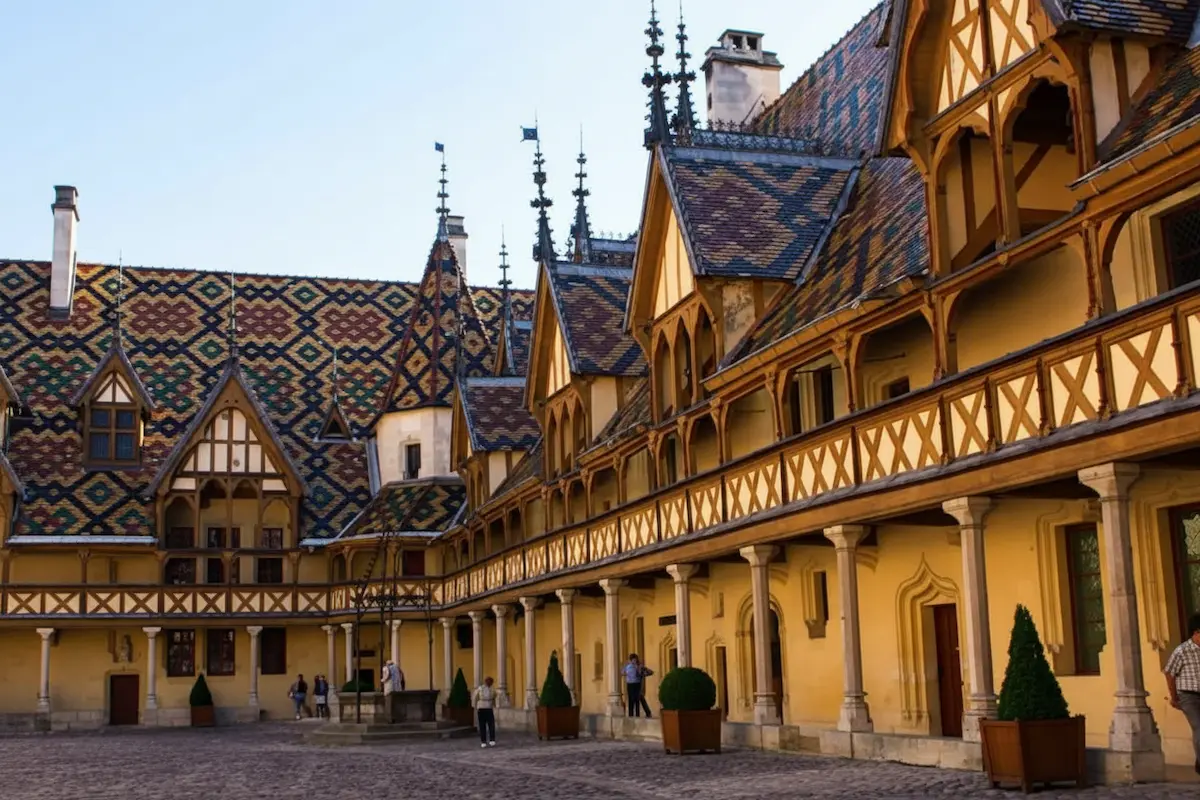
6 km from Aloxe-Corton, Beaune is the high point of the itinerary. Devote the whole afternoon to the town and its cellars. On the morning of day two, you can visit the Hospices de Beaune (see the dedicated page), stroll the Saturday market if you are there, or choose among the many cellars in the centre.
For tastings, several options:
- Cave d’Élisée offers guided tastings of 3 to 6 wines, from 30 minutes to 1 hour.
- Caveau Nuiton-Beaunoy represents 80 growers from the Côte de Beaune and Côte de Nuits, with free tastings.
- Caves Patriarche offer a self-guided trail with tasting of 10 wines in more than 5 km of galleries.
- Maison Champy, founded in 1720 and one of Burgundy’s oldest négociant houses, offers a tasting of 5 wines in its historic cellars.
For lunch, Place Carnot and Rue de l’Hôtel-Dieu concentrate the best addresses, from traditional bistro to starred table.
Distance covered on day 2: about 20 km. Suggested accommodation: hotel or B&B in Beaune or nearby wine villages (Pommard, Volnay, Meursault).
Day 3: from Beaune to Santenay
Morning: the southern Côte de Beaune
The last day explores the southern Côte de Beaune, from Pommard to Santenay. 3 km from Beaune, Pommard is renowned for its structured red wines, among Burgundy’s most tannic. Château de Pommard (18th century) offers guided visits of its cellars and park.
Continue to Volnay (2 km), whose wines are by contrast renowned for finesse and elegance. The village itself, perched on a ledge, offers a clear view over the Saône plain.
The morning’s star is Meursault (3 km from Volnay), a world reference for Chardonnay. The village produces some of the planet’s greatest white wines, with no official Grand Cru but a constellation of Premiers Crus (Les Perrières, Les Genevrières, Les Charmes) that sell at Grand Cru prices. Château de Meursault, with its vaulted cellars dug in the Cistercian style (12th–16th centuries), is an essential stop for a tasting of Burgundy’s greatest whites.
Lunch: Puligny-Montrachet and Chassagne-Montrachet
4 km from Meursault, the duo Puligny-Montrachet and Chassagne-Montrachet share the world’s most prestigious white-wine appellation: Montrachet, produced on barely 8 hectares. Understanding the difference between a Puligny (mineral, taut) and a Chassagne (round, generous) is one of the best tasting exercises on the route. Several domaines in both villages offer tastings by appointment, but it is simpler to go through a local wine merchant for a comparative approach.
Afternoon: Santenay and arrival
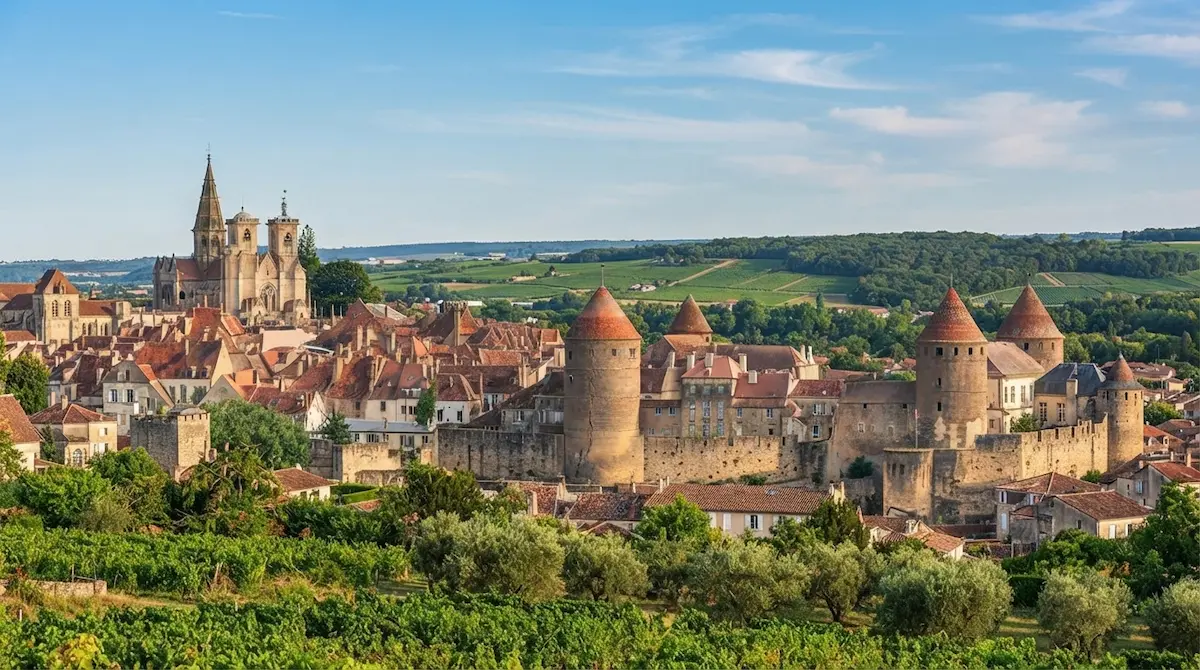
The last kilometres lead to Santenay, 4 km from Chassagne-Montrachet, the final point of the Route des Grands Crus. Santenay is also the start of the Voie des Vignes bike section that reaches Nolay on a former railway. The village is dominated by Château de Santenay, a medieval fortress with glazed tiles, whose vaulted cellars can be visited. Santenay’s spa, with its casino and park, adds an unexpected spa dimension to this wine stop.
Beyond Santenay, the road continues into Saône-et-Loire as far as Chagny and Mercurey, but for a 3-day Côte-d’Or itinerary, Santenay is the natural end of the loop: time to head back to Dijon (60 km, 45 minutes by road) or take the train from Chagny station for a car-free return.
Where to stay on the Route des Grands Crus
Accommodation is one of the sensitive points of this itinerary: the best addresses book early, especially in spring, autumn and during major wine weekends. A few options by stage:
- Nuits-Saint-Georges: a choice of hotels and B&Bs in the town centre, to book early in season.
- Beaune: the widest choice, from charming hotels to B&Bs in the heart of town.
- Meursault or Pommard: B&Bs in the heart of the vineyard, to book very early, our guide to wine-domain accommodation lists addresses at winemakers’ homes.
Estimated budget for 3 days on the Route des Grands Crus
Per person, in low season: accommodation, €90 to €150 per night; meals with wine, €60 to €100 per day; tastings, €20 to €50 per day (allow €15 to €25 per tasting at renowned cellars); fuel or transport, €15 per day. Total: between €400 and €700 depending on the standing of accommodation and restaurants.
Frequently asked questions
Can you do the Route des Grands Crus without a car?
Do you need to book tastings in advance?
What is the best time of year for this itinerary?
Another question?
Write to usSources
- Route des Grands Crus - official site
- Bureau interprofessionnel des vins de Bourgogne (BIVB)
- UNESCO - Climats of Burgundy, World Heritage List
- Beaune Tourisme - Route des Grands Crus
- Wikipedia - Route des Grands Crus
- Wikipedia - Côte de Nuits
- Wikipedia - Côte de Beaune
- Château du Clos de Vougeot
- Ville de Nuits-Saint-Georges - Tourist office
- Côte-d'Or Tourisme - Route des Grands Crus
- Les Climats du vignoble de Bourgogne - UNESCO heritage