
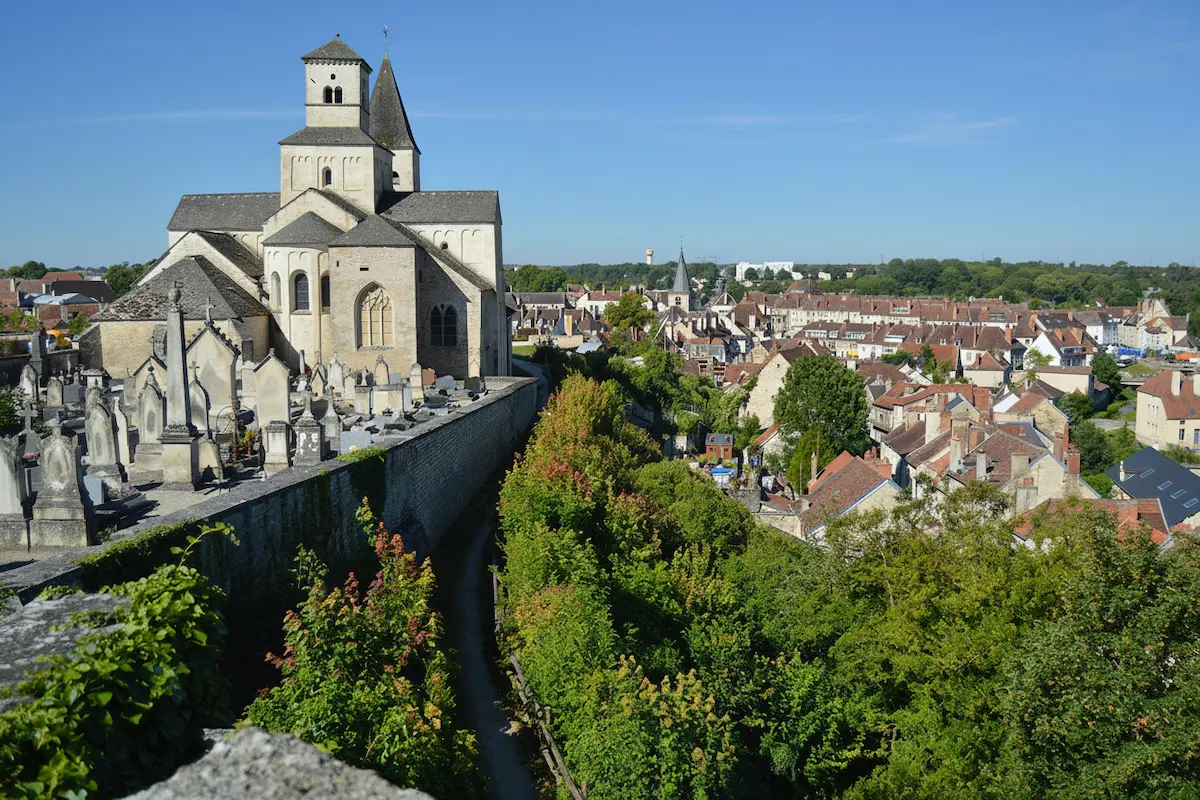


In brief: Marsannay-la-Côte, 6 km south-west of Dijon, is the gateway to the Route des Grands Crus and the only village appellation in Burgundy authorised to produce red, white and rosé AOP wines. The vineyard covers 302 hectares across three communes, yielding around 1.3 million bottles per year.
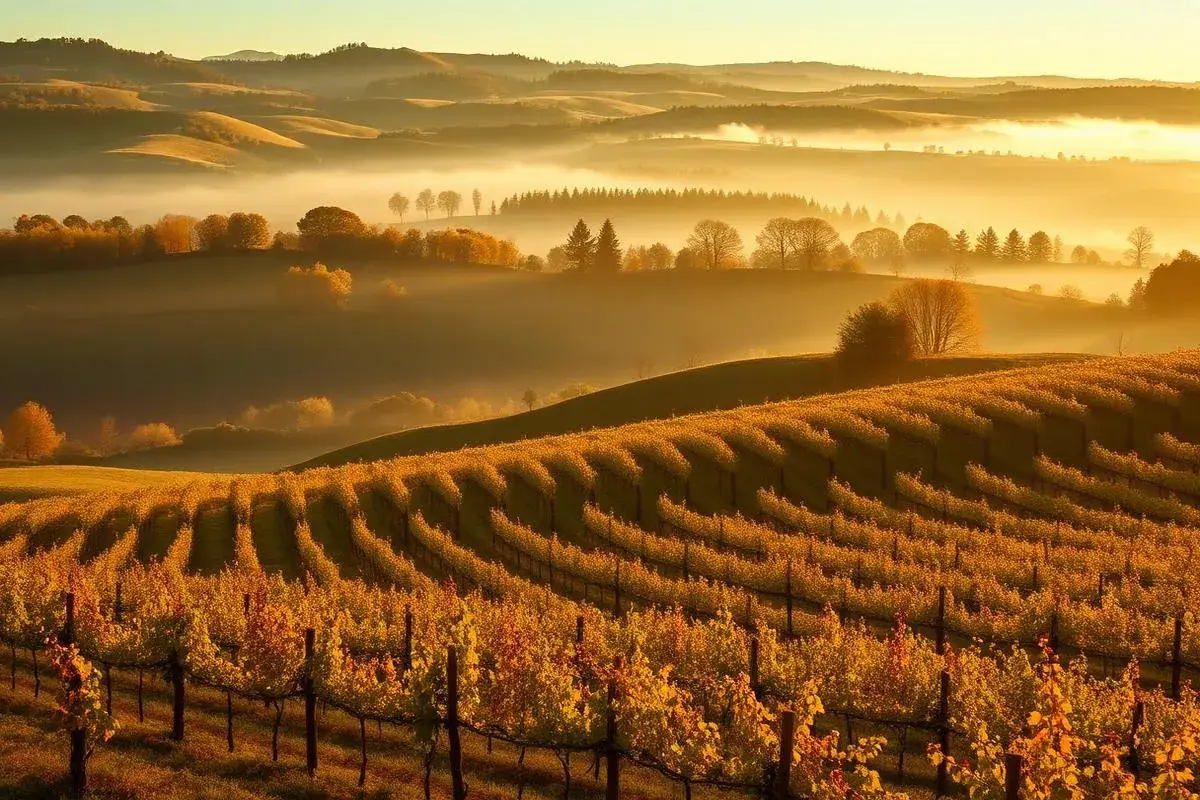
At Marsannay-la-Côte, the vines reach right up to the village. The first plots border the houses, and from the main road coming from Dijon, the eye sweeps across an amphitheatre of hillsides planted with Pinot Noir and Chardonnay. It is the first winegrowing commune you encounter when leaving Dijon to the south, and the logical first stop on the Route des Grands Crus before plunging towards Gevrey-Chambertin and the Côte de Nuits.
What sets Marsannay apart from every other village appellation in Burgundy is its rosé. Not a regional rosé labelled simply “Bourgogne Rosé”, but a village-appellation rosé with its own name on the label: Marsannay Rosé. No other village in Burgundy has this right. And yet rosé accounts for only a small share of production: the appellation produces mainly red (roughly two-thirds of the volume), then white (growing fast), and finally this famous rosé that built its reputation.
The Marsannay appellation: late recognition
The Marsannay AOC was created on 19 May 1987, making it the most recent of the Côte de Nuits village appellations. But the village’s winemaking history goes back much further: the monks of the Abbey of Bèze were cultivating vines here from the 7th century, and the bishops of Autun as well as the dukes of Burgundy owned estates here. By the 18th century, Marsannay wine was served at the tables of Louis XIV and Louis XVI.
Today the appellation covers three communes: Marsannay-la-Côte (the historic heart), Couchey and Chenôve (the northern gateway of the Côte de Nuits, already on the outskirts of Dijon). The vineyard extends over 302 hectares in total, of which around 214 hectares are planted with Pinot Noir for red and rosé, and 51 hectares with Chardonnay and Pinot Blanc for white.
The terroir is that of the Côte d’Or foothills, at an altitude of 260 to 320 metres, on Jurassic limestone soils mixed with marl and gravelly scree. The wide valley that opens above Marsannay ventilates the vines and limits spring frosts, an advantage in this northern part of the Côte de Nuits where the climate remains cool.
Red wines: the dominant share
Red wine represents roughly two-thirds of production, with wines from Pinot Noir that recall in structure those of Gevrey-Chambertin, the great neighbour to the south. These are powerful, colourful wines, fairly tannic in their youth, with aromas of red fruits (morello cherry, strawberry) and black fruits (blackcurrant, blueberry). With age, they develop more animal and spicy notes, sometimes a touch of undergrowth.
The base yield is 40 hectolitres per hectare for red, with a minimum alcohol content of 10.5%. A bottle typically costs between 12 and 18 € at the cellar or a wine shop, more for the most renowned domaines (Bruno Clair, Jean Fournier, Domaine Bart) on age-worthy vintages.
The best Marsannay parcels - Les Longeroies, Les Favières, Les Es Chezots, Les Grasses Têtes - are currently candidates for Premier Cru classification. INAO (the French appellation authority) is studying the request, which could raise the appellation’s profile in coming years.
White wines: a remarkable rise
Long kept as a secret, Marsannay whites have seen notable progress since the 2000s. They are vinified mainly from Chardonnay, sometimes with a proportion of Pinot Blanc. The authorised yield is 45 hl/ha, with a minimum alcohol of 11%.
The whites stand out for their fine roundness and generous texture, with aromas of citrus, white flowers (hawthorn, acacia) and a minerality that asserts itself on the finish. They pair well with fish, poultry in cream sauce and goat cheeses, and also support a few years of ageing - allow 3 to 6 years for them to give their best.
Marsannay rosé: a specialty born in 1919
It is through rosé that Marsannay stands apart from every other Burgundy appellation. In 1919, Joseph Clair (Clair-Daü family, now associated with Domaine Bart) had the idea of vinifying Pinot Noir as a direct-press rosé, creating a wine that did not yet exist in Burgundy outside the regional “Bourgogne Rosé”. The success was immediate, and official recognition arrived in 1987 with the AOC.
Today, Marsannay Rosé is produced on just 16 hectares, for around 700 hectolitres per year (fewer than 100,000 bottles). It is obtained by direct pressing of Pinot Noir (sometimes complemented by a short maceration), giving it a pale colour, salmon reflections and great aromatic finesse: white peach, gooseberry, white flowers and sweet spices.
It is a food rosé, pairing as well with a plate of charcuterie and gougères as with grilled white meats or a seafood platter. Its price is slightly higher than that of the reds, between 14 and 22 € per bottle, due to the small volumes and the specific work it requires.
Château de Marsannay: a must-visit
Address: 2 rue des Vignes, 21160 Marsannay-la-Côte Phone: +33 3 80 51 71 11
Château de Marsannay is the ideal starting point for a day on the Route des Grands Crus. This 40-hectare estate, organically farmed (certified in 2021), owns parcels in four grand crus - Chambertin, Ruchottes-Chambertin, Clos de Vougeot, Échezeaux - and premier crus in Gevrey-Chambertin and Vosne-Romanée. It also produces wines from 5 hectares of the best climats of the Hospices de Dijon.
The château offers several tour and tasting packages:
- 3 Terroirs Discovery (no reservation, 20 €): 3 wines in 30 minutes, the ideal entry-level option.
- Climats de Bourgogne (39 € online): guided tour of the vaulted cellars + tasting of 6 wines including 1 premier cru.
- Private tasting (79 €): private tour + 6 wines including 1 grand cru.
- Exclusive package (150 €): 3 premier crus + 3 grand crus in a seated tasting.
The château’s vaulted cellars are worth the trip in themselves: they house ageing cuvées and offer a dive into the history of the appellation. The château is open May to September from 10 am to 6.30 pm daily, and October to April from 10 am to 12 pm and 2 pm to 6 pm (closed Sundays December to March).
Things to do at Marsannay-la-Côte
Tasting with winemakers
Le Marsannay cellar, in the heart of the village, brings together 26 domaines of the appellation. It offers a selection of 6 different wines each week, with tasting packages from 10 € (3 wines) or 20 € (6 wines). It is open Tuesday to Saturday from 10 am.
Domaines Bruno Clair, Jean Fournier and Domaine Bart also welcome visitors by appointment for more in-depth tastings.
Walking in the vineyards
Several marked trails run through the hillsides between Marsannay-la-Côte, Couchey and Chenôve. The GRP Tour de la Côte de Nuits passes nearby and offers remarkable viewpoints over the Saône plain and, on clear days, as far as the Jura mountains. The Forêt de Marsannay, covering the top of the valley, offers shaded walks that are particularly pleasant in summer.
Eating on site
For dining, several tables in the village offer Burgundy cuisine, and the Château de Marsannay offers formulas combining lunch with a tasting.
Practical information
Marsannay-la-Côte is 6 km from central Dijon (15 minutes by car, 25 minutes by bus line 14 of Divia - stop “Marsannay Charon”). From the A31 motorway, take the Chenôve / Marsannay exit.
To extend your discovery, the Route des Grands Crus continues towards Gevrey-Chambertin (5 km), Chambolle-Musigny (10 km) and Vougeot (12 km), where the Clos de Vougeot and its 12th-century château merit a stop.
Bring a cooler bag to bring back a few bottles, comfortable shoes for walking in the vineyards, and a little curiosity to step through the doors of the cellars that line the route.
Frequently asked questions
How much does a bottle of Marsannay cost?
How do I visit Château de Marsannay?
Where can I taste Marsannay wines without visiting a château?
Another question?
Write to usSources