
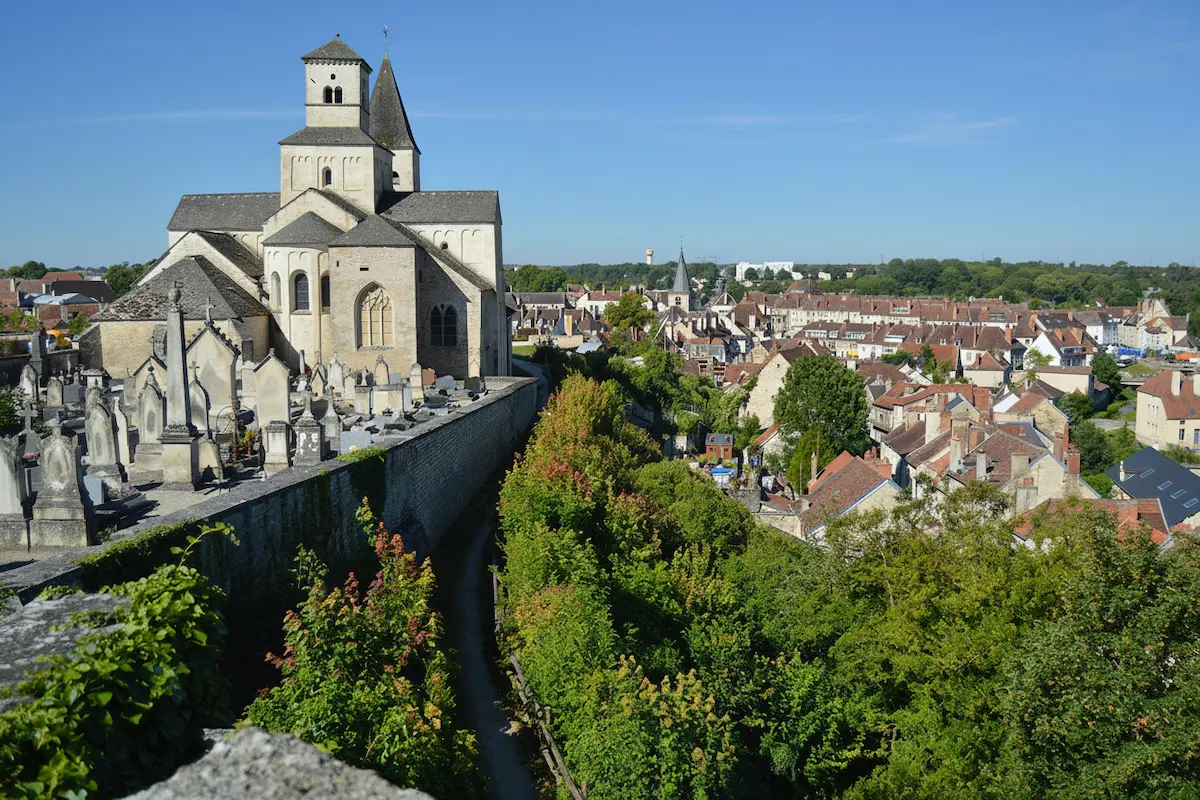


In brief: founded in 1098, Cîteaux Abbey is the motherhouse of the Cistercian order. Still home to around thirty monks, it can be visited by appointment (10.50 €, guided tour 1h15). Don’t leave without tasting Cîteaux cheese, made by the monks from their herd of Montbéliarde cows.
South of Dijon, in an isolated valley of the Saône plain, Cîteaux Abbey embodies one of the most important chapters in Western monastic history. It was here in 1098 that a group of Benedictine monks led by Robert of Molesme founded a new establishment, with the ambition of returning to a strict reading of the Rule of Saint Benedict: manual labour, silence, poverty and prayer. This rejection of Cluniac comfort became the programme of what would soon be the Cistercian order, of which Cîteaux is the spiritual cradle.
Today, the abbey remains an active monastic community. Around thirty monks continue the Cistercian rule in buildings that blend medieval and classical eras. The guided tour (mandatory) allows visitors to discover the 13th-century scriptorium cloister, the 15th-century library, the 17th-century novitiate, and an exhibition on 12th-century illumination. A film presents the daily life of the contemporary community. The monastic shop, accessible without a ticket, sells the famous Cîteaux cheese, the abbey’s flagship product.
The history of Cîteaux Abbey: a turning point for monasticism
The foundation of 1098
It all begins in 1098. Robert of Molesme, a Benedictine abbot, leaves Molesme Abbey with around twenty monks to found a new monastery in a marshy, wooded place called Cîteaux (from Latin Cistercium). The aim: to apply the Rule of Saint Benedict in its original rigour, without the compromises that the Cluniac order had introduced. Duke Eudes I of Burgundy supports the venture by granting lands.
The beginnings are difficult. The community barely survives in precarious conditions. But the arrival of Bernard of Fontaine (later Saint Bernard) in 1112 with thirty companions changes everything. Bernard, sent to found Clairvaux Abbey in 1115, becomes the most influential figure of the order. Under his impetus, the Cistercian order experiences a meteoric expansion: several hundred abbeys are founded within a century, from Scandinavia to the Holy Land.
The French Revolution and the return of the monks
Like most French abbeys, Cîteaux is hard hit by the Revolution. Sold as national property in 1791, the abbey is dismantled. The medieval buildings are partly destroyed or converted. The monks only return in 1898, when the abbey is bought back by the Cistercians of the Immaculate Conception. Since then, monastic life has continued uninterrupted. The 20th century saw major restoration work, notably on the scriptorium cloister.
Visiting Cîteaux Abbey today
Spaces open to the public
The guided tour, the only way to discover the abbey, follows a route through the main historic spaces:
- The scriptorium cloister (13th century): restored, it retains its medieval atmosphere with its ribbed vaults. This is where the monk-copyists transcribed manuscripts.
- The library (15th century): it houses part of the abbey’s ancient collection.
- The novitiate (17th century): unrestored, it offers a striking contrast between the period building and its raw state.
- The exhibitions: one devoted to the history of 12th-century illumination, the other to bookbinding.
At the end of the visit, a 20-minute film presents the daily life of the monks today: prayer times, work in the cheese dairy, community life.
Practical information
Address: Route de Seurre (RD996), 21700 Saint-Nicolas-lès-Cîteaux. Opening hours: guided tour times vary by season. In July-August (high season), departures at 10:30am, 11:30am, 2pm, 3pm, 4pm and 5pm Monday to Saturday, with additional slots on Sunday. In May-June-September, departures are reduced. The abbey is closed to visitors from November to April (except for group bookings). Prices: full price 10.50 €, student and job-seeker rate 7 €, free for children. Booking: mandatory, by phone (+33 3 80 61 32 58) or email (visites@citeaux-abbaye.com).
Cîteaux cheese: a gastronomic treasure
No mention of Cîteaux would be complete without its cheese. Cîteaux cheese is an uncooked pressed cheese, made from raw cow’s milk, produced by the monks themselves in the abbey’s dairy. The herd of Montbéliarde cows provides a rich milk that gives the cheese its melting texture and fruity flavour.
Production is small-scale: only a few hundred cheeses per week, made on Mondays and Tuesdays, then aged for three weeks in the abbey’s cellars. The rind, washed in brine, develops a characteristic pale orange colour.
Cheese sales represent nearly half of the abbey’s income. It is available at the monastic shop, which also offers abbey beers, honey, artisan jams, gingerbread and regional wines. The shop is open without an entrance ticket.
Spirituality at Cîteaux: attending services
For those wishing to go beyond the tourist visit, it is possible to attend daily religious services. The monks follow the rhythm of the liturgy of the hours: Lauds (7am), mass (10am), Vespers (6pm) and Compline (8pm). These services are open to the public. Sunday mass at 10:30am particularly attracts worshippers and visitors.
The abbey also welcomes spiritual retreats. People wishing to share the community’s time of prayer and silence can stay at the monastic guesthouse, by prior arrangement. It is a unique immersive experience to understand what Cistercian life means in the 21st century.
Cîteaux Abbey, reviews and tips
Visitors often remark on the simplicity of the place: no excessive decoration, but an atmosphere of peace that pervades every room. The welcome is warm, and the guides know how to convey the history of this site. Allow a good hour on site, longer if you wish to see the film and explore the shop.
In season, the drive from Beaune or Dijon is pleasant, through the vineyards of the Côte and the Saône plain. The abbey is about thirty minutes from Beaune, forty from Dijon. Access is less well-known than the prestigious abbeys of Fontenay or Cluny, which preserves a certain tranquillity: even in high summer, you will never encounter the crowds of Burgundy’s major sites.
Frequently asked questions
How long does the guided tour of Cîteaux Abbey last?
Can I buy Cîteaux cheese without visiting the abbey?
Do I need to book to visit Cîteaux Abbey?
Can I attend religious services at Cîteaux?
Another question?
Write to usSources