



Three weeks in September, 6 am to 6 pm, hands in the pinot noir bunches. It is tiring, it is poorly paid, it is sometimes rainy. And it is probably the best way to understand Burgundy from the inside.
The essentials
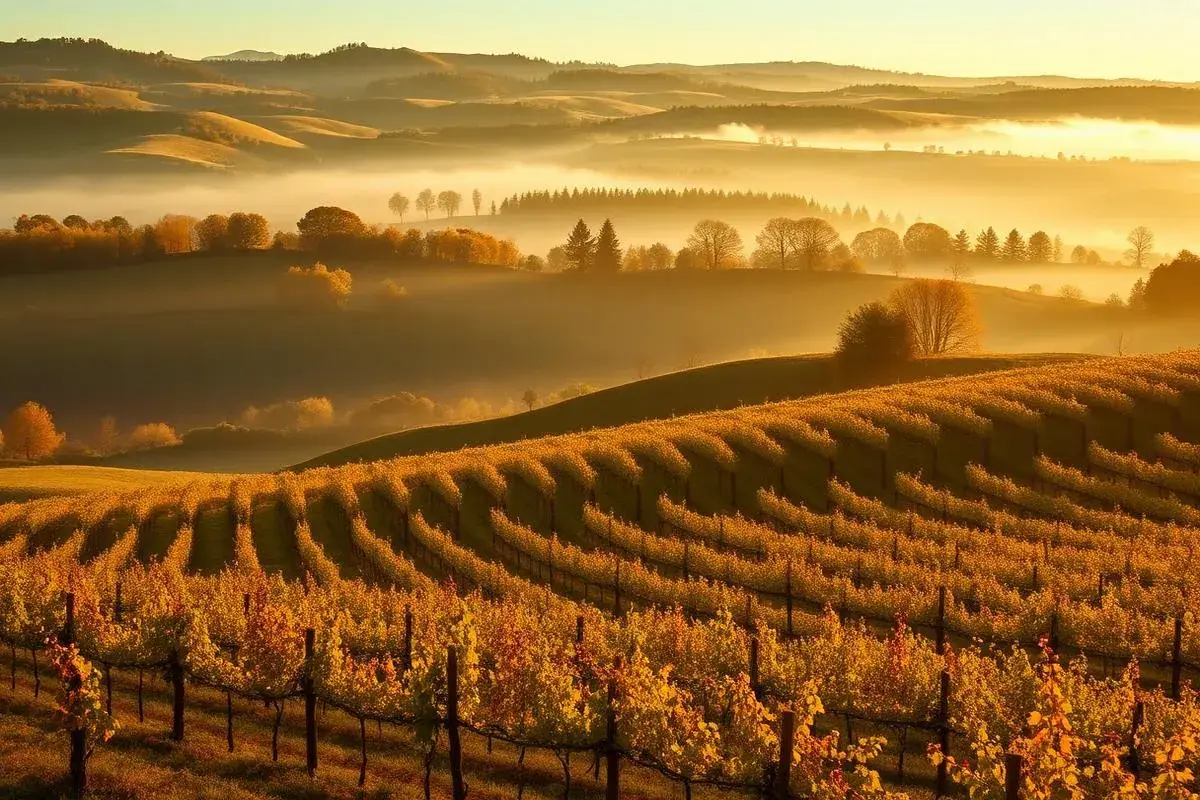
The Côte-d’Or harvests by hand. Not out of folklore, but because the Grands Crus charter requires it and because the plots, often under a hectare, sloping and tightly planted, do not accept machines. Every year, between 8,000 and 12,000 seasonal workers descend on the vineyard between Marsannay and Santenay. A third come back the following year. It is a physical, supervised, short job, and it remains one of the few jobs where you are fed, housed and paid, and where you leave with an understanding of the terroir that no tasting can replace.
The first day, you ache everywhere. The third, you stop thinking. The last, you don’t want to leave.
Pierre, team leader at Vosne-Romanée, 32 harvests
Dates and length
The start date of the harvest (ban des vendanges) is set each year by prefectoral order, generally the first week of September. In recent years, with global warming, the Côte de Beaune starts around 5–10 September, the Côte de Nuits a week later. Allow 8 to 15 days of actual work, depending on the size of the estate and the weather. A fixed-term harvest contract is signed for the planned duration, extendable by three days in case of rain.
Finding an estate that hires
Three channels that work
1. Pôle Emploi Bourgogne-Franche-Comté opens a dedicated platform in mid-June (bourgogne-franchecomte.pole-emploi.fr). About 4,500 offers are published each year, half of them in the Côte-d’Or.
2. Anefa 21, the national association for employment and training in agriculture, runs a specific job board, often with small estates that do not go through Pôle Emploi. Office in Beaune, 21 boulevard Foch.
3. Word of mouth on the spot. At the end of August, walk through the wine villages (Gevrey-Chambertin, Vosne-Romanée, Meursault) and push open the cellar doors. One team in two is still filling up three days before the start.
Beware of suspicious ads. No serious estate asks for administration fees, a deposit or an advance transfer. A real employer has you sign a fixed-term harvest contract, with a payslip at the end. If in doubt, call MSA Bourgogne (03 80 40 71 71).
How much you really earn
Hourly SMIC (statutory minimum wage) at 1 January 2026: €12.10 gross. For an 8-hour working day, that makes about €96.80 gross, or €76 net. Overtime (beyond 35 h/week) is paid at a 25% premium. For a full ten-day harvest, expect €780 to €950 net, plus 10% paid leave paid out at the end of the contract. Food and accommodation provided are not deducted from the wage at most estates on the Côte: it is a local tradition.
Accommodation and meals
Two arrangements dominate. At the big estates (négociants, cooperatives), shared dormitories, often a converted former vat house, 4 to 12 beds, shared bathrooms. At the small ones, rooms for two or three in the family house, sometimes in a gîte next door. Meals always taken together, cooked by a cook hired for the period. For many former pickers, it is even the best memory: four meals a day, a good bottle at dinner, a table of twenty people who did not know each other ten days earlier.
A typical day
6 am: Wake-up, coffee and bread with butter in the estate kitchen.
6:45 am: Departure by truck for the plots, briefing by the team leader.
7 am–12 pm: Picking, alternating cutters and carriers, breaks every two hours.
12 pm–2 pm: Lunch at the estate, two courses, cheese, dessert, glass of wine.
2 pm–6 pm: Back to work, often the ripest plot.
6:30 pm: Shower, rest.
8 pm: Dinner, rather generous. Bedtime between 10 and 11 pm. The next day, you start again.
What to bring
The secateurs are provided by the estate (do not bring your own: handles and blades must match the estate’s charter). Plan for: rain boots and waterproof walking shoes, two sturdy pairs of work trousers, five T-shirts, two fleeces, a light oilskin, a hat, a 1 L water bottle, thin gardening gloves (hands take a beating the first three days), a headlamp, a basic first-aid kit, Compeed plasters, arnica, ibuprofen.
Frankly
This is not an experience to sell to someone looking for a romantic summer job. It is physical, you repeat the same gesture 6,000 times a day, and it often rains. But if you want to understand why a bottle of Vosne-Romanée costs €90 and why the winemakers of the Côte talk about their vines like children, this is where to go. Almost all the world’s great sommeliers have been through it once.
Sources
- ANEFA Bourgogne: Vineyard jobs and grape harvest
- Pôle Emploi Bourgogne-Franche-Comté: Seasonal grape harvest offers
- MSA Bourgogne: Harvest contract and agricultural social protection
- Légifrance: SMIC (2026 decree)
- BIVB: Grape harvest in Burgundy
- Service-public.fr: Grape harvest employment contract
- France Travail: Agricultural seasonal workers