



In short: contrary to popular belief, a significant part of the Côte-d’Or can be visited without a car. The Dijon–Beaune axis is one of France’s best-served for a wine region, with trains roughly hourly and a parallel cycle greenway. The Auxois and Morvan are more demanding, but not inaccessible if you combine modes of transport and limit your geographic ambitions.
This guide sets out available transport options, car-free itineraries and the limits to know so you are not stranded in a village with no fallback. The point is not to claim the whole département is reachable by public transport, but to show that for a certain type of stay (Dijon–Beaune axis, bike, hiking), a car is not essential.
Getting around by train in the Côte-d’Or
The backbone line: Dijon–Beaune
The backbone line: Dijon–Beaune, details
The Dijon–Beaune rail axis is the backbone of car-free transport in the Côte-d’Or. The Dijon–Chalon-sur-Saône TER line, continued by some trains to Mâcon and Lyon, serves both towns with roughly one train an hour, sometimes more at peak times. The journey takes 20 to 25 minutes and costs about €8 to €10 full fare. The TER Bourgogne-Franche-Comté discount card gives 50% off for under-26s.
Intermediate stations served: Nuits-Saint-Georges (every TER stops), Comblanchien and Corgoloin (partial stops). Santenay has its own halt, Santenay-les-Bains station, served by the Dijon–Chalon-sur-Saône TER trains at the foot of the village. Chagny station (Saône-et-Loire), a few minutes by TER from Santenay, opens towards the Côte chalonnaise.
Stations beyond the central axis
Other stations open less-served areas:
- Gare des Laumes-Alésia: served by TER, about 40 minutes’ walk from MuséoParc Alésia (3 km uphill) and 20 minutes by bus from Semur-en-Auxois (Mobigo line LR 121).
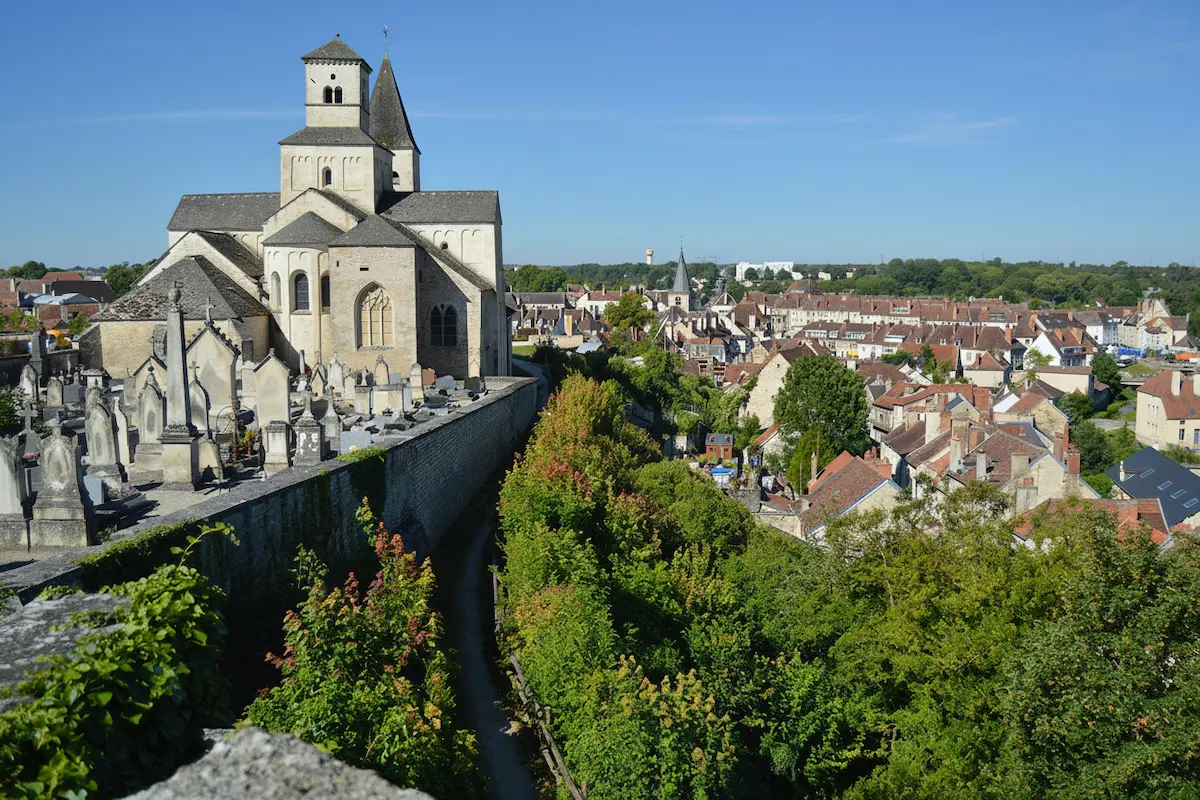
- Montbard: TGV station (Paris in 1 h 05) and TER, 20 minutes by road from Fontenay Abbey (no direct bus, taxi or bike needed).
- Autun: TER station (Étang-sur-Arroux line), the rail gateway to the Morvan for hikers.
Long-distance TGV
Dijon is well linked to the TGV network: Paris in 1 h 35 (several daily return trips, from €35 advance fare), Lyon in about 1 h 30, Strasbourg in 2 h 20 and Marseille in 3 h. Dijon-Ville station is in the city centre, a 10-minute walk from the Palais des Ducs.
Train and bike
TER Bourgogne-Franche-Comté trains accept assembled bikes free of charge, without reservation, in dedicated spaces (usually 2 to 4 places per train). At peak hours, space can fill up: better to avoid TER services between 7–9 am and 5–7 pm if you are carrying a bike. TGV services require a mandatory reservation for a non-folding bike (about €10), and the bike must be packaged (bag or cover). Folding bikes are accepted as hand luggage at no extra charge.
This train+bike combination is especially useful for the Voie des Vignes itinerary: you can cycle Dijon–Beaune on the greenway and return by train, or the reverse.
Getting around by bus in the Côte-d’Or
The Mobigo network
The departmental Mobigo Côte-d’Or network (run by the Bourgogne-Franche-Comté Region) has around 30 regular lines, plus three on-demand services (TAD), covering the département. The most useful for visitors are:
- LR 118: Dijon–Saulieu (via Pouilly-en-Auxois), several return trips a day, about 1 h 30 journey.
- LR 120: Montbard–Saulieu–Censerey, a direct link between the Montbard TGV station and the Morvan, about 1 hour’s journey.
- LR 121: Semur-en-Auxois–Venarey-les-Laumes (gare des Laumes-Alésia), a short link of about twenty minutes.
- Local lines around Beaune, Nuits-Saint-Georges and Châtillon-sur-Seine, with reduced frequency (2 to 4 return trips a day). The on-demand service (TAD 151) also links Semur-en-Auxois to Montbard by reservation.
Taking a bike on Mobigo buses follows rules that vary by line: check the Mobigo app before counting on the bus to carry your bike. Payment is on board (card or cash). Timetables are on the Mobigo app.
Network limits
The Côte-d’Or bus network has two main limits. First, frequencies are low, especially at weekends and outside school terms: some lines do not run on Sundays or have only two return trips a day. Second, buses do not serve the wine villages themselves: stops are in canton centres, which means approach walks of 15 to 45 minutes to reach tourist sites (cellars, domaines, castles).
Car-free itineraries
Itinerary 1: Dijon and Beaune by train (2 days)
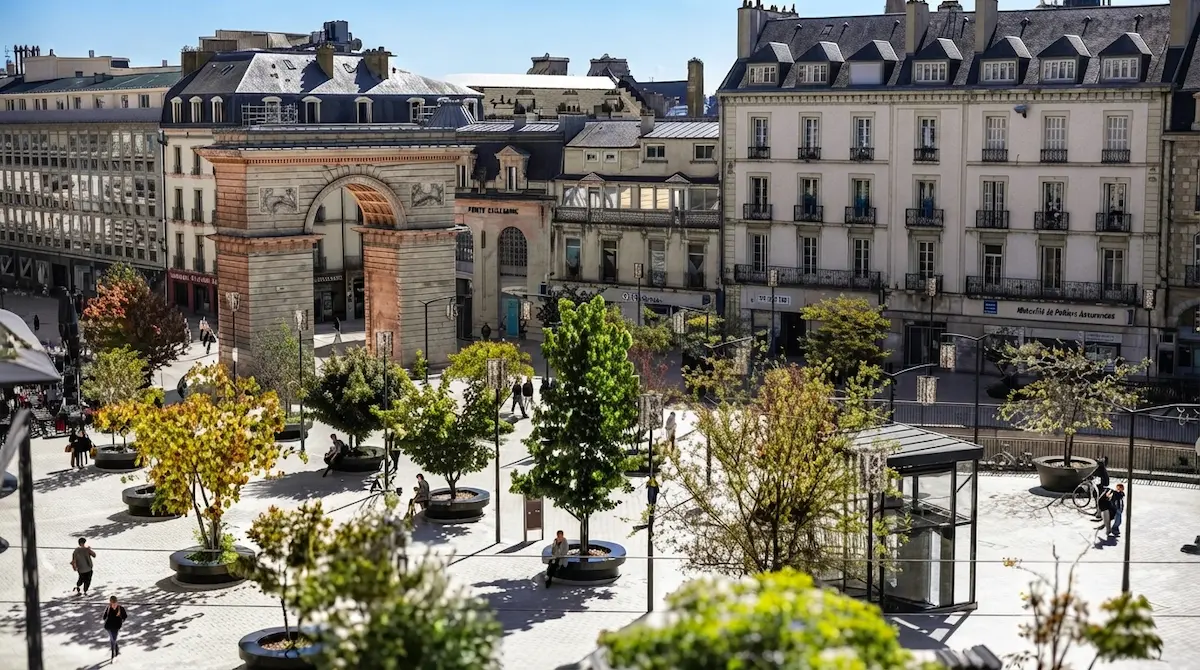
The simplest: take the TER between Dijon (day 1) and Beaune (day 2). Both centres are less than 15 minutes’ walk from their stations. This itinerary is detailed on the 48 hours in Dijon page, simply replace the car with the train for Dijon–Beaune.
Variant: cycle Dijon–Beaune on the Voie des Vignes (45 km one way) and return by train. Beaune station has covered, secure bike parking.
Itinerary 2: Dijon, Nuits-Saint-Georges and Beaune (3 days)
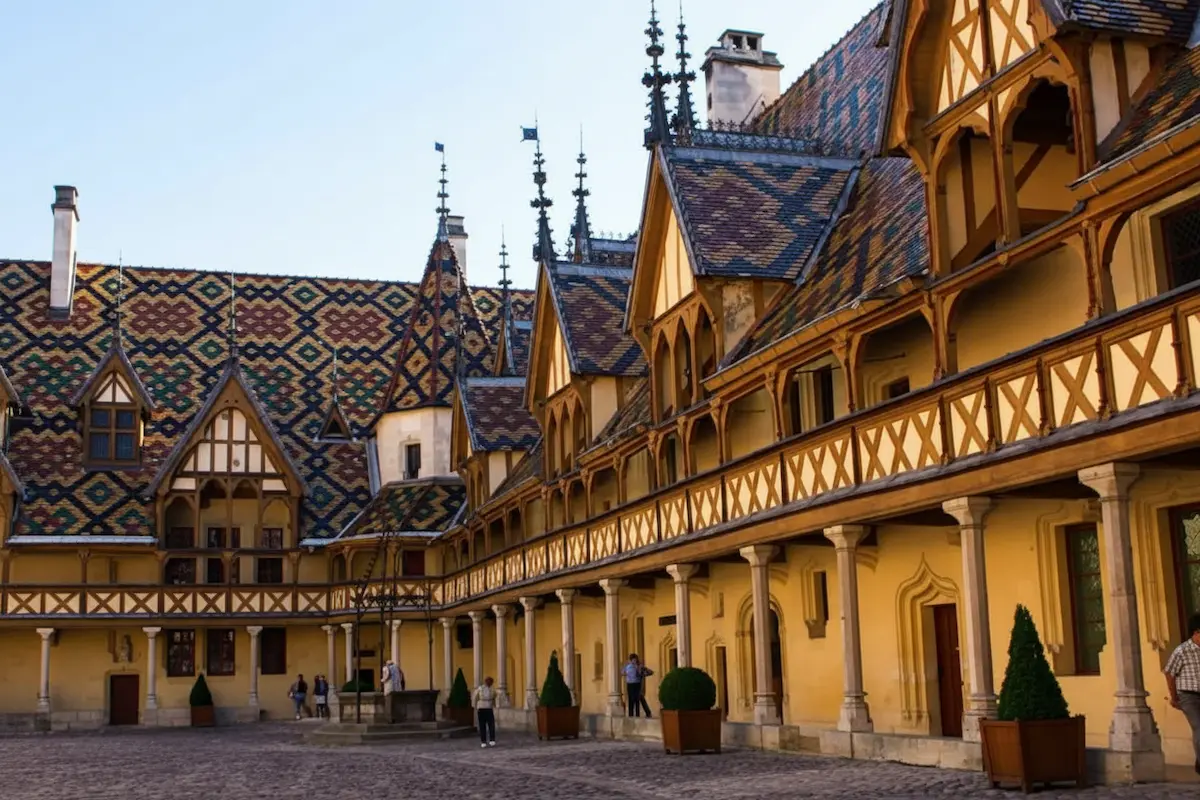
Day 1: Dijon on foot (Palais des Ducs, Chouette trail, Halles). Overnight in Dijon. Day 2: Train Dijon–Nuits-Saint-Georges (20 minutes). Visit Nuits-Saint-Georges and its cellars on foot. Afternoon: train Nuits-Saint-Georges–Beaune (10 minutes). Overnight in Beaune. Day 3: Beaune on foot (Hospices, Saturday market, centre cellars). Return by train from Beaune.
This itinerary needs no motorised transport beyond the trains. Distances between sites are 10 to 20 minutes’ walk.
Itinerary 3: Semur-en-Auxois and Alésia by train (1 day)
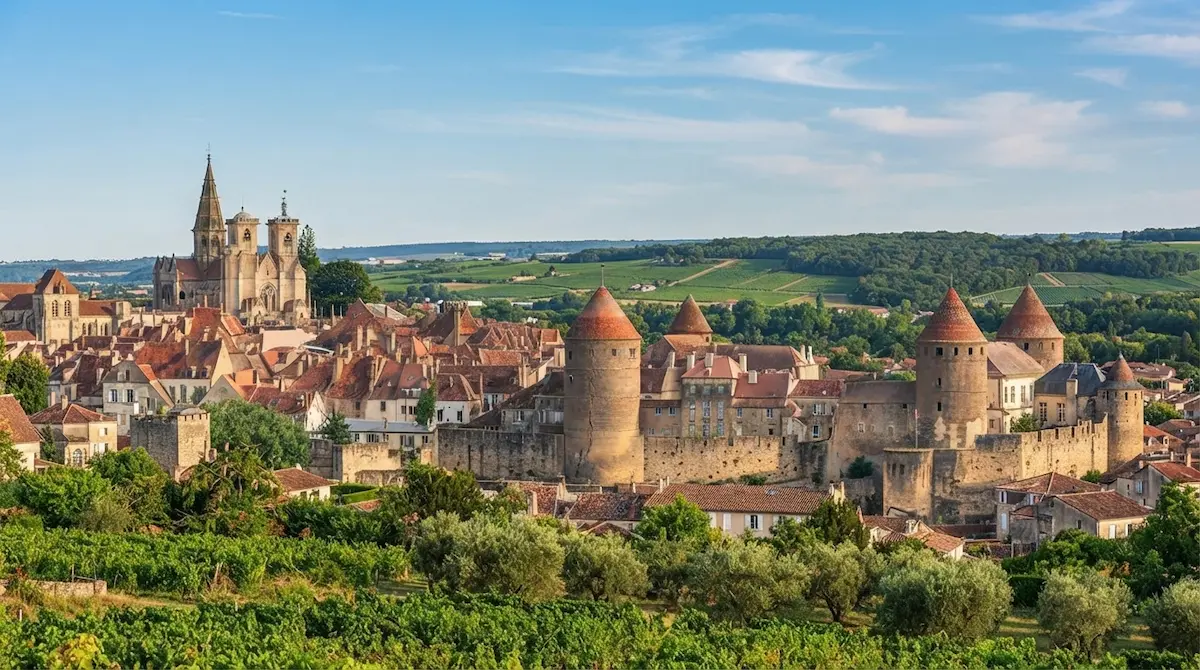
Take the TER Dijon–Laumes-Alésia (about 35 minutes). From the station, two options: about 40 minutes’ walk to MuséoParc Alésia (3 km uphill), or the Mobigo bus (LR 121) to Semur-en-Auxois in 20 minutes, then a 20-minute walk to the centre. The day is long but doable: Alésia in the morning, Semur in the afternoon, return to Dijon on the last train of the evening.
Itinerary 4: the Morvan on foot, by train (3–7 days)
The Tour du Morvan des Sommets, a 137 km loop in 7 stages (inaugurated in 2023), circles the massif’s three summits (Haut Folin, mont Préneley, mont Beuvray) through 12 rural communes where accommodation is available (stage gîtes, B&Bs). The loop can be started from any of these communes. Without a car, reach it by train to Montbard (TGV from Paris in 1h05) or Autun, then by Mobigo bus: line LR 120 links Montbard station directly to Saulieu, on the edge of the massif. Frequencies are low, so check times the day before on the Mobigo app. Less experienced walkers can cover just a few stages around a stage village, or opt for the Tour du Morvan (GR de Pays, 230 km), the massif’s big loop, also reachable by bus from the neighbouring stations.
Bike hire without a car
Even without a car, bike hire is possible:
- Dijon: DiviaVélo (municipal self-service hire, many stations in the centre and at the station).
- Beaune: several hire shops 5–10 minutes’ walk from the station.
- Santenay, Nolay and Chagny: classic and electric bike hire at the tourist offices, a few steps from Santenay-les-Bains station for the start of the Voie des Vignes.
Dijon’s self-service system lets you take a bike at the station and return it at another centre station, which helps multimodal travel.
Accommodation reachable without a car
Several hotels and B&Bs sit right by stations:
- Dijon: many hotels between the station and the centre (5–10 minutes’ walk).
- Beaune: hotels on Rue de l’Hôtel-Dieu and Place Carnot, 10–15 minutes from the station.
- Nuits-Saint-Georges: centre hotels, 5 minutes from the station.
- Semur-en-Auxois: centre hotels, 30 minutes’ walk from Laumes station (or 15 minutes by bus).
Check the distance between accommodation and station before booking: some rural Auxois gîtes are several kilometres from any public transport stop.
Limits to know
Without a car, you cannot see everything. These areas are particularly hard to reach without a vehicle:
- Côte de Nuits wine villages (Gevrey-Chambertin, Chambolle-Musigny, Vougeot): the TER line serves Nuits-Saint-Georges, but surrounding villages are 3 to 5 km from the station.
- Fontenay Abbey: no direct bus from Montbard or Semur. Taxi or bike required from the nearest station.
- Morvan lakes (Settons, Pannecière): reachable by Mobigo buses from Saulieu, but with very low frequency.
The most effective way to visit the Côte-d’Or without a car is to combine train (for longer journeys) and bike (for local travel). The Voie des Vignes and the small wine roads of the Côte de Nuits and Côte de Beaune suit this combination perfectly.
Estimated transport budget for 3 car-free days
TER Dijon–Beaune return: €16–20. Mobigo bus for an excursion: €2 per trip, flat fare. Bike hire for a day: €15–25 (standard) or €35–50 (electric). TGV Paris–Dijon one way: from €35 advance fare. Total transport for 3 days: between €30 and €100 depending on options chosen.
Frequently asked questions
Can you visit the Côte-d'Or entirely without a car?
How much does a TER Dijon–Beaune ticket cost?
Can you take a bike on the train in the Côte-d'Or?
Another question?
Write to usSources
- SNCF - Dijon-Ville and Beaune stations
- TER Bourgogne-Franche-Comté
- Département de la Côte-d'Or - Mobigo
- Divia - Dijon public transport
- France Vélo Tourisme - Voie des Vignes
- Parc naturel régional du Morvan - Hiking
- Bibracte - Tour du Morvan des Sommets
- Mobigo - Côte-d'Or road lines
- SNCF - Bikes on TER trains
- Wikipedia - Gare de Dijon-Ville
- Wikipedia - Gare de Beaune
- FlixBus - France
- TGV inOui - Paris Dijon