
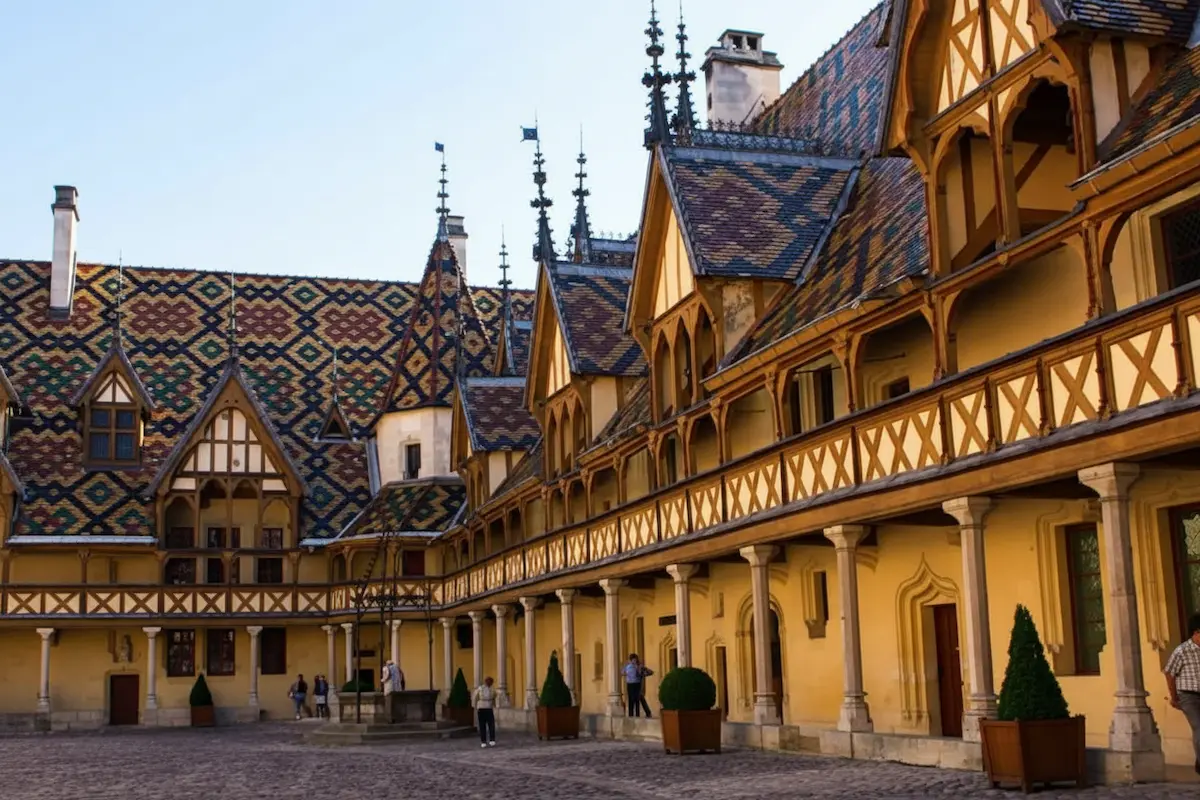


In short: every third Sunday of November, Beaune becomes the world capital of wine auctions. The Vente des Vins des Hospices de Beaune, the oldest and most famous charity wine sale in the world, auctions the production of the Hospices estate, 60 hectares of vines, 85% Premier and Grand Cru, bequeathed over the centuries to the hospital founded in 1443. The 166th edition is held on Sunday 15 November 2026, as part of the Trois Glorieuses, a weekend that gathers growers, négociants, collectors and the curious from around the world.
Many Côte-d’Or visitors have heard of the Hospices de Beaune wine auction without quite understanding what is at stake. Is it a festival? A sale reserved for professionals? Can you take part as a tourist? The answer is yes to all three, but to different degrees. This page explains how the sale works, its history, its calendar and what you need to know to enjoy it.
History of the sale: from the first gifts to a world event
From donation to sale
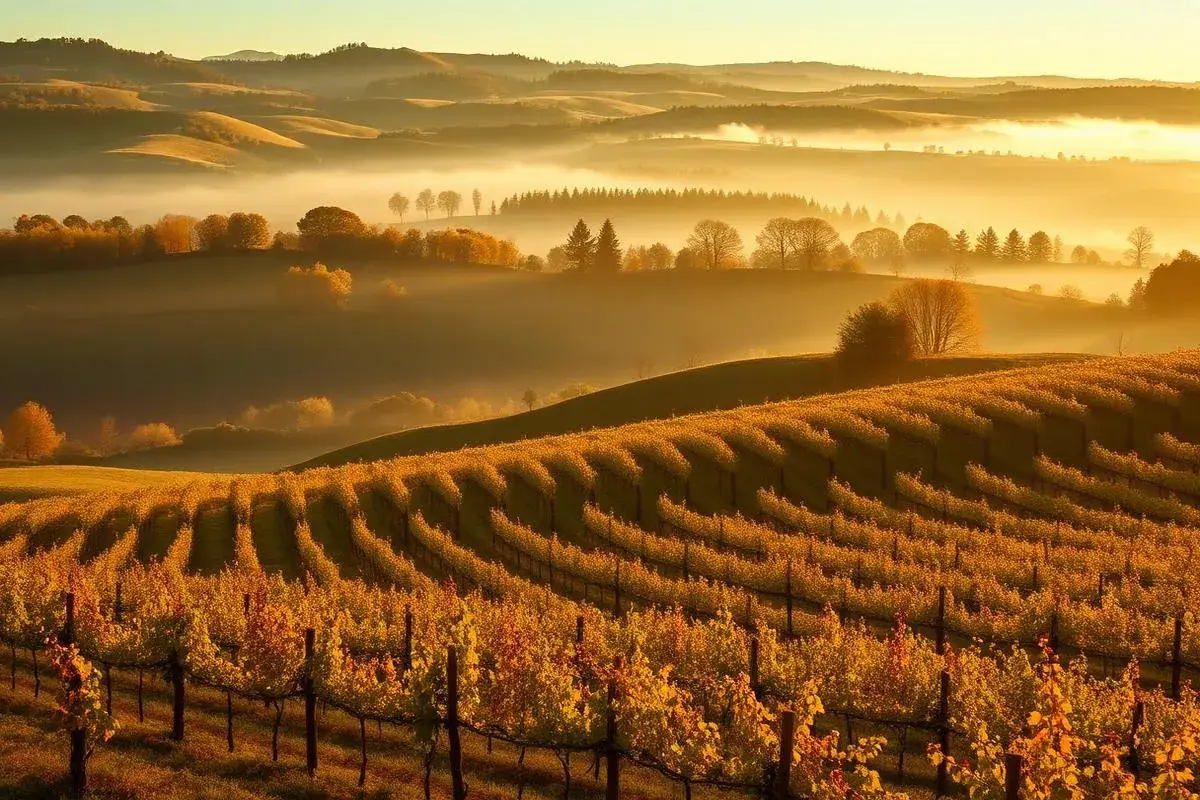
It all begins in 1457, when Jean Guillotte le Verrier bequeaths to the Hôtel-Dieu a vineyard plot called “Beaumont Le Franc”. This first gift inaugurates a tradition of legacies that continues to this day: generations of Burgundians have entrusted their vines to the Hospices, gradually building a unique wine estate, today 60 hectares spread across the Côte de Beaune and the Côte de Nuits.
The original aim of these donations was not commercial: the vines produced wine for patients and hospital staff, the surplus sold locally. But in the mid-19th century, the Hospices board realised that this vineyard heritage, poorly managed, yielded far less than its potential. In 1859, it created a public auction to maximise revenue for the hospital. The first edition was held that year: success was immediate.
The contemporary rise
For more than a century the sale remained a local affair, followed by Burgundy négociants and a few informed amateurs. Everything changed from the 2000s. In 2005, the sale was entrusted to an international auctioneer (first Christie’s, then Sotheby’s since 2020), giving it world visibility. That same year, the “candle” bidding system was dropped for most lots: only a few exceptional pièces retain this historic method.
The figures speak for themselves: €3.79 million in 2005, €12.77 million in 2020, €28.91 million in 2022 (absolute record). In 2022 the historic auction was driven by soaring Burgundy wine prices on the Asian market, before a return to more moderate levels in 2024–2025. Since 2009, private individuals can bid online, which has considerably widened the sale’s public.
The Trois Glorieuses: the weekend that gathers Burgundy
The wine sale is only one highlight of a three-day weekend called the Trois Glorieuses, which sets the rhythm of late November in Burgundy.
Saturday: the Confrérie des Chevaliers du Tastevin chapter
Festivities begin on Saturday at the Clos de Vougeot, a celebrated wine château listed as a historic monument. The Confrérie des Chevaliers du Tastevin, founded in 1934 to promote Burgundy wines, holds a chapter there: an induction ceremony at once solemn and exuberant, where new figures from wine, gastronomy or culture are admitted to the confraternity. The evening continues with a multi-course gastronomic meal, each accompanied by a different Burgundy wine, one of the weekend’s great moments for informed amateurs.
Sunday: the Hospices de Beaune wine auction
The weekend’s climax. From morning, the Halles de Beaune, the 19th-century covered market in the heart of town, fill with the curious and bidders. The sale starts in early afternoon and lasts several hours: each lot is presented by the auctioneer, who describes the cuvée, its plot origin and the story of the donor behind it. Bidding rises quickly on the most renowned pièces, Corton, Clos de la Roche, Échezeaux, under the gaze of a dense crowd packed around the podium.
Monday: the Paulée de Meursault
The Trois Glorieuses end on Monday in Meursault with the Paulée, a legendary lunch where growers bring their greatest bottles to share among professionals. Originally a simple end-of-harvest meal, the Paulée has become an institution: it is held at the Château de Meursault and gathers several hundred guests, in an atmosphere firmly turned towards the pleasure of the table and shared wine rather than commerce.
How to take part in the sale
On site, under the Halles
On sale day, the Halles de Beaune are open to all, free of charge. There is no access restriction for watching the bidding as a spectator: you arrive, weave through the crowd, and watch the lots go by. The atmosphere is at once tense and festive, with growers in traditional dress, international buyers in suits, and the curious in city clothes. Seated places near the podium are generally reserved for bidders, but the standing public enjoys good visibility from the sides of the Halles.
Tip: arrive early (before 10am) if you want a decent spot. The crowd is dense by mid-morning.
Online, from home
Since 2009, it has been possible to bid at a distance via the official Hospices de Beaune platform (hospices-beaune.com). Registration is compulsory and requires identity verification, proof of address and, depending on the amount targeted, a deposit. Online bidding runs simultaneously with the room sale: you therefore need to be connected on the day, as lots follow quickly. The minimum purchase is one bottle for some cuvées, which makes the sale accessible to private buyers without aiming for a whole barrel.
What you actually buy
Beware: when you win a pièce (a barrel of 228 litres, or 288 bottles), you are not buying ready-to-drink wine. You buy young wine, in barrel, which must then be aged by an approved négociant for about 18 to 24 months before bottling. The Hospices provide a list of authorised élevage houses, and the buyer chooses whom to entrust with their wine. Only after that ageing period are the bottles delivered.
For the private buyer, the process is less heavy than it seems: you simply choose a négociant among those offering élevage contracts to individuals, and pay the corresponding fees (élevage, bottling, labelling). Several Beaune houses offer turnkey packages, with online follow-up of the ageing. Some cuvées are also available by the bottle from the sale.
The Pièce de Charité and the Pièce des Présidents
Each year, two special lots stand apart. The Pièce des Présidents (formerly called Pièce de Charité) is a unique pièce whose proceeds go entirely to a charitable cause. In 2024, the Pièce des Présidents, a Beaune Premier Cru Les Bressandes, was knocked down for €360,000 in favour of Médecins Sans Frontières and the Global Gift Foundation.
The cause supported by the 2026 charity lot is announced by the Hospices as the sale approaches. Tradition has this lot sold by the historic candle method: a wick is lit at the start of bidding, and the last bidder before it extinguishes wins the lot. It is one of the most emotionally charged moments of the sale, when considerable sums are spent for a collective cause.
The cuvées: a unique vineyard heritage
The Hospices de Beaune estate produces about 50 cuvées each year: 33 reds (pinot noir) and 18 whites (chardonnay), among the most famous:
- Corton Grand Cru (red and white): the most prestigious of the Côte de Beaune
- Clos de la Roche Grand Cru (red): on the Côte de Nuits
- Échezeaux Grand Cru (red): on the Côte de Nuits
- Corton-Charlemagne Grand Cru (white): one of the world’s greatest chardonnays
- Meursault Premier Cru (white): several plots, including the famous Genevrières
- Beaune Premier Cru (red and white): many cuvées carry donors’ names, Guigone de Salins, Nicolas Rolin, Brunet, Rousseau des Landots
Each cuvée bears a name recalling the plot’s donor: Mazis-Chambertin “Madeleine Collignon” or Corton “Charlotte Dumay”, so many family stories engraved in the wine.
Calendar and practical tips for the weekend of 15 November 2026
The sale is held on Sunday 15 November 2026, but the Trois Glorieuses weekend starts as early as Friday evening with satellite events (dinners, private tastings, inductions). Here is what you need to know to organise your stay:
Lodging: Beaune shows full months ahead for the Trois Glorieuses weekend. Intra-muros hotels are stormed from spring, and guest rooms in surrounding wine villages (Pommard, Volnay, Meursault, Savigny-lès-Beaune) follow close behind. Book as soon as the dates are confirmed, ideally in spring.
Dining: Beaune’s great tables (Loiseau des Vignes, L’Écusson, Le Conty, Caves Madeleine) are also full several months ahead. An alternative: restaurants in the wine villages, more discreet but often excellent, which sometimes keep tables until the last minute.
Traffic: Beaune is saturated on sale weekend. Intra-muros parking is almost impossible: park at park-and-ride sites or in neighbouring communes and use the shuttles put on for the occasion.
Clothes: November in Burgundy means cool temperatures (5–10 °C), humidity and possible rain. Pack warm clothes, a waterproof and comfortable shoes for walking from cellar to cellar.
Frequently asked questions
Can a private buyer purchase a bottle at the Hospices de Beaune auction?
How much does a pièce (barrel) of Hospices de Beaune wine cost?
Do you need to book to attend the sale under the Halles de Beaune?
What happens to the money raised by the wine sale?
Another question?
Write to usSources
- Hospices de Beaune - Official auction site
- Cité des Climats et vins de Bourgogne - Wine sale 2026
- Bourgogne Tourisme - Trois Glorieuses and wine sale
- Beaune Tourisme - Wine sale diary
- Decanter - What is the Hospices de Beaune wine auction?
- Le Bien Public - Hospices de Beaune: news
- France 3 Bourgogne-Franche-Comté - Hospices de Beaune sale
- Vins de Bourgogne (BIVB) - Hospices de Beaune sale
- Wikipedia - Hospices de Beaune