
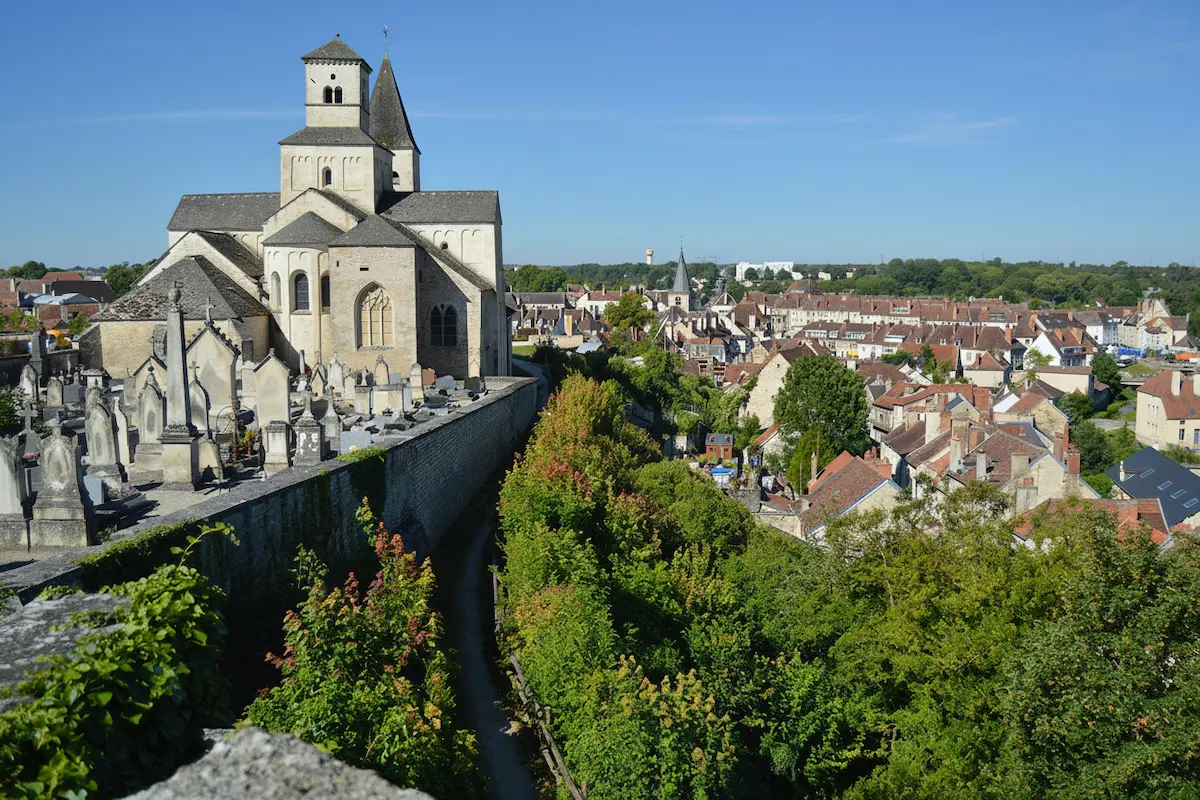


In short: the Côte-d’Or holds two UNESCO sites on its territory (the Climats of the vineyards and Fontenay Abbey) and makes it easy to reach a third, Vézelay basilica in the Yonne. This 3-day itinerary links all three, with stops in the finest villages along the way.
UNESCO World Heritage recognises “cultural properties of outstanding interest for humanity’s shared heritage”. The Côte-d’Or counts two on its territory, the Climats of the vineyards (2015) and Fontenay Abbey (1981), and the Vézelay basilica, in the neighbouring Yonne, is reached in an hour from Fontenay. These three inscriptions, spread from 1979 to 2015, tell three facets of the same terroir: wine, monasticism and pilgrimage. This 3-day itinerary links all three.
Day 1: the Climats of the Burgundy vineyards (UNESCO 2015)
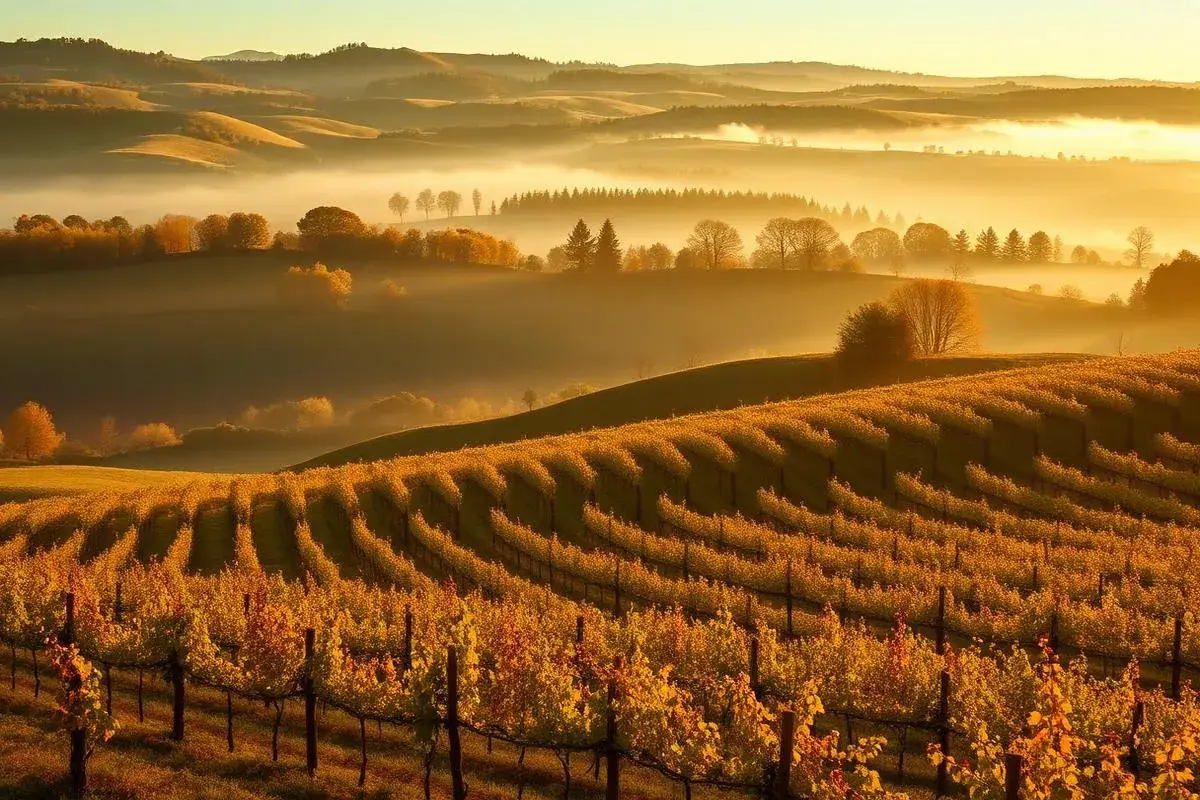
Inscribed on the World Heritage List on 4 July 2015, after a bid launched in 2006, at the 39th session of the Committee in Bonn, the Climats of the Burgundy vineyards stretch over 50 km, from the south of Dijon to the Maranges, beyond Santenay, for a listed area of 13,219 hectares. They are not monuments but vine parcels: exactly 1,247 climats, ranked within the appellation d’origine contrôlée system (communal, premier cru, grand cru). The property also includes the Côte’s villages, the town of Beaune and Dijon’s historic centre.
What to see:
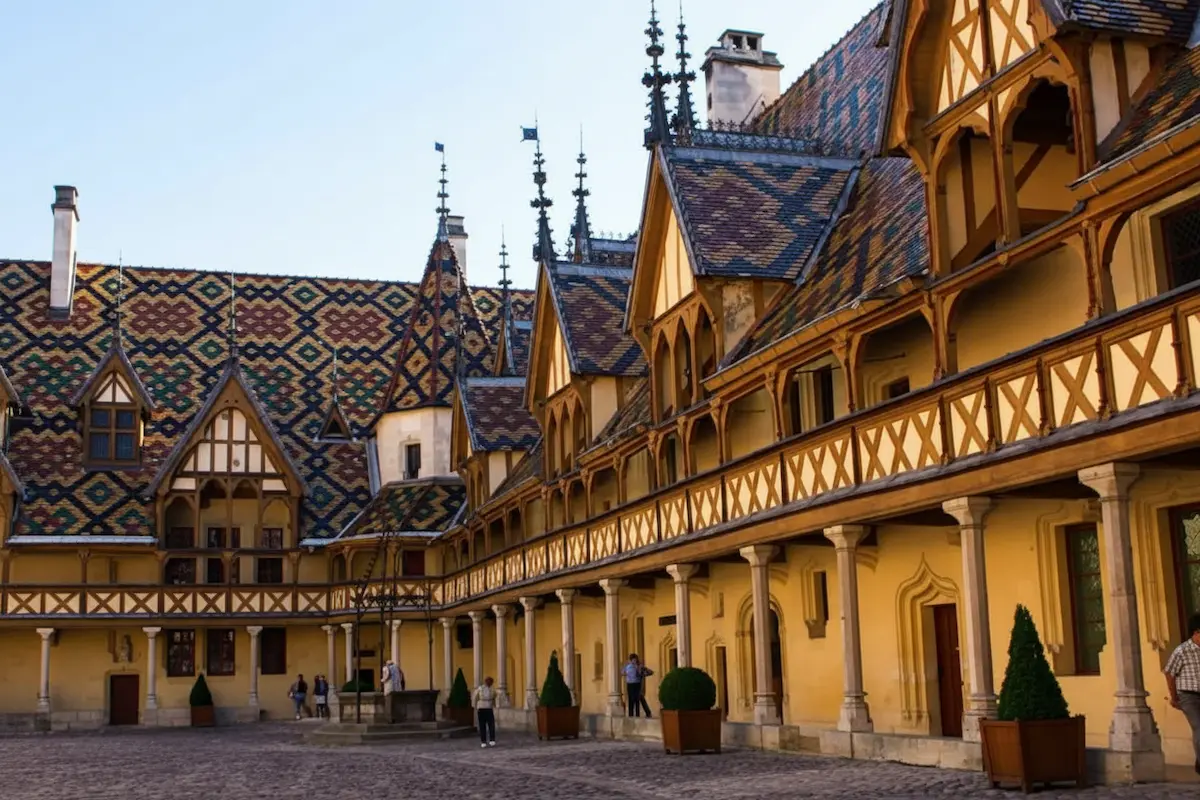
- Beaune: the Hospices (15th century), historic heart of the Côte
- Gevrey-Chambertin: 9 grands crus, the most titled village
- Vosne-Romanée: Burgundy’s greatest reds (Romanée-Conti)
- Meursault: the great white, between Romanesque church and deep cellars
Tasting
Tasting, key points
Limit yourself to one or two stops at domaines open to visitors on the route. Allow one hour per domaine and book: the most reputed cellars often receive only by appointment.
Day 2: Fontenay Abbey (UNESCO 1981)
Founded in 1118 by Saint Bernard, Fontenay Abbey is, according to its official site, the oldest Cistercian abbey preserved in the world, and one of the most complete medieval monastic complexes in Europe. It has been UNESCO-listed since 1981, among the very first French properties, under criterion (iv): the ideal of self-sufficiency and stripped-down architecture of the first Cistercian communities. The church, built between 1139 and 1147, was consecrated by Pope Eugene III, a former disciple of Saint Bernard. Sign of its renown, Fontenay is today among the 30 most popular historic sites in France on TripAdvisor.
What to see (2.5 h): the abbey church (Cistercian austerity), the cloister (garden and galleries), chapter house, monks’ dormitory, hydraulic forge, built at the end of the 12th century, it is one of France’s oldest industrial buildings.
Price
€11.50 full fare, €9.50 concession (students, jobseekers, disabled people…), €8.50 for under-12s, free up to age 6 (2026 rates, self-guided visit). Hours: every day 10 am to 6 pm from April to November, and 10 am to noon then 2 to 5 pm the rest of the year.
Access: about 1 h 10 from Beaune (93 km), free parking on site. Montbard and its TER station are 6 km away.
Day 3: Vézelay basilica (UNESCO 1979, Yonne)
From Fontenay, allow about 1 hour by road (60 km) to reach Vézelay in the Yonne. The Basilique Sainte-Marie-Madeleine has been World Heritage since 1979, one of the very first French inscriptions, under criteria (i) and (vi): a masterpiece of Burgundian Romanesque art associated with events of universal importance. It was here that Saint Bernard preached the Second Crusade at Easter 1146, before Louis VII and Eleanor of Aquitaine, and that Richard the Lionheart and Philip Augustus met at the start of the Third Crusade in 1190. In 1217, Francis of Assisi founded the first Franciscan establishment in France there. Perched on its “eternal hill”, the basilica can be spotted from very far above the Cure valley.
What to see
the narthex tympanum, the “Mission of the Apostles” (12th century), the Romanesque capitals, unique in the variety of their subjects, the nave with white-and-ochre two-tone arches, the view from the terrace over the Cure valley.
Free (except crypt, Saint-Michel tower and guided tours). The basilica is open every day from 7 am to 8 pm (8 am on Mondays).
Understanding what UNESCO actually listed
These stops could not be more different, and that is what makes the journey interesting. Fontenay Abbey is a very concrete monastic complex: buildings, forge, cloister and gardens are visited within a closed perimeter. Vézelay is a basilica and a perched village, where the view over the hills is part of the experience. The Climats are a living cultural landscape: a network of parcels, villages and wine practices that cannot be reduced to a single monument.
The Climats are not a tasting route
The 2015 listing covers the wine band between Dijon and the Maranges, vineyards, villages and the town of Beaune, as well as Dijon’s historic centre. An appellation and a climat are not exactly the same thing. A climat is a precisely delimited place, often worked by several domaines; its name may appear on a label, but a tasting does not automatically give access to the parcel. To understand the system without jargon, start with Beaune’s interpretation trail or a tourist information point, then look at the hillsides from a public path.
Take time to compare a regional wine, a village wine and, if your budget allows, a premier cru. The aim is not to find “the best”, but to see how a few hundred metres, an aspect or a history of ownership change the language of the wine. A tasting of four wines often costs €15 to €30; the very grands crus are not needed for this understanding.
Respecting a working landscape
Vine rows are not a footpath. Walk on the Voie des Vignes or communal paths, do not pick grapes and do not park in front of a winery entrance. During harvest, from late August to October depending on the year, tractors and teams have priority. It is a fascinating time to observe the villages, but not one for improvising a cellar visit.
Fontenay: a slow visit beats a flying stop
The abbey sits near Marmagne, away from major stations. A car is the simplest solution; from Montbard, a taxi or short-term hire can complete a TER arrival from Paris or Dijon. Check the hours on the official site before you leave: in winter, the abbey opens from 10 am to noon then 2 to 5 pm, against a continuous day from 10 am to 6 pm from April to November. Allow two hours on site, more if you like photographing the galleries and garden.
The hydraulic forge is one of the elements that set Fontenay apart from a simple church visit. It recalls that the abbey was also an economic organism, with mastery of water and metalwork. In the church, the austerity is not an absence of history: it is a Cistercian rule, designed for light, proportion and prayer. The audioguide or visitor booklet helps you read these details without overloading them.
Around Montbard
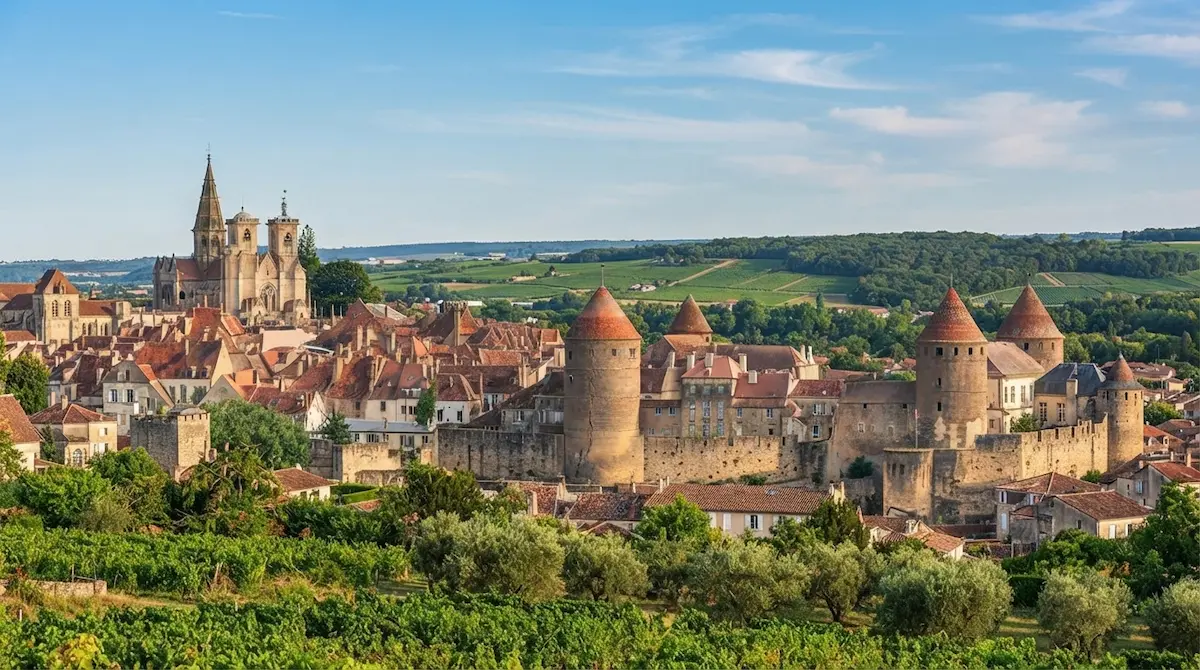
Montbard is a good place for lunch or shopping before Fontenay. If you sleep in the Auxois, plan a night around Semur-en-Auxois or Montbard rather than a late return to Beaune. Map distances are short, but departmental roads cross villages and stretch journey times. One major visit in the morning and a calm arrival at accommodation works better than three monuments in the same half-day.
Logistics over three days
A car makes this itinerary far more flexible. Day 1 can be done without a car between Dijon, Beaune and the TER; take a vehicle only the next day if that cuts cost. Allow about 95 kilometres from Beaune to Fontenay (1 h 10 by road), then about 60 kilometres from Fontenay to Vézelay (1 h). Parking is outside Vézelay village: the final climb is on foot over cobbles, with a real gradient.
Indicative budget
Excluding accommodation, allow €12.50 for the Hospices de Beaune (current rate) or another major Beaune visit, €11.50 for Fontenay, and a separate budget for tasting and meals. Basilica entry is free, but the crypt, the Saint-Michel tower and guided tours may be charged. Wine villages and walking paths are free: keep budget for one well-chosen guided visit rather than multiplying extras.
Useful bookings
Book Saturday accommodation first, a domaine tasting and any table you really want. For Fontenay, tickets are often bought on site, but check group and busy-period rules. At Vézelay, check service times if you want to photograph or visit the basilica in calm: a religious ceremony comes before the tourist programme. Pack stable shoes, a light jacket and water for the climb.
A variant without Vézelay
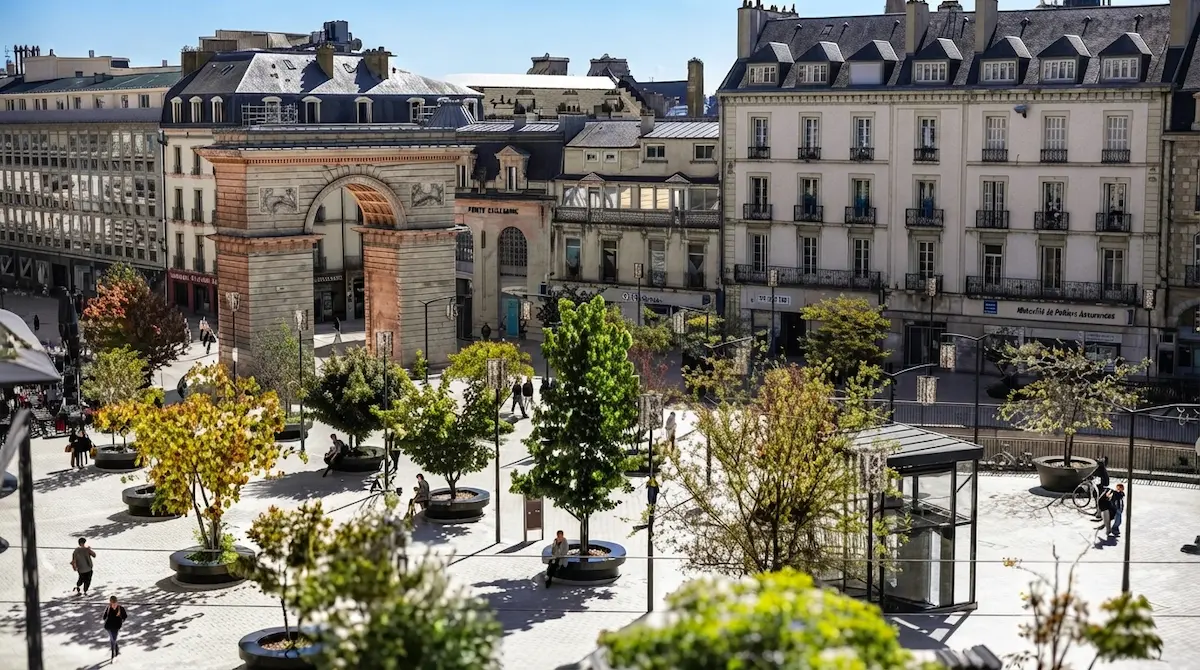
If you prefer not to leave the Côte-d’Or, replace day three with Dijon: Palais des Ducs, Musée des Beaux-Arts and the historic centre complete the Climats reading very well. Another option is to stay in the vineyard, from Beaune to Santenay, by electric bike or car. You then tick only two UNESCO inscriptions, but you avoid a long day of driving and look at the territory with more attention.
Frequently asked questions
Why are the Burgundy climats UNESCO-listed?
Can you visit the three UNESCO sites in 2 days?
Another question?
Write to usSources