


In short: a hot-air balloon flight over the Côte-d’Or vineyards is one of the most memorable experiences the region can offer. From the basket, at 200 or 1,000 metres, the Route des Grands Crus unfolds like a relief map: vineyard plots draw geometric patterns, wine villages (Pommard, Volnay, Meursault, Aloxe-Corton) are patches of red tiles in the green ocean of vines, and the glazed roofs of Beaune or Dijon glitter in the distance. The experience lasts about an hour, for a budget of around €250 per person, and the weather alone decides the day and the hour.
Flying over the Burgundy vineyard by hot-air balloon is not just a tourist flight. It is a reading of the wine landscape that nothing else allows: the logic of the climats, those precisely delimited plots that define Burgundy wines, is visible from the sky as it is not from the ground. A dry-stone wall, a slope, an orientation, details that decide whether a plot is classified village, premier cru or grand cru, become obvious from the basket.
How a hot-air balloon flight unfolds in Burgundy
The early-morning rendezvous
The early-morning rendezvous, details
Hot-air balloon flights take place almost exclusively at sunrise, for a simple reason: the air is then more stable, thermals (rising warm air currents) are weak, and winds are generally more predictable. The rendezvous is at dawn, at the meeting point set by the company, often a vineyard site or a car park on the edge of a village. The first light on the vines, as morning mist begins to lift, is one of the most photographed moments of the experience.
The ground crew usually consists of two or three people: the pilot, who climbs into the basket with the passengers, and a chase team in a vehicle that follows the balloon by road and picks everyone up at the landing point. Preparing the balloon is itself a spectacle: the 2,500 to 6,000 cubic metre envelope is laid out on the ground, inflated with cold air by a fan, then gradually heated by the burners until the balloon stands upright.
Take-off and flight
Take-off is silent, or nearly so: only the roar of the burners breaks the calm when the pilot fires the flame to hold or gain altitude. The basket, of woven wicker, lifts without a jolt, and in a few seconds the landscape tilts: the ground recedes, tree silhouettes shrink, and the perspective changes radically.
The flight lasts about one hour, during which the balloon follows the wind, at an altitude ranging from a few metres above the treetops (for the most spectacular passes skiming the vines) to 800 or 1,000 metres for panoramic views. The pilot comments on the landscape, points out villages, domaines, climats you fly over. Each flight is unique, since wind direction and speed vary every day.
Landing
Unlike a plane, a hot-air balloon cannot land exactly where it wants: the pilot looks for a field or clearing large enough, aligned with the wind. Landing is announced by the pilot (“hold on, bend your knees”) and is generally gentle, sometimes with a small bounce or a drag of the basket across the grass if the wind is a little strong. The ground team arrives a few minutes later, and everyone helps fold the balloon, a convivial moment that is part of the experience.
Tradition has the flight end with a glass of crémant or champagne shared among passengers and crew, sometimes with breakfast or gougères. It is the moment for group photos, exchanging numbers and commenting on the best moments of the flight.
Companies offering flights in Côte-d’Or
Several companies operate hot-air balloon flights over the Burgundy vineyard, mainly from Beaune, Dijon and the wine villages of the Côte de Beaune and Côte de Nuits.
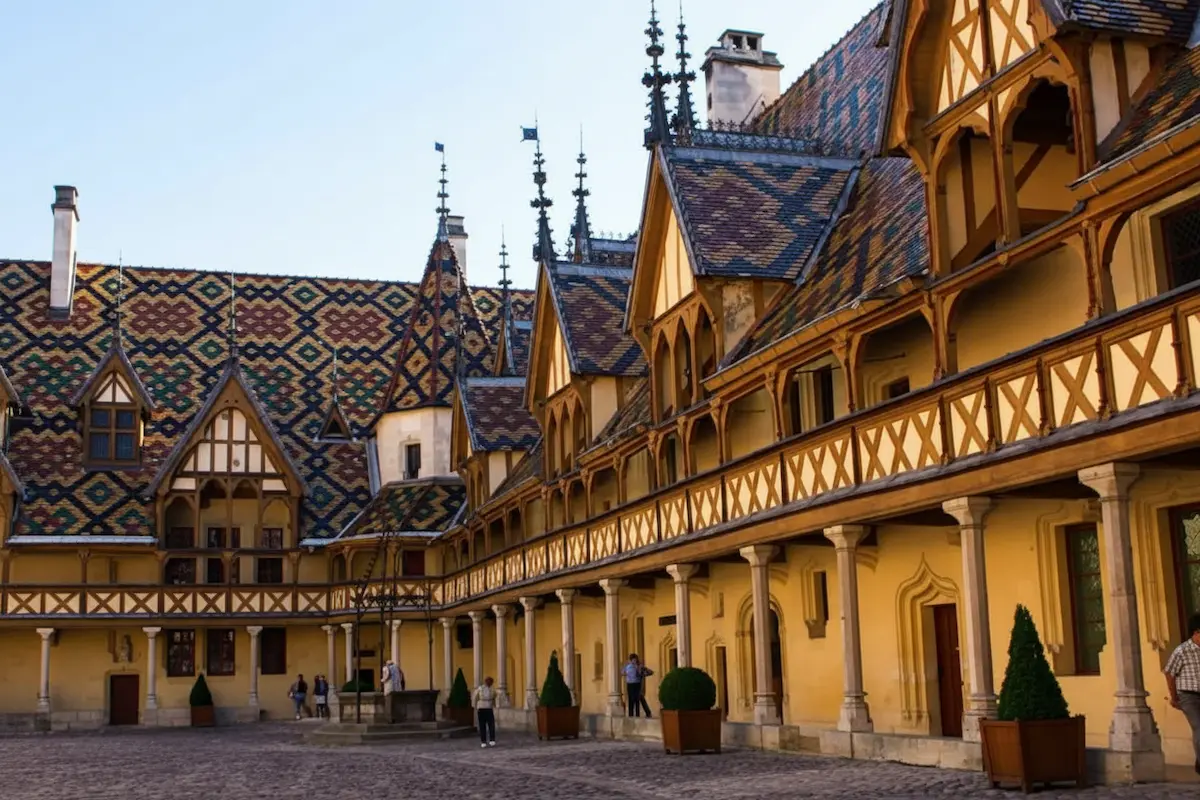
Beaune Montgolfières: one of the best-established companies, based in Beaune. It offers flights over the Côte de Beaune, with views of the Hospices, the glazed roofs and the grands crus of Corton. Prices: from €249 per person for the discovery flight (€280 for one person, €550 for two), €999 for an exclusive duo flight, €1,300 for a private basket, with a basket seating up to 8 passengers.
Bourgogne Montgolfière: a company based in Côte-d’Or, it covers the Côte de Nuits more: Gevrey-Chambertin, Vosne-Romanée, Clos de Vougeot. An ideal flight for lovers of grands crus.
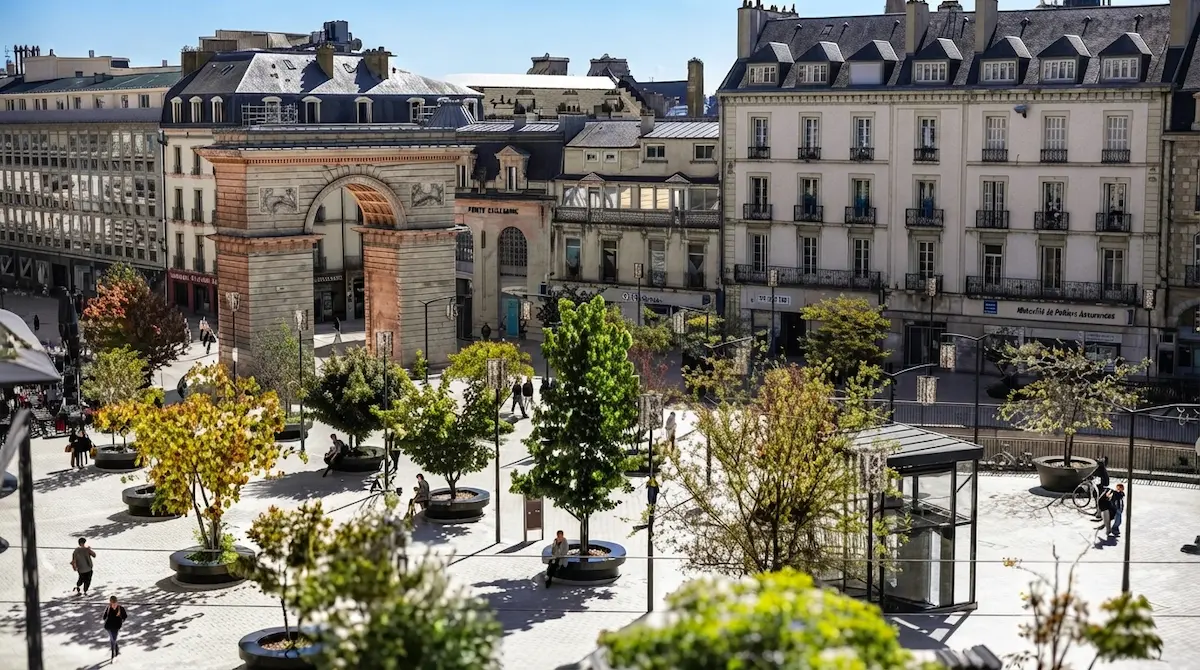
Several operators offer take-offs from the Dijon metropolis, with a view mixing vineyard and urban heritage, the cathedral of Saint-Bénigne, the Palais des Ducs, and the slopes of Marsannay, the only Côte de Nuits appellation to produce all three colours (red, white, rosé).
How to choose
The choice of company depends mainly on what you want to see. The Côte de Beaune (flight from Beaune) offers the most iconic view: glazed roofs, the Hospices, Pommard, Volnay, Meursault. The Côte de Nuits (flight from Nuits-Saint-Georges) is more compact, with the world’s greatest reds. The Dijon area (flight from Dijon) mixes urban and viticultural.
All companies are subject to the same safety rules set by the Fédération Française d’Aérostation and the Direction Générale de l’Aviation Civile. Pilots hold a free-balloon pilot’s licence, obtained after specific training and a minimum of flying hours.
Weather conditions: the decisive factor
Wind is the hot-air balloon’s enemy. A flight needs surface wind below 10 km/h, ideally around 5 km/h. Beyond that, take-off and especially landing become too risky. Visibility must be good (no thick fog, no rain), and the atmosphere stable (no storm forecast).
These conditions explain why about 30% of scheduled flights are cancelled or postponed. This is not a service fault; it is an unavoidable physical constraint. Companies know it and say so: they prefer to cancel a flight rather than take risks. The decision is taken the evening before or the same morning, after consulting specialised weather bulletins for ballooning.
Consequence for the visitor: do not organise your stay around a single balloon slot. Schedule a flight early in the stay, with a two- to three-day buffer for a postponement. If you have only one day available and the flight is cancelled, the experience is refunded, but the disappointment remains.
The best time to fly
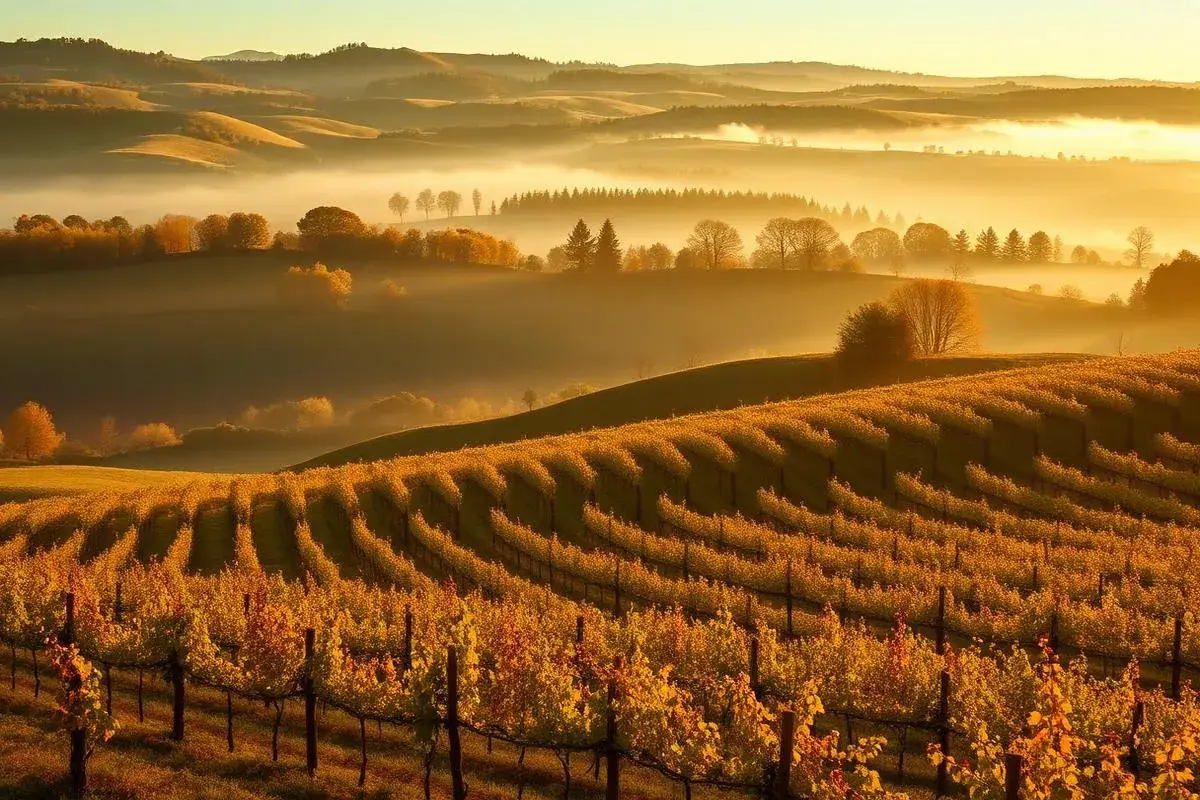
The most favourable seasons are spring (April to June) and autumn (September to October). In April–May the vine is only just greening and colours are soft; in September–October the leaves turn red and gold, and the harvest animates the plots. Mornings are often clear and calm.
Summer (July–August) brings more stormy days, which raises cancellation risk. Morning flights remain possible, but summer heat generates thermals that make the flight less stable, especially mid-morning. Winter (November to February) offers spectacular low light and a calmer atmosphere, but the days are short and the cold at altitude is sharp.
Prices and booking
The standard rate for a one-hour discovery flight is about €250 per person (from €249 with some operators). This price usually includes the flight, equipment, preparation, pack-up, the celebratory glass and sometimes breakfast. Private flights (basket reserved for a couple or small group) cost more, from €1,300 depending on the company.
Booking is done online on the company’s site, with payment on registration. Companies generally offer a weather guarantee: if the flight is cancelled for bad weather, it is postponed free of charge or fully refunded.
Frequently asked questions
What is the best season for a hot-air balloon flight in Burgundy?
How much does a hot-air balloon flight over the vines cost?
Is hot-air ballooning suitable for children?
What happens if the flight is cancelled for weather?
Another question?
Write to usSources