
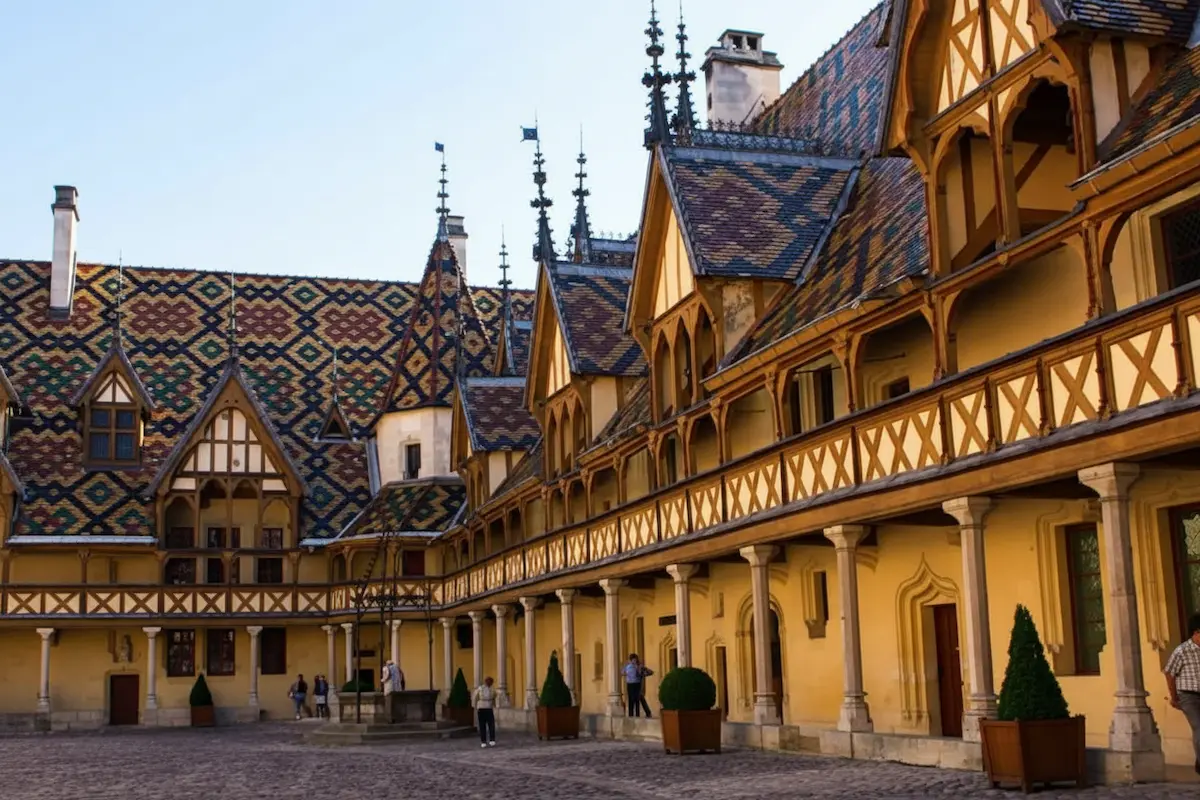
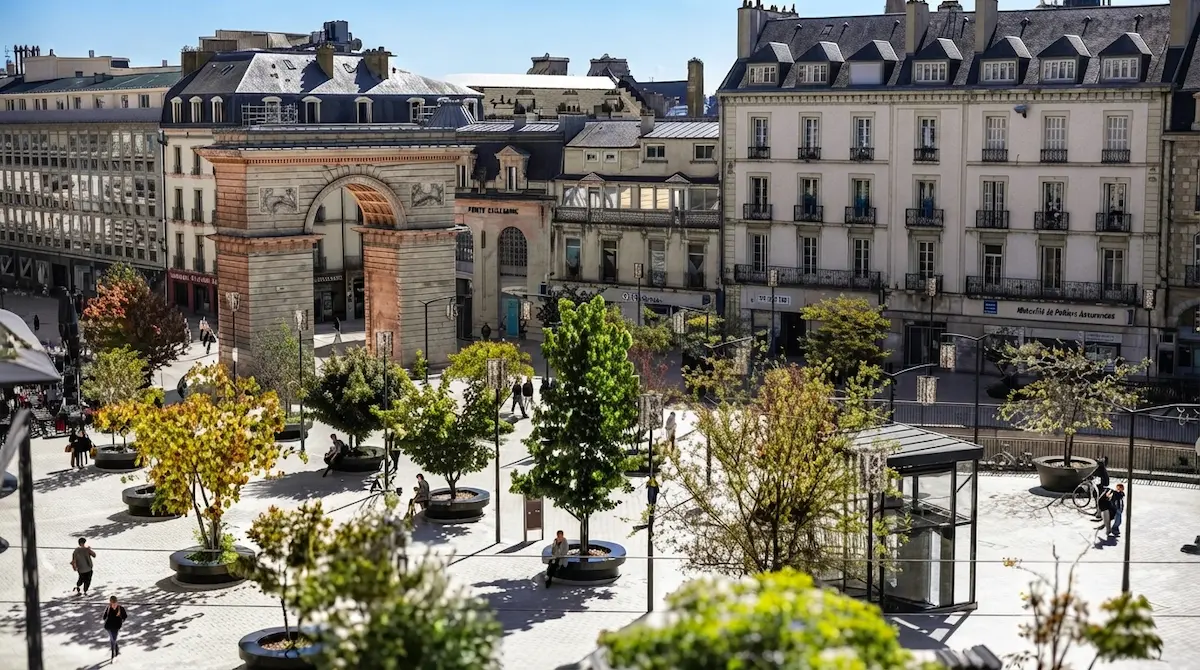
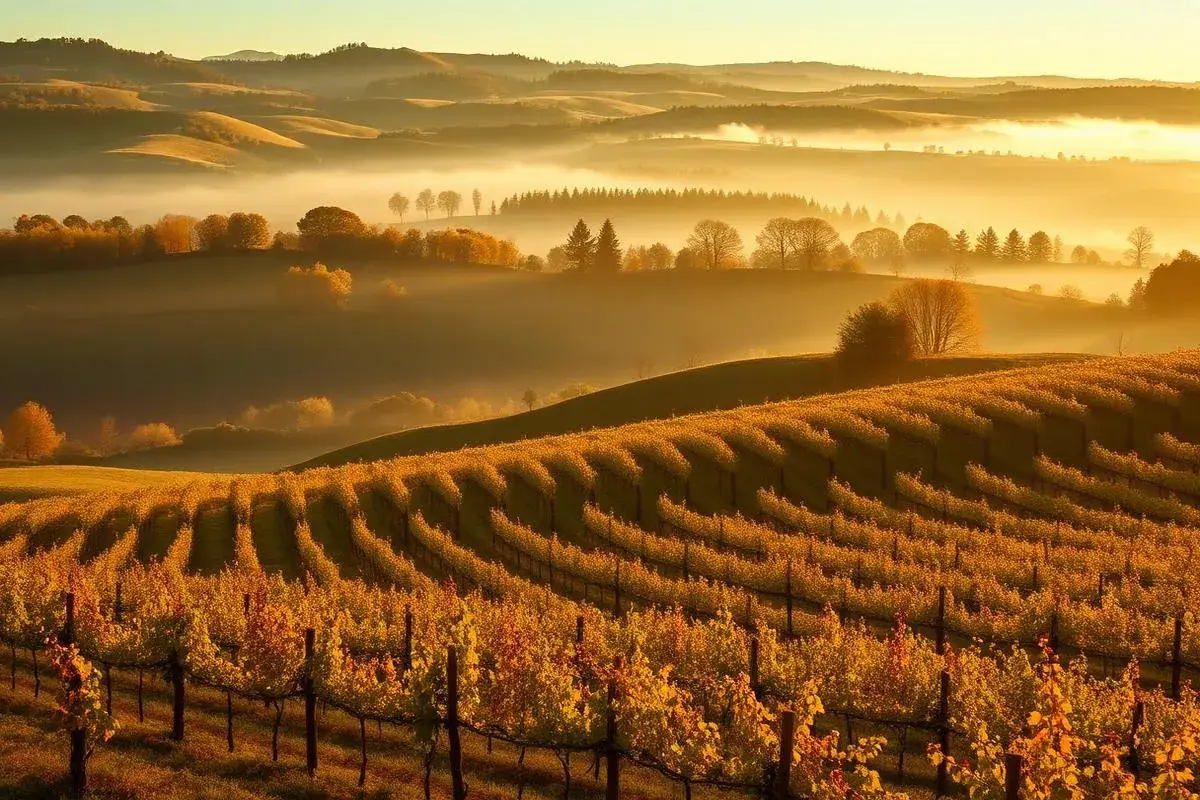
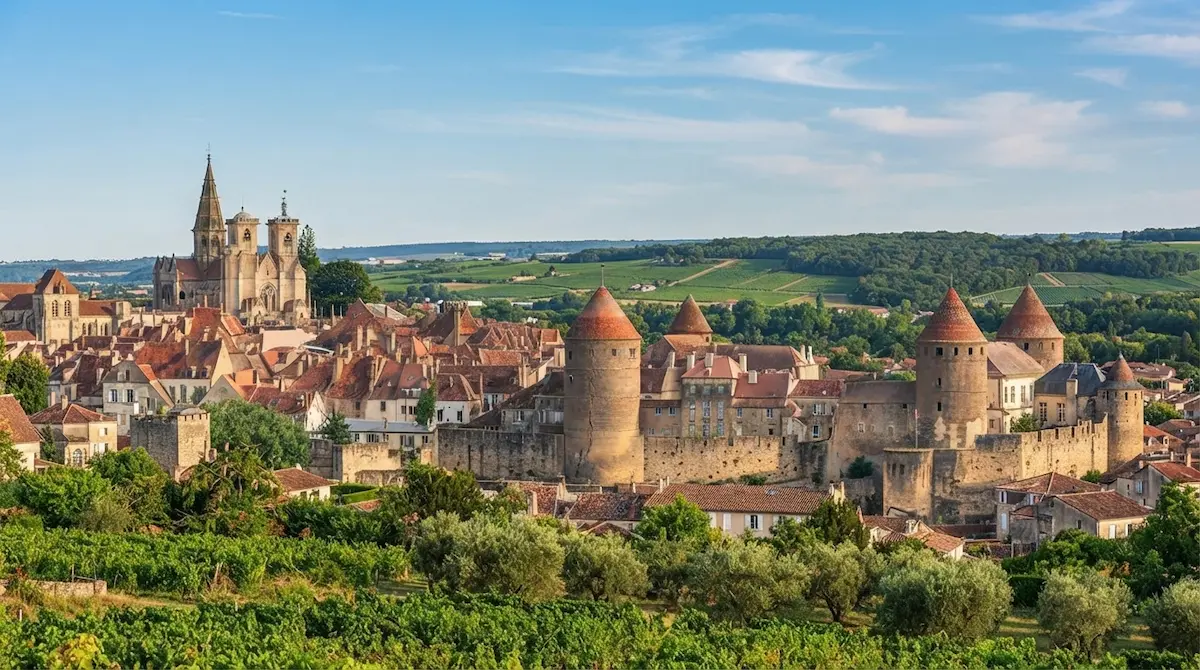
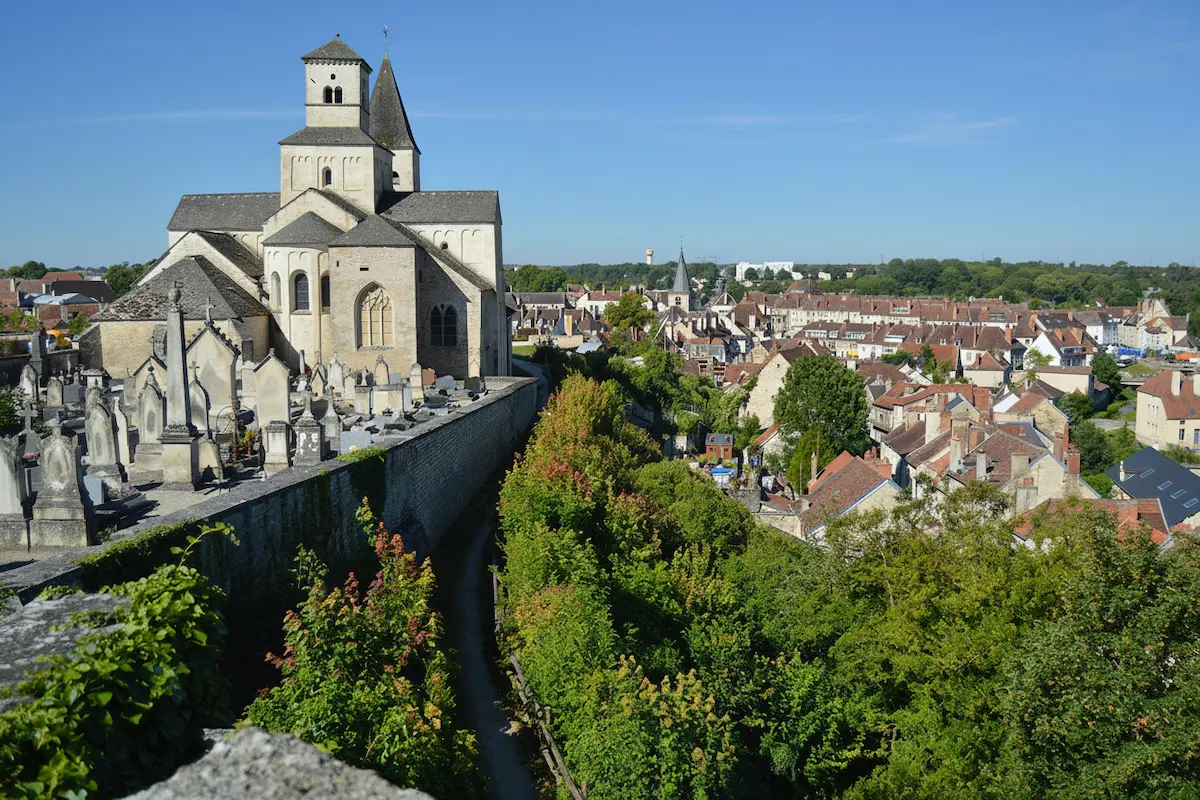


In short: with around 360 labelled gîtes and some twenty communal gîtes, Côte-d’Or offers one of the highest densities of rural holiday rentals in Bourgogne-Franche-Comté. From a character gîte in an Auxois farm building to a fishing gîte beside the canal, or a treehouse in the Châtillonnais forest, the choice depends less on the label than on the ‘region’ you settle in. Each natural area, Dijonnais, Auxois, Châtillonnais, Morvan, has its own logic of stay.
The rural gîte is the most widespread form of accommodation in Côte-d’Or after the second home. According to 2025 data from ADN Tourisme and INSEE, the département has around 360 labelled properties (Gîtes de France and Clévacances combined), plus unclassified rentals and some twenty communal gîtes managed directly by town halls. This dense network covers the whole territory, with peaks of concentration in suburban Dijonnais, the Ouche valley and the Auxois, and looser coverage in the Châtillonnais and Morvan, where gîtes are more spaced out but also more isolated.
The two dominant labels, Gîtes de France and Clévacances, work on very similar principles but with different assessment grids. Gîtes de France submits each property to an audit covering 250 criteria in six categories: equipment, comfort, services, environment, activities and sustainability. Classification runs from 1 to 5 épis, with 5 épis corresponding to a prestige level with hotel-style services (linen provided, welcome products, cleaning included, spa or private pool). Clévacances uses a lighter grid of around 150 criteria and a 1 to 5 clés rating on a similar system. Both labels require regular inspections and updated membership fees, but neither guarantees the age of the building: a 4-épis gîte may be in an eighteenth-century farm building fully renovated or in a recent construction, only interior comfort is audited.
Dijonnais gîtes: countryside twenty minutes from the city
The Dijonnais, within roughly 25 kilometres of Dijon, concentrates the highest density of rural gîtes in the département. This zone benefits from demand generated by the Dijon metropolis: business travellers, families coming for an event (International Gastronomic Fair, Fêtes de la Vigne, DFCO matches), foreign tourists who want to stay in the country while keeping the city within tram reach. Gîtes here are almost all labelled Gîtes de France or Clévacances, mostly 2 to 4 épis, with rates slightly above the département average because of rental pressure.
Four sectors stand out in rural Dijonnais. The Ouche valley, from Fleurey-sur-Ouche to Pont-d’Ouche, offers gîtes beside the river or canal, with direct access to the towpath for cyclists and walkers. The Langres plateau to the east, around Is-sur-Tille and Selongey, has more isolated gîtes, often with enclosed garden and large grounds, suited to families with children. The Dijon slope, the wine villages of Marsannay-la-Côte, Couchey, Chenôve, Fixin, concentrates upmarket gîtes in former winemakers’ houses, with vineyard views and sometimes a private cellar. Finally, the Saône valley, towards Auxonne and Saint-Jean-de-Losne, attracts boaters with gîtes near Saône marinas.
The price of a 4-person gîte in the Dijonnais for a week in high season varies by standing: expect €400 to €1,200 a week depending on equipment and location. Low season offers reductions that often bring a week down to €350–450 for decent accommodation. The main advantage of this sector is access to shops and services, with short travel times to supermarkets or medical centres.
The Auxois: character gîtes in stone
The most sought-after region for family stays
The Auxois, stretching from Semur-en-Auxois to Montbard and from Vitteaux to Pouilly-en-Auxois, is the sector where rural gîte supply is most diverse and highest quality in the département. The landscape alternates bocage, limestone hills crowned with forest and green valleys, dotted with medieval villages among the finest in Burgundy: Semur-en-Auxois, Flavigny-sur-Ozerain, Châteauneuf-en-Auxois, Saint-Thibault. The concentration of listed sites (Fontenay Abbey UNESCO, Château de Bussy-Rabutin, Basilica of Vézelay within an hour) attracts cultural-stay visitors who rent for a full week rather than a weekend.
Auxois gîtes fall into three main categories. Farm-building gîtes, converted from old barns or stables in limestone, with exposed beams, thick walls and flat tile roofs, account for around 40% of labelled supply in the Auxois and are particularly sought after for character and space. Village gîtes are self-contained units in historic town centres, more compact but better placed for visits on foot. Estate gîtes are rented by owners who live on site (often in an adjoining farm building), with more personal welcome and local sightseeing tips.
The Gîtes de France label dominates the Auxois, with around 90 properties out of the 210 in the département. The reason is historical: Gîtes de France was founded in 1955 in Provence and spread from the 1960s in Burgundy, supported by communes and chambers of agriculture who saw rural letting as a supplement to farm income. The Auxois, an agricultural region where mixed farming dominates, was an early stronghold, and the Gîtes de France Côte-d’Or adviser network still carries out most of its approval and inspection visits there today.
Prices, capacity and equipment by Auxois sector
Prices in the Auxois follow a gradient: the closer you are to the most visited sites (Semur-en-Auxois, Flavigny, Fontenay Abbey), the higher the rate. A 3-épis gîte for 6 people at Semur-en-Auxois or within 5 kilometres of Flavigny rents for €700 to €950 a week in high season. The same gîte, 20 kilometres east (Vitteaux canton, Précy-sous-Thil) or north (Montbard canton outside Semur), drops to €550–700 for equivalent capacity and equipment. The gap is purely geographical and does not reflect a difference in quality: it simply reflects demand concentrated on tourist hubs.
Auxois gîtes average higher capacity than elsewhere in the département: converted farm buildings often offer 6 to 10 beds over two levels, with two or three bathrooms, a well-equipped kitchen and a spacious living room. This layout suits large families, groups of friends and family reunions. Village gîtes in medieval towns are more compact (2 to 4 people), often on several floors with narrow stairs, making them less suitable for reduced mobility but more charming for a couple or small family.
Standard equipment for a 3-épis gîte in the Auxois includes: fitted kitchen (hob, oven, fridge, dishwasher), washing machine, central heating or wood stove, television, wifi, private terrace or garden, parking. 4-épis gîtes add: private or shared pool, spa or jacuzzi, fireplace or insert stove, household linen provided, cot on request, local welcome products (apple juice, jam, Auxois honey). 5-épis gîtes, very rare in Côte-d’Or (fewer than 5 in the whole département), include full hotel-style services with daily cleaning, breakfast on order and concierge.
The Châtillonnais: stopover and nature gîtes
The Châtillonnais, in the north of the département, offers a radically different type of gîte: the emphasis is on isolation, nature and quiet rather than proximity to tourist sites. Gîte density is the lowest in Côte-d’Or, with around 35 labelled properties over more than 1,800 km², one gîte per 51 km² compared with one per 8 km² in the Dijonnais. This isolation is both the main appeal, alone among fields and forest, and the main constraint: shops and services may be 20 to 30 minutes away by car.
Châtillonnais gîtes cluster around three axes: the Seine valley (from Châtillon-sur-Seine to Saint-Seine-sur-Vingeanne), with the most accessible and best-equipped gîtes, often riverside with garden; the Montagne plateau, forest and clearing country around Recey-sur-Ource and Auberive, where gîtes are isolated stone farms with wood heating and sometimes unreliable internet; and the Aube valley to the east, around Montigny-sur-Aube and the Clairvaux forest. Communal gîtes are particularly present here: several small communes (Vaupoisson, Villers-le-Duc, Larrey) rent a renovated communal dwelling at very moderate prices, between €250 and €400 a week.
The Châtillonnais is also the favoured sector for unusual gîtes in Côte-d’Or: yurts, treehouses, caravans and tiny houses are more numerous than elsewhere in the département, driven by demand for nature tourism and digital detox. These non-standard properties often escape Gîtes de France or Clévacances classification but are listed by the Pays Châtillonnais tourist office and specialist booking platforms. Their price in high season ranges from €70 to €130 a night for two people, with limited capacity (2 to 4 beds) and often basic equipment (shared sanitary facilities, outdoor kitchen).
The Morvan: fishing, hiking and stargazing gîtes
Accommodation designed for outdoor activity
Morvan on the Côte-d’Or side, the eastern part of the regional natural park, offers some fifty labelled gîtes spread across the cantons of Saulieu, Précy-sous-Thil and Liernais. Morvan gîtes are distinctive for their orientation towards outdoor activities. Many offer dedicated equipment: bike garage with repair kit, fishing-clothes dryer, storage for hiking gear, e-bike charging point. Some gîtes near Lac de Pont or Lac de Chamboux include a weekly fishing permit and access to private pontoons.
The most common type in the Morvan is the angler’s or walker’s gîte: capacity 4 to 6 people, functional equipment without excess luxury, wood or oil heating, in a hamlet or beside a departmental road rather than at the heart of a village. Rates are among the lowest in the département: allow €300 to €500 a week in high season for a 2 to 3-épis gîte, with last-minute offers in June and September under €250. Upmarket gîtes exist in the Morvan too but in smaller numbers, concentrated around Saulieu (a stop on the N6 and RN80, with renowned restaurants) and Lac de Pont.
The Morvan is also where the gîte opening season is most marked. Although most owners rent year-round, demand drops sharply between November and March, except for gîtes with a wood stove or fireplace that attract short winter breaks. Low season (January–March) can see rates 50% below summer, with nights from €45 for a 2-person gîte. Some gîtes simply close from November to March, especially those without efficient central heating.
Communal gîtes: the budget alternative
Communal gîtes, managed directly by municipalities without a private label, deserve special mention in the Morvan context. Of the twenty or so communal gîtes listed in Côte-d’Or, about ten are in the Morvan, in communes of fewer than 200 inhabitants. They are installed in former schoolteacher housing, renovated presbyteries or village houses acquired by the commune. Equipment is basic but functional: kitchen, bathroom, 2 to 4 bedrooms, electric or wood heating. Rates are often degressive by length of stay, with nights from €35 for a couple off season, and weeks at €250–350.
Their main drawback is visibility: few communal gîtes have an online booking site or presence on platforms. Booking is by phone or email with the town hall, and availability is not always up to date on tourist directories. In return, welcome is usually very personal, with tips from the mayor or town clerk on hiking paths, local producers and village events.
Choosing your gîte according to your itinerary
Choosing a gîte in Côte-d’Or depends first on your itinerary, more than on label or price. A stay centred on major sights (Hospices de Beaune, Fontenay Abbey, Château de Bussy-Rabutin, medieval Semur) justifies a gîte in central Auxois, within 30 minutes of each site. A nature and hiking stay suits Morvan or Châtillonnais gîtes, with marked trails starting from the doorstep. A wine-tourism stay should target Dijonnais or Côte de Beaune gîtes, walking or a short drive from wine estates. And a complete switch-off stay, without phone or timetable, belongs in isolated Châtillonnais or deep Morvan gîtes.
Booking period is also key. For the Auxois and Dijonnais, 3 and 4-épis gîtes are 70% booked by April for high season, and last availability in July–August is mainly in communal gîtes or unclassified rentals. For the Châtillonnais and Morvan, availability stays good until late June, with frequent last-minute cancellations. The 2025–2026 trend confirms a significant rise in rural gîte bookings in Bourgogne-Franche-Comté, driven by post-pandemic nature demand and growth in working holidays (gîtes with wifi sought by workers extending their stay mid-week).
Frequently asked questions
What is the difference between Gîtes de France, Clévacances and a communal gîte?
What budget should you allow for a rural gîte in Côte-d'Or in 2026?
Is a Gîtes de France 4-*épis* gîte necessarily more expensive than a 2-*épis* one?
Do rural gîtes accept pets?
Another question?
Write to usSources
- Gîtes de France Côte-d'Or - Locations
- Clévacances - Locations en Côte-d'Or
- Bourgogne Tourisme - Gîtes et locations
- Parc naturel régional du Morvan - Gîtes et hébergements
- Côte-d'Or Attractivité - Se loger en Côte-d'Or
- Wikipédia - Gîte rural
- ADN Tourisme - Location saisonnière, tendances 2025
- INSEE - Tourisme en Bourgogne-Franche-Comté