
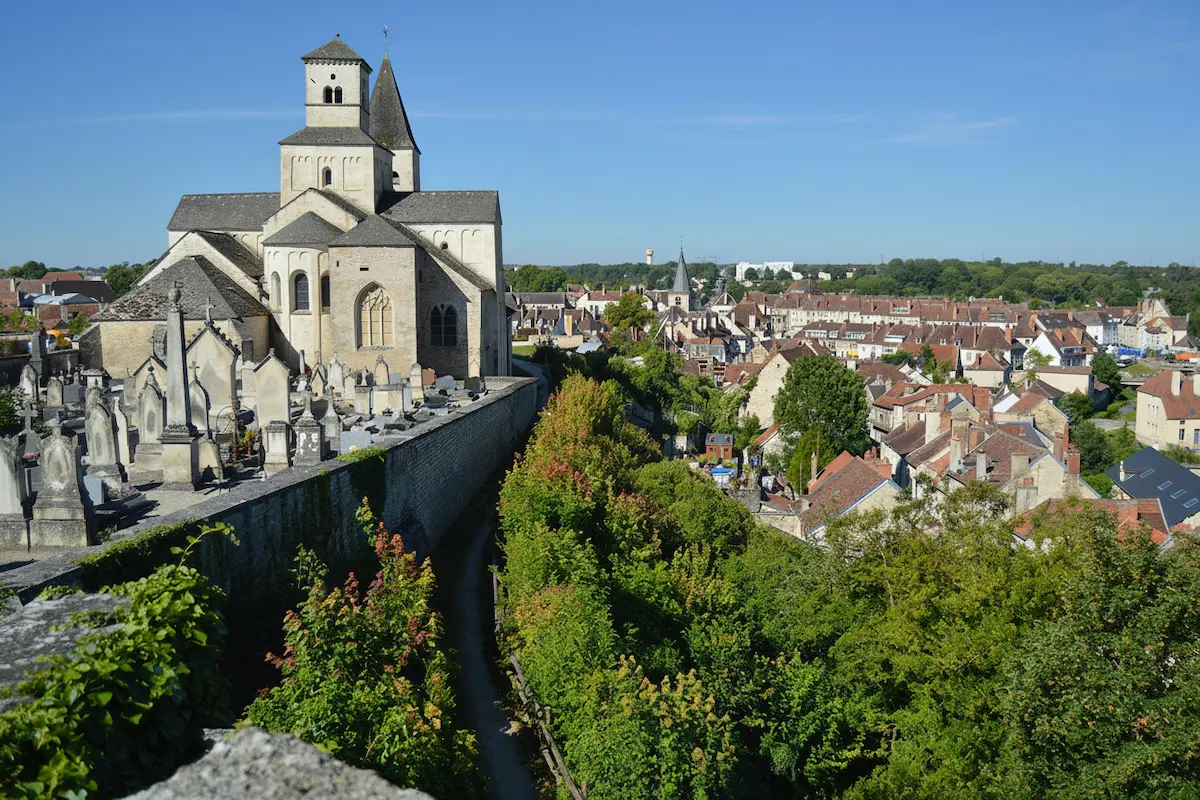


In short: in Côte-d’Or, where you sleep shapes the trip far more than it does elsewhere. A wine village, a viewpoint over the UNESCO-listed climats, a townhouse in Dijon’s protected sector, a farmhouse guest room in the Auxois, or a night under the Morvan’s dark sky: five different logics, to choose according to what you actually want from the stay.
Côte-d’Or counts 1,638 recorded tourist accommodations, according to the tourism agency Côte-d’Or Attractivité, from rural gîtes to grand hotels in Dijon. That figure alone says nothing about the trip you’ll actually have: sleeping steps from a listed climat, in a half-timbered 18th-century room, or under the darkest sky between Paris and Lyon are three experiences with almost nothing in common, even though the first two sit less than an hour apart. This guide names no addresses. It explains what each type of place genuinely changes, so the choice gets made with the facts in hand rather than at random on a map.
Sleeping at the Foot of the Vineyard
Choosing a wine village on the Côte de Nuits or Côte de Beaune over a town changes the rhythm of the day first. Winegrowers start early, and the streets of villages like Gevrey-Chambertin, Vosne-Romanée or Meursault fall quiet by 9pm outside harvest season. You can walk into the rows in ten minutes from the village centre, no car or organised transport required, something true of no town of more than 5,000 people in the department.
The trade-off: these villages have no cinema, no supermarket, and barely any nightlife, and the choice of restaurants often drops to two or three addresses in low season. Sleeping in the village means accepting that quiet, or renting a car to reach Beaune or Dijon in the evening. During harvest, generally late August to mid-September depending on the vintage, the bustle in the streets and the smell of must in the air become part of the stay as much as the wine itself: a plus for anyone chasing immersion, a drawback for anyone hoping for total calm.
A View Over the UNESCO Climats
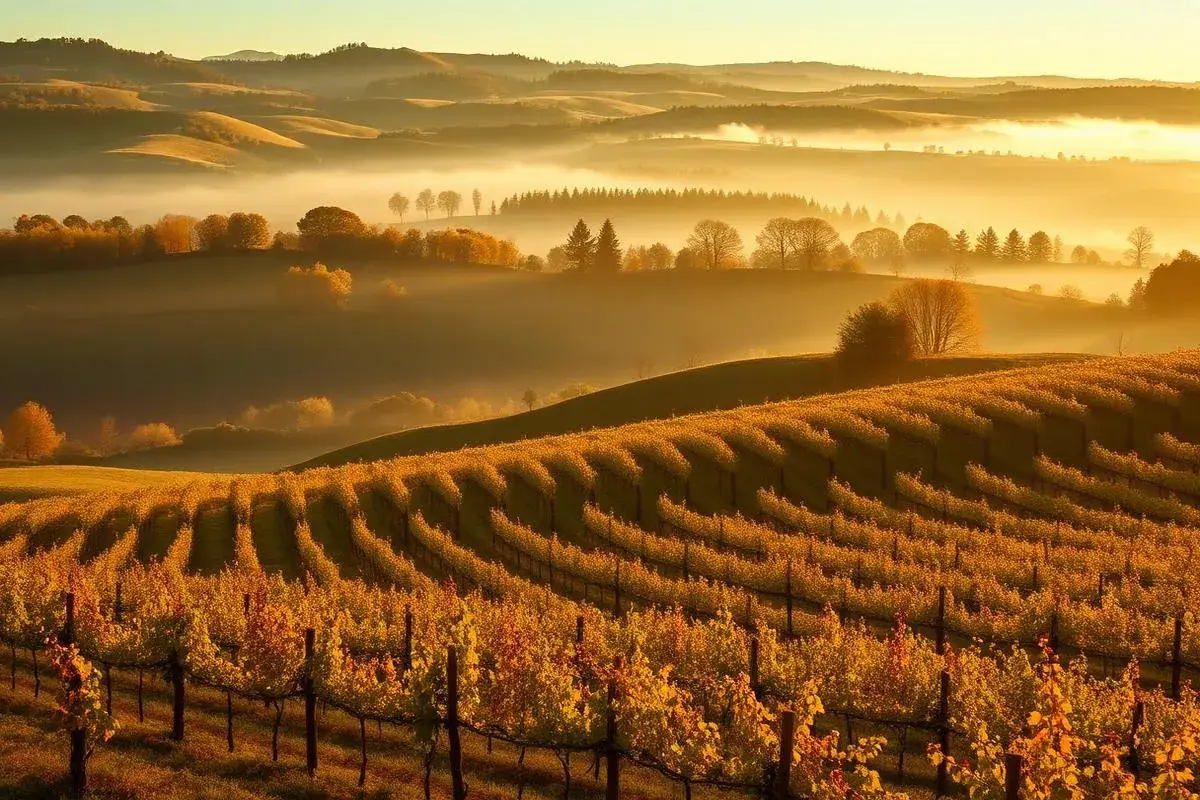
The climats of the Burgundy vineyard, 1,247 precisely delimited plots across the Côte de Nuits and Côte de Beaune, were inscribed on the UNESCO World Heritage List on 4 July 2015. What sets one climat apart from another comes down to four factors: slope, which aids drainage, the nature of the soil (clay or limestone), the subsoil (limestone or marl), and sun exposure. The Côte d’Or as a whole faces predominantly due east, with local variations caused by the valleys cutting through it, a detail that matters directly for anyone after a room with a view: the high points on the western edge of the slope, around the Hautes-Côtes de Nuits and de Beaune, look right down over the whole hillside and catch the sunrise on the vine rows, while accommodation lower down, level with the plots, only sees the green wall of the neighbouring climat.
Light shifts through the day along that eastern orientation too: morning light hits the vines head-on, afternoon light strikes them at an angle, and the best moment for photographing or simply watching the vineyard’s colours falls in late morning, once the sun has swept across the slope without yet burning it at the low angle of evening.
A Townhouse in Dijon, 17th-18th Century
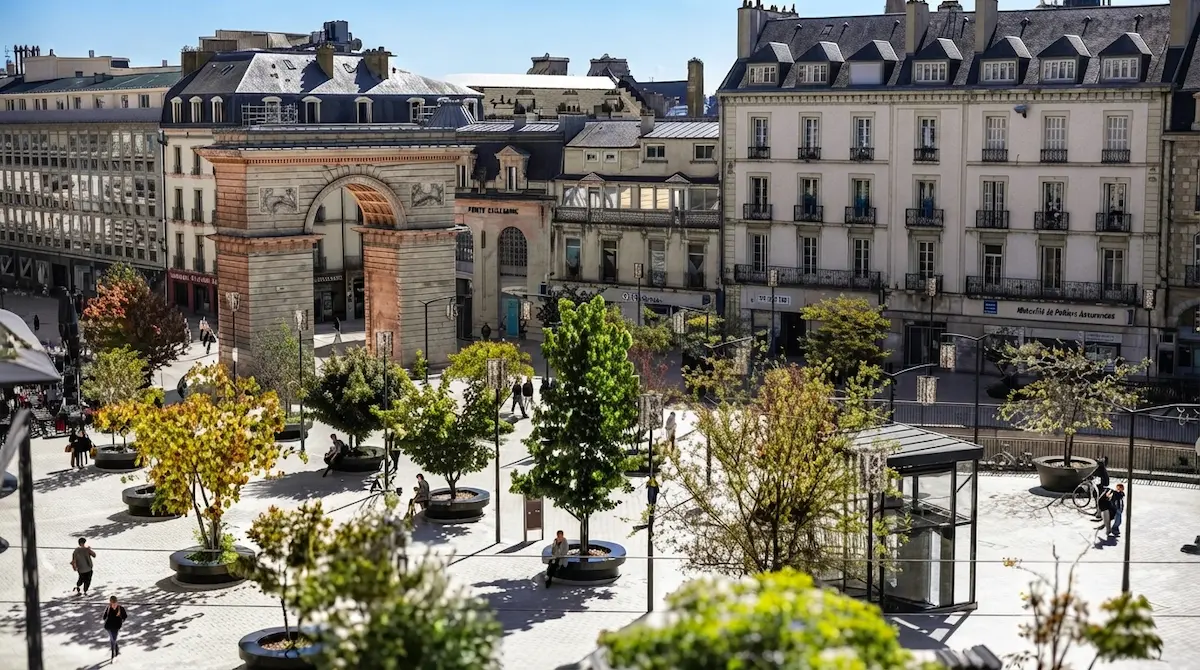
Central Dijon was designated a protected heritage sector in 1966, over 97 hectares that follow the line of the old medieval ramparts, one of the largest such protected sectors in France. It holds around 3,000 buildings from every period, including more than 120 townhouses listed or registered as historic monuments. About a hundred of them were built between the 16th and 18th centuries by families of the Parlement de Bourgogne, seated in Dijon after the duchy’s annexation to the French crown: in a society where appearance signalled rank, these mansions displayed their owners’ standing as much as they housed them.
The typical layout follows the courtyard-and-garden model, comparable to the Marais district in Paris: set back from the street, an entrance courtyard, an elaborate staircase, façades in Burgundy limestone whose tones shift with the light. Sleeping in one of these townhouses converted into accommodation means staying in rooms designed to receive guests: high ceilings, tall windows with small panes, sometimes a grand staircase, a few minutes’ walk from the Palais des Ducs and the covered market, with no need for a car to explore the historic centre.
Farmhouse Guest Rooms
A Well-Documented Rural Architecture
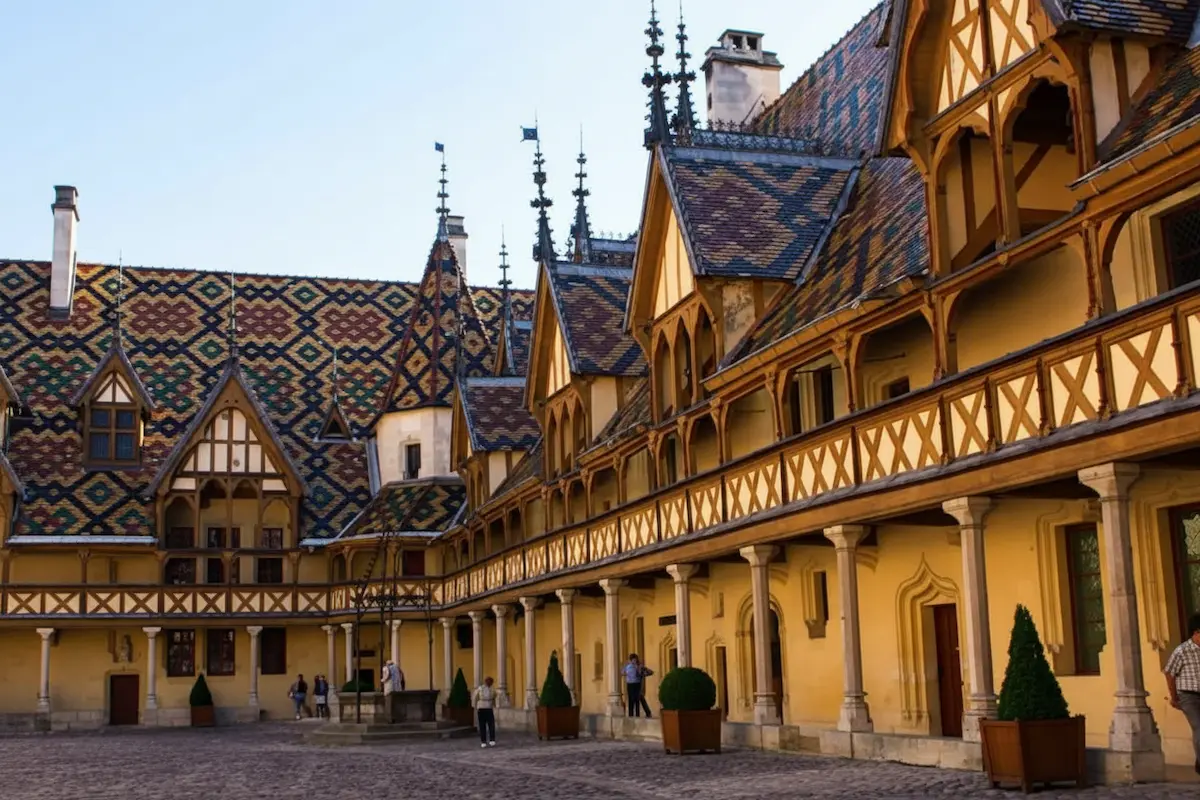
In the Auxois and Châtillonnais, traditional rural buildings combine local limestone, timber framing and flat terracotta roof tiles, sometimes glazed on the finest buildings, laid with a curved eave and ridge finials. In the Morvan, a survey carried out by the regional cultural authority (Drac Bourgogne) between 1998 and 2004 across 98 municipalities of the regional park recorded 460 rural buildings, of which 208 were entered into the national Mérimée heritage database: the typical Morvan farmhouse combines the dwelling, barn and stable under one roof but in separate sections, with the hayloft above the living quarters.
Labels That Guarantee Comfort, Not Age
Two labels help sort things out when an old farmhouse is offered as a rental or guest room: Gîtes de France rates accommodation from 1 to 5 épis based on comfort and equipment, Clévacances rates from 1 to 5 keys on an equivalent principle, backed by an audit against controlled criteria. Neither guarantees how old the building actually is: a renovated farmhouse can score 4 épis with an entirely contemporary interior, but both give a reliable read on the real comfort level, useful for weighing old-stone charm against the sometimes harsh thermal inertia that thick stone walls impose without reinforced heating.
Sleeping in the Morvan, Under a Protected Sky
The Parc naturel régional du Morvan received, on 21 May 2025, the International Dark Sky Reserve (IDSR) designation from DarkSky International: the 7th such reserve in France, the 24th worldwide. The designated area covers 50 municipalities, with a core zone of 16 municipalities where 99.8% of public lighting switches off between 10pm and 6am and where average zenith luminance reaches 21.6 mag/arcsec², a figure that places the Morvan among the darkest skies in France’s north-east quarter. On satellite imagery of the region, the Morvan’s dark patch stands out clearly between the light halos of Paris and Lyon.
That darkness owes as much to the mid-mountain terrain as to the low population density: the territory is made up of small towns and many isolated hamlets, linked by a road network that stays usable without ever generating the light pollution of a city. Sleeping in the Morvan for that specific reason means aiming for the core zone rather than its outskirts, and accepting in exchange a silence and a distance from shops that travellers chasing the buzz of the wine villages won’t necessarily be looking for.
How to Choose Based on the Trip
These five logics aren’t mutually exclusive, but they answer different desires. A trip built around tastings and cellar visits benefits from staying as close to the vineyard as possible, even at the cost of nightlife. A photography-driven or simply contemplative trip benefits from a high point over the climats, for the morning light as much as the overview. A cultural, food-focused city break fits best in Dijon’s protected sector, everything within walking distance. A family or group trip after space and direct contact with the countryside suits a farmhouse in the Auxois or Châtillonnais. A fully disconnected break, free of signal and artificial light, exists nowhere else in the department but the Morvan’s core zone.
The common thread: in Côte-d’Or, where you sleep is never a neutral stopover between two visits. It’s already, in part, the trip.
Frequently asked questions
Do I need to sleep in a wine village to visit the UNESCO climats?
Are all the townhouses in Dijon's protected heritage sector open to the public?
When is the best time to watch the stars in the Morvan?
Does a Gîtes de France-rated farmhouse guarantee an old building?
Another question?
Write to usSources
- Côte-d'Or Attractivité - Côte-d'Or in figures
- UNESCO / Département de la Côte-d'Or - The Climats of Burgundy
- Wikipédia - Climat (viticulture)
- City of Dijon - Protected heritage sector
- Patrimoine Dijon - An exceptional architectural heritage
- Tourisme Coutances - Understanding accommodation labels (Gîtes de France, Clévacances)
- Parc naturel régional du Morvan - The rural architecture inventory
- Parc naturel régional du Morvan - The Morvan, International Dark Sky Reserve
- Parc naturel régional du Morvan - The starry sky