
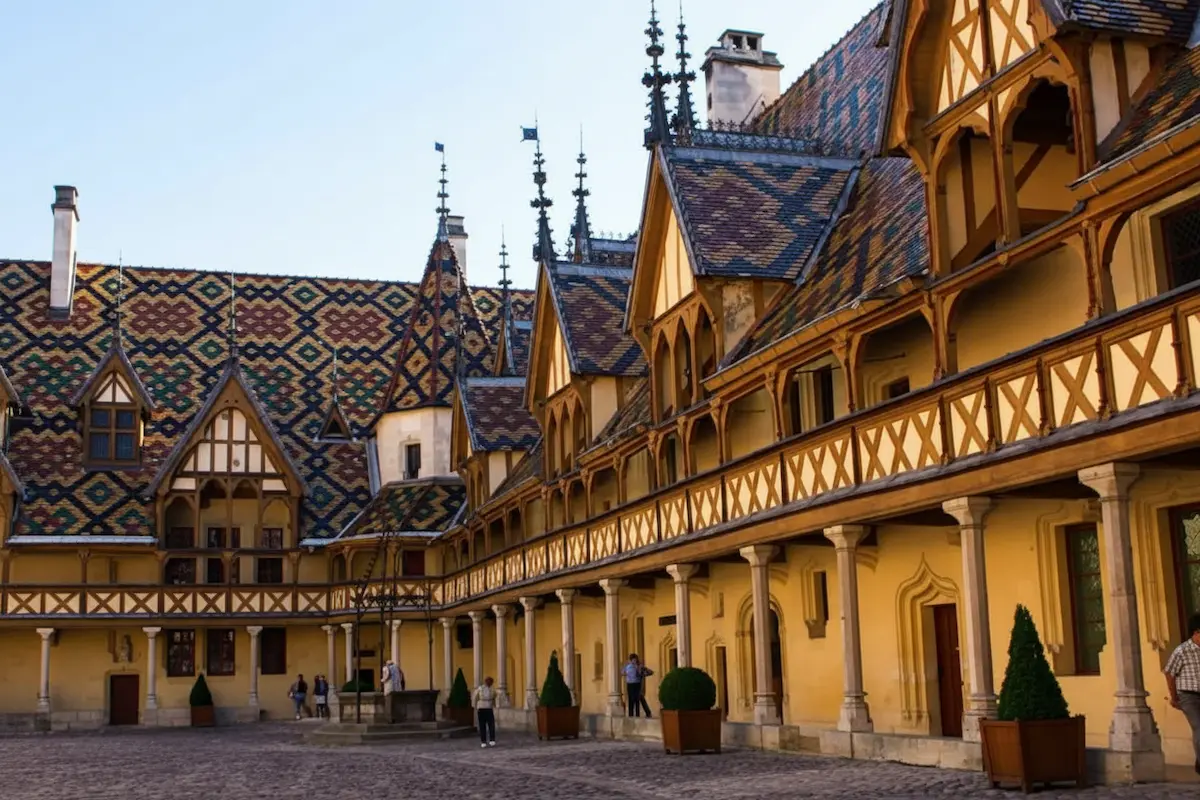
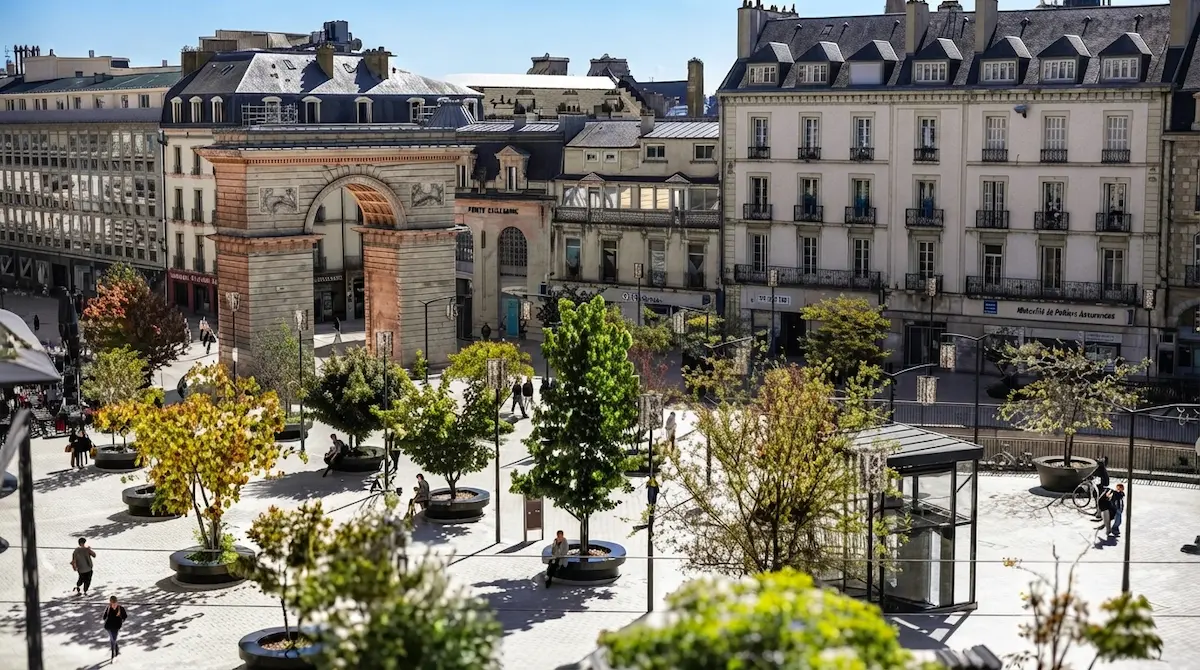
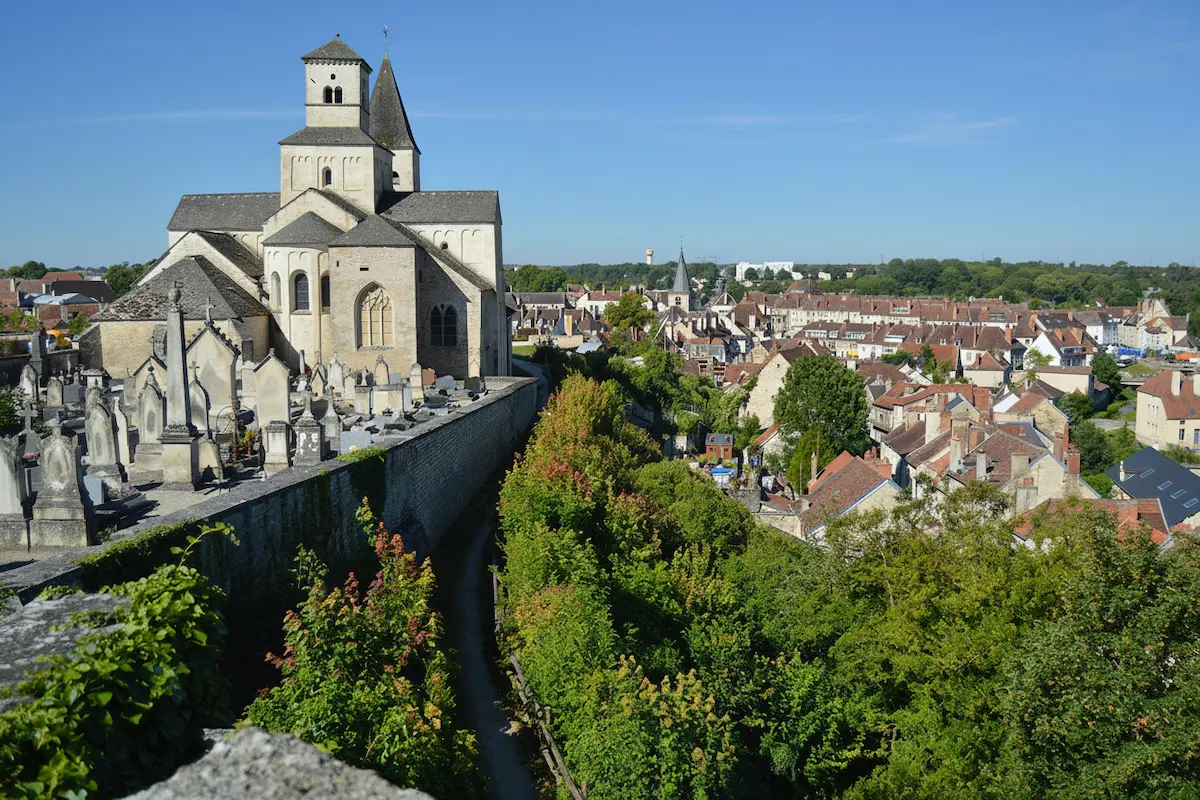


A city of 160,000 inhabitants that has kept its medieval heart, opened its international Cité de la Gastronomie, and can be crossed on foot from the Palace of the Dukes to the Arquebuse garden in under thirty minutes.
Dijon in one minute
Dijon is often underestimated. People imagine a stopover town between Paris and Lyon: a station, a hotel, a plate of beef bourguignon, and off again. That is a mistake. Dijon is a human-scale capital, with a fully pedestrian historic centre, seven free museums, a silent tramway and a gastronomy that joined UNESCO’s world heritage list in 2010, as the Gastronomic meal of the French.
You can spend 48 hours there without ever getting back in a car, sleep in a 17th-century mansion, have lunch at a Saturday morning market and end the day in a wine bar on rue Berbisey. It is the logical starting point for any trip to the Côte-d’Or.
Dijon reads like an open book: start at place de la Libération, in the shadow of the Palace of the Dukes, then let yourself get lost in the lanes down to rue Verrerie. The rest comes by itself.
Field notes, June 2026
Getting there, getting around
By train
Dijon-Ville is served by 25 direct TGVs a day from Paris-Gare-de-Lyon (1 h 35, from €39 when booking three weeks ahead on SNCF Connect). The TER Bourgogne-Franche-Comté trains reach Beaune in 22 minutes (€9.20 full fare, €6.44 with the Avantage card), Auxerre in 1 h 45 via Montbard.
By car
A6 from Paris (3 h, €39 in tolls), A31 from Nancy, A39 from Bourg-en-Bresse. Two free park-and-ride car parks with tram included in the ticket: Parc-Relais Valmy (north) and CHU-Bocage (west). The city centre has been a low-emission zone since September 2025: Crit’Air 4 and 5 vehicles are banned on weekdays.
On the spot
Two tramway lines (T1, T2) linked to the station, single ticket €1.50, day pass €4.20. Local bike share DiviaVélodi: 30 min free, a station at every tram stop. On foot, the whole historic centre fits in a square 1.2 km on a side.
The Owl’s Trail
A signposted walking route of 22 bronze markers set into the cobbles, linking the main monuments. Start at the tourist office (11 rue des Forges), free booklet, allow 2 h at a leisurely pace.
What to see
The Palace of the Dukes and Estates of Burgundy
The symbolic heart of the city. The Philippe-le-Bon tower (46 metres, 316 steps) offers the only 360° panorama of the historic centre. Guided visit only, booking at the tourist office (€5, every day from April to November). The Musée des Beaux-Arts occupies the east wing, free entry, two floors, allow 2 hours: the tombs of the Dukes of Burgundy, in alabaster and black marble, are worth the trip on their own.
The Cité internationale de la Gastronomie et du Vin
Opened in May 2022 on the former hospital site, 6,500 m², paid entry (€12), a little expensive if you only take the permanent exhibition. Better taken as a combined ticket with a cellar tasting (6,000 references, 45 wines by the glass): €28 for two hours, booking compulsory at weekends.

Notre-Dame de Dijon
A 13th-century Gothic church. Two details not to miss: the owl carved on the north buttress (the one you touch with your left hand while making a wish), and the Jacquemart, a copper automaton brought back from Courtrai by Philip the Bold in 1382, which has struck the quarter hours for 640 years.
The neighbourhoods
The Antique Dealers’ quarter
Around rue Verrerie, rue Auguste-Comte and place Bossuet. About thirty galleries, flea-market shops and restoration workshops, generally open Tuesday to Saturday 2 pm–7 pm. Have a coffee at the Rhumerie (16 rue Verrerie), a little café left outside time.
Berbisey, Charrue
The student and party quarter, between place Wilson and place Émile-Zola. About twenty bars, livelier from Thursday to Saturday. Avoid place de la République on Saturday night if you are after calm.
Where to eat, three tested addresses
La Maison des Cariatides, gourmet table
A 17th-century mansion, one Michelin star (Thomas Collomb). Lunch menu at €55 (starter-main-dessert), 7-course tasting menu at €125. Book two weeks ahead at least. 28 rue Chaudronnerie.
DZ’envies, modern bistro
The locals’ favourite lunch address. A slate that changes every day, around €24 a main. Short but sharp wine list of red Burgundy. 12 rue Odebert, closed Sunday and Monday.
Chez Léon, the classic
Family bistro since 1955, œufs en meurette at €12, beef bourguignon at €19, a Burgundy mustard mille-feuille to finish. 20 rue des Godrans, continuous service 12 pm–10 pm in summer.
Where to sleep
Three options by budget: Hôtel Le Jacquemart (2★, €68–85, rue de la Chouette, well placed, a bit dated), Hôtel des Ducs (3★, €105–140, rue Lamonnoye, rooms renovated in 2024), Hostellerie du Chapeau Rouge (4★, €195–320, in a mansion at the foot of the Palace of the Dukes, where Napoleon III slept).
Going out at night
For wines by the glass, Dr Wine (5 rue Musette, 6 pm–1 am), 65 references by the glass, a sharp selection from the Côte de Beaune. For craft beer, La Distillerie (13 rue Chabot-Charny). For live concerts, La Vapeur (contemporary music venue, 42 avenue de Stalingrad), busy programme from September to June.
What I would avoid
The white-tablecloth restaurants on place de la Libération: magnificent setting, industrial cooking and an inflated bill. The tourist little-train tours (€12, 40 minutes): the Owl’s Trail is free and covers the same points. A visit to the parc de la Colombière on a Sunday afternoon in May: pretty but packed.
Budget and seasons
A full weekend for two, 3★ hotel, two bistro dinners, a gourmet lunch, museum entries and local transport: allow €420 to €560 for two people excluding the return trip from Paris. Best times: the second half of May, all of September. To avoid: the first three weekends of November during the Hospices de Beaune wine auction, all Dijon is full.
Sources